



- TL;DR: This article covers six main DevOps benefits: reduced costs, faster delivery, higher product quality, better user experience, accelerated innovation, and revenue growth
- Reduced costs: DevOps cuts operational expenses by 20-40% in the first year. Smart infrastructure management eliminates waste and over-provisioning
- Faster delivery: Teams deploy code in hours instead of weeks. Automated pipelines remove bottlenecks that slow traditional development.
- Higher quality: Automated testing catches bugs before customers see them, creating reliable software that works properly from day one.
- Better user experience: Users get faster apps, fewer crashes, and regular updates that actually improve their daily work.
- Accelerated innovation: Manual tasks disappear, freeing developers to prototype new ideas in days and run real experiments with actual users.
- Revenue growth: Faster iterations create more opportunities to launch features, upsell customers, and respond to market demands while competitors wait months between releases.
- We also explain what DevOps means in 2026, share real case studies from publishing and fintech companies, and reveal the main secret behind successful DevOps implementation.
Everyone talks about the benefits of DevOps recently, yet many business leaders struggle to understand what DevOps actually means for their bottom line. Unfortunately, it happens because these conversations often focus on technical jargon rather than real business impact, when in fact, DevOps practically solves concrete problems that keep executives awake at night. Slow product launches, frequent system crashes, high operational costs, and, ultimately, frustrated customers: adopting a DevOps culture may help address all of these issues.
As an experienced DevOps automation service provider, we witness firsthand how adopting DevOps practices affects entire organizations, not just technical teams. Furthermore, the advantages of DevOps extend beyond simple efficiency gains because this approach fundamentally changes how companies respond to market demands. For instance, a team that once spent weeks preparing a single release adopted DevOps and now deploys updates multiple times per day without breaking a single existing feature (that’s more than just mere words - we’re talking about our actual client, what we’ll describe in a separate section). Consequently, the shift to DevOps allows businesses to deliver high-quality software while their competitors still struggle with manual processes and waste valuable time. That’s an obvious win, isn’t it?! But DevOps is not only about the efficiency of the development process.
Still sounds complicated? Don’t worry, in today’s guide, we’ll explain the benefits of DevOps in the most straightforward way possible without unnecessary technical jargon, focusing on measurable indicators that matter to your business.
What is DevOps, and why does it matter in 2026?
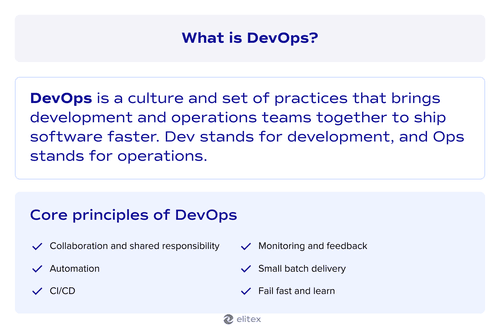

DevOps first emerged around 2007-2008 as a culture and set of practices that connect development and operations teams to build and ship software faster. The term “DevOps” was first coined by Patrick Debois in 2009. It originally combined development (Dev) and operations (Ops) in a single, collaborative unit—DevOps.
One of the main benefits of this approach is that it removes the traditional barriers between the developers who write code and the operations engineers who deploy it. DevOps does this through continuous integration that merges code changes frequently and continuous delivery that automates deployment through pipelines. Together, continuous integration and continuous delivery (CI/CD) form one of the main principles of modern DevOps (we’ll return to this in a second).
When implemented properly, DevOps practices compress the software development lifecycle from months to days, enabling teams to achieve continuous improvement while maintaining high standards for quality and reliability.
Core principles of DevOps
- Collaboration and shared responsibility: With DevOps, different parts of your product team work together throughout the software development lifecycle, eliminating traditional barriers between them. New collaboration between the development team and the operations team creates a sense of shared accountability for product success, improving virtually all aspects of the software development lifecycle.
- Automation: Under the DevOps paradigm, software engineers eliminate as many repetitive manual tasks that waste time and introduce errors as they can. Typically, it’s done through DevOps automation. In 2026, teams with proper DevOps automation tools can handle testing, monitoring, configuration management, containerization, and deployment with minimal manual efforts involved.
- CI/CD: DevOps teams merge code changes frequently throughout the day. They do it in order to detect conflicts and issues before they become major problems, fixing them with minimal effort. This approach enables rapid software updates that move through automated pipelines, allowing organizations to deploy new features and fixes to users within hours instead of weeks.
- Continuous monitoring and feedback: Under the DevOps approach, teams also implement comprehensive monitoring systems (often fully automated) that track application performance and user behavior in real-time. Continuous feedback loops help DevOps specialists identify issues immediately and understand how changes affect system performance and user experience.
- Continuous improvement: DevOps teams regularly analyze their processes, workflow, tools, and outcomes to identify potential for enhancement and optimization. This principle drives ongoing refinement of development practices, deployment procedures, and operational efficiency based on data and team retrospectives.
- Fail fast and learn: DevOps endorses identifying and addressing problems early in the development cycle when fixes require less time and resources. Organizations adopting the DevOps methodology treat failures as valuable learning experiences that strengthen future development efforts rather than sources of blame or punishment. As practice shows, this approach works well in both business environments and software development.
But what’s going on with DevOps in 2026?
In 2026, DevOps is more efficient than ever before. Nowadays, AI-powered automation handles routine tasks across every stage of the automated DevOps pipeline. The latest advantages of DevOps now include predictive analytics that catch issues before they reach production and intelligent systems that optimize deployments automatically. Automation tools are more intelligent and versatile than ever.
Simply put, nowadays, everything helps experienced DevOps service providers to do their job, delivering faster results that boost your revenue while cutting operational costs. However, DevOps is not just about cutting costs. Let’s see what DevOps practically means for your business.
Top 6 benefits of DevOps for product teams
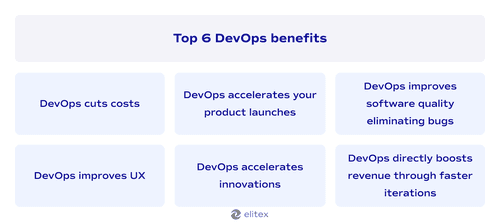
DevOps helps cut costs
But first, let’s talk about costs, why no?! DevOps slashes your operational expenses by automating tedious manual processes and squeezing every drop of efficiency from your technology stack. From our practice, companies typically pocket 20-40% cost savings within the first year as teams eliminate waste and streamline operations. In some extreme cases (we'll mention the specific case later), proper DevOps implementation can demolish infrastructure costs by up to 90%. This massive cost advantage creates a competitive edge that lets you pour those savings into innovation and growth initiatives that actually matter.
Why DevOps reduces operational costs:
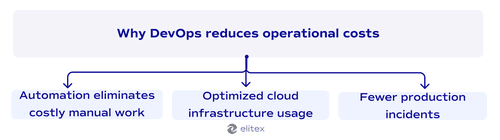
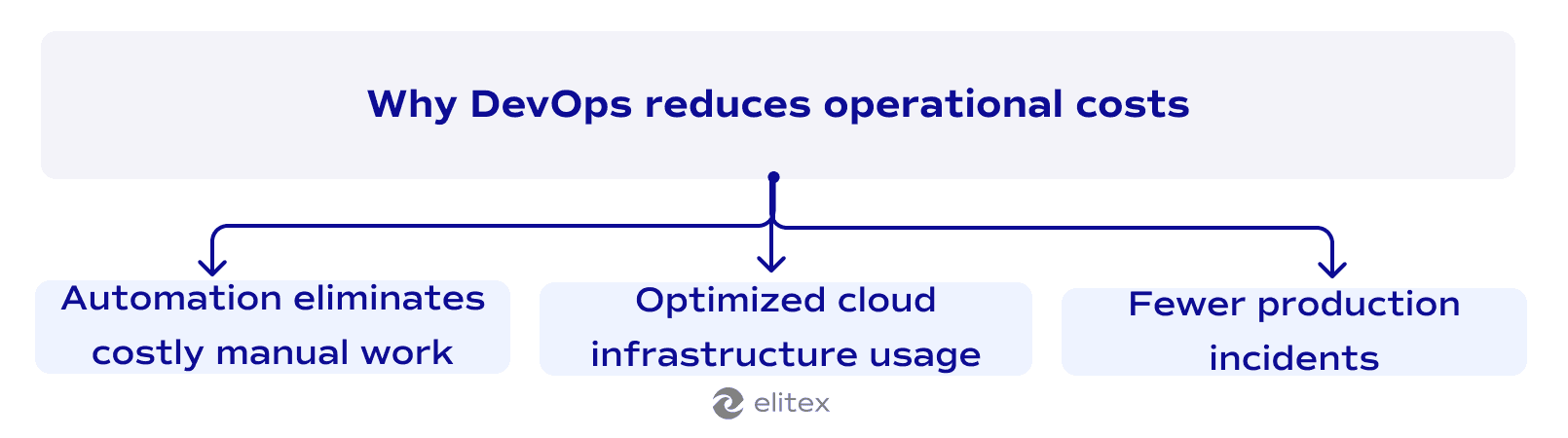
- Automation eliminates expensive manual work: DevOps removes repetitive tasks that consume developer time, allowing teams to focus on revenue-generating activities instead of the routine of maintenance and deployment procedures;
- Optimized cloud infrastructure usage: Smart resource management and automated scaling ensure companies only pay for the cloud infrastructure they actually need, eliminating over-provisioning and reducing monthly hosting bills;
- Fewer production incidents and faster recovery: Automated testing and monitoring catch problems early. It reduces costly emergency fixes and minimizes downtime that eventually impacts customer satisfaction and revenue.
DevOps means faster delivery
DevOps culture eliminates traditional bottlenecks that slow down product launches and feature rollouts. Teams with continuous deployment push new code live in hours, not weeks of waiting around for approvals and manual testing. This faster time to market puts you ahead of competitors who still use outdated release schedules that move at a snail's pace.
Frequent releases happen naturally when development and operations teams collaborate from the start. Companies see massive improvements in their time to market because each software release flows automatically through optimized pipelines. Business leaders get immediate results as teams deliver customer-requested features in days instead of months. This speed boost leads to higher customer satisfaction and helps you grab more market share from slower competitors.
DevOps means higher product quality and fewer bugs
Customers hate buggy software: that's just a fact. DevOps makes sure your customers never have to deal with broken features or crashes. In a DevOps environment, the development pipeline catches problems before they reach actual users through automated testing that runs every single time someone writes new code. Teams spot issues instantly and fix them while they’re small problems instead of waiting until they become expensive disasters that ruin your reputation.
This approach creates high-quality software that actually works the way it’s supposed to. Your users stay happy, and your support team stays relaxed because there are fewer fires to put out. Fast issue resolution keeps your app running smoothly while competitors deal with crashes and angry customers. This reliability becomes one of the biggest benefits of DevOps implementations that directly impacts your bottom line and customer retention.
DevOps eventually means better user experience
DevOps creates smoother, more reliable applications that users actually enjoy using instead of constantly fighting against. When your software works properly the first time, customer satisfaction goes through the roof. People can accomplish their goals without frustration or delays. Teams fix bugs before users even notice them, which creates seamless user interactions that keep customers coming back.
When it comes to UX, here the benefits of DevOps automation reach your users directly through faster load times, fewer crashes, and regular feature updates that improve their daily experience. Users definitely notice when applications respond quickly and work consistently across different devices and browsers. This reliability builds the kind of trust and loyalty that translates into higher retention rates. With DevOps, you get positive reviews and word-of-mouth referrals that drive organic growth for your business without spending extra on marketing.
DevOps accelerates innovation
DevOps gives you a serious competitive edge by enabling rapid innovation cycles that leave competitors in the dust. Faster delivery becomes your core benefit as teams ship new features and improvements while others are still stuck in planning meetings. This business agility lets you respond to market changes instantly and capture opportunities before anyone else even notices them.
How DevOps drives innovation
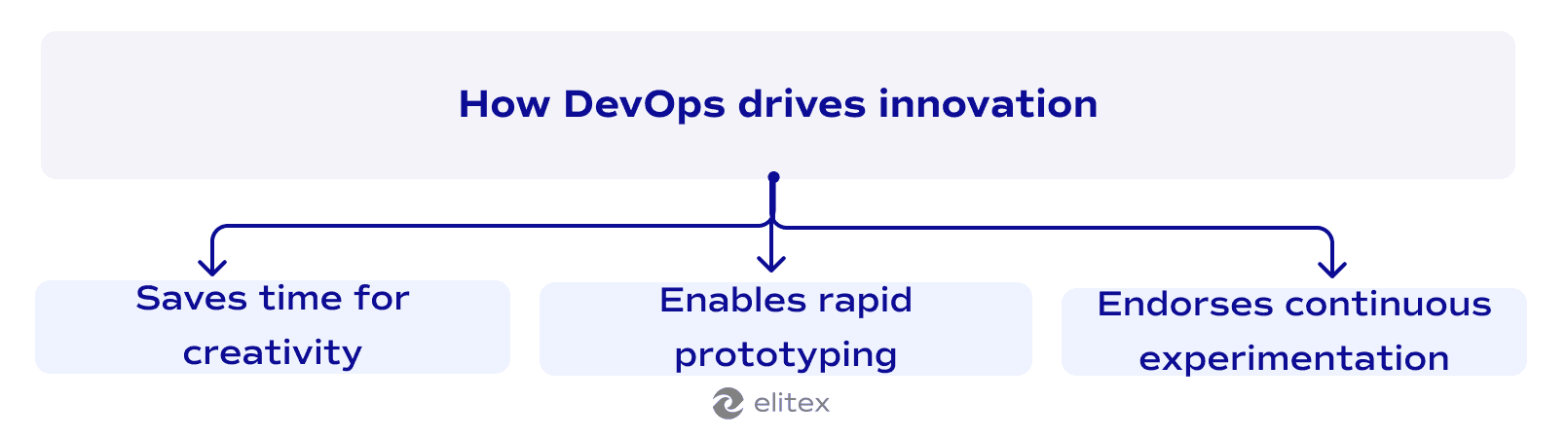
- DevOps saves time for creativity: Eliminating manual processes frees up your team’s mental capacity to focus on creative problem-solving and breakthrough ideas instead of repetitive operational tasks.
- DevOps enables rapid prototyping: While competitors spend weeks on manual processes, your teams test new ideas and iterate on concepts in days, turning innovative thoughts into working features.
- DevOps endorses continuous experimentation: DevOps endorses “fail fast and learn” approach. The DevOps process means teams quickly deploy small experiments and gather real user feedback, allowing for data-driven innovation instead of guessing what customers want.
DevOps directly boosts revenue through faster iterations
Faster product iterations are one of the DevOps advantages that directly impact your bottom line. When you can ship new features every few days instead of every few weeks, you generate revenue from multiple product updates throughout the year. Each iteration brings new opportunities to upsell customers, attract new users, and charge premium prices for cutting-edge functionality.
With DevOps, your business makes more money because you can respond to customer requests and market trends immediately. If customers want a specific feature, you can build and deploy it within weeks, then start charging for it right away. Meanwhile, your competitors without DevOps ecosystem are stuck with yearly release schedules that miss seasonal opportunities and actual customer demands. This speed advantage translates directly into higher revenue numbers and market share growth.
Real-world case studies: How DevOps benefits actual software products
Now, let’s talk about specific measurable improvements in real-world companies.
Case # 1: DevOps services for Dutch publishing company
Here is the STM Integrity Hub development case study. We, at ELITEX participated in development of this cloud-based publishing platform that helps academic publishers screen manuscripts for research misconduct before publication. Our DevOps team was involved from the very beginning of the development process.
Here are direct benefits of DevOps in case of STM:
- Cut downtime costs through deployment pipelines that catch errors before production;
- Eliminated mistakes during deployment with automation of development processes;
- Significantly improved issue response time through automated monitoring;
- Reduced costs associated with security incidents;
- Prevented major security incidents from reaching production;
- Eliminated human error during deployments with Datadog-based security tests.
Case # 2: Swiss FinTech company
Due to ethical considerations and the fact that our client is a major name in the banking sphere, we cannot disclose specific company details for the following fintech project. ELITEX rebuilt a financial services banking platform with 20 interconnected microservices that suffered from legacy Azure infrastructure and high operational costs. Our DevOps team migrated the entire system from Azure to AWS and implemented ISTO service mesh architecture, consolidating scattered code repositories into a unified monorepo structure.
In this case, due to our DevOps expertise, we achieved the following direct benefits:
- Reduced infrastructure costs by 90% through optimized AWS resource management and automated scaling;
- Significantly accelerated development speed;
- Enhanced security posture through service mesh implementation and automated security monitoring;
- Improved system reliability through automated error detection and prevention mechanisms.
Is DevOps still a thing in 2026?
- Yes, sure! In 2026, it is even more essential than before. Companies that ignore DevOps practices simply cannot compete with organizations that deploy code multiple times daily. The methodology has evolved from a nice-to-have approach into the standard way advanced modern software teams operate. AI integrations and other latest DevOps trends have made pipelines smarter and more reliable, while the cultural shift toward collaboration and security (here we have written a separate article where we compared DevOps vs DevSecOps) has become the norm rather than the exception. DevOps is no longer a trend: it’s the foundation of how successful technology companies build and deliver software.
Advantages of DevOps: What can go wrong?
DevOps transformation brings significant benefits, but poor implementation can turn these advantages into expensive problems. Here are the most common pitfalls that sabotage DevOps success:
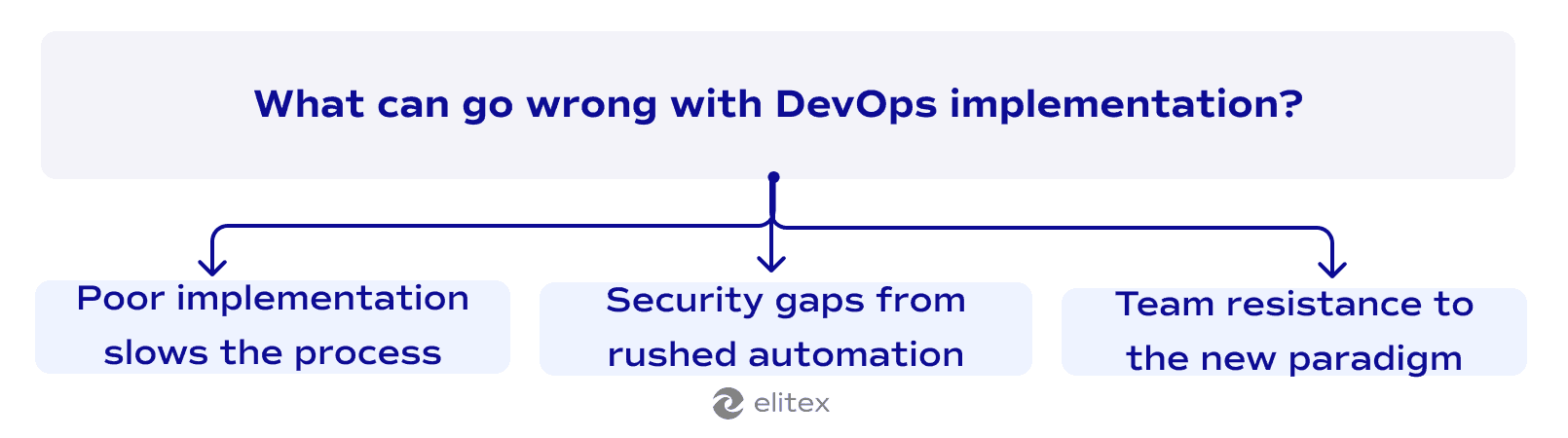
- Poor implementation slows everything down: Badly configured pipelines and over-complicated automation create more bottlenecks than traditional development methods;
- Security gaps from rushed automation: Inexperienced teams can automate deployments without proper security checks, creating vulnerabilities that manual processes would have caught;
- Team resistance derails cultural change: Developers and operations staff resist collaboration, turning DevOps tools into expensive solutions that nobody actually uses effectively.
P.S.: With trusted DevOps specialists who understand both technical implementation and cultural shift, you’ll never experience these situations—only the real benefits of DevOps.
Also read our article about top 10 DevOps automation companies in the USA.
Benefits of DevOps: The main secret
The main secret behind successful DevOps implementation isn’t choosing the right tools or following the latest trends. It’s working with experienced specialists who understand both the technical complexities and cultural challenges involved. DevOps requires deep knowledge of cloud infrastructure, automation pipelines, security protocols, and team dynamics that only comes from years of hands-on experience across different projects and industries. ELITEX bring over a decade of DevOps expertise to every project, ensuring that you get the real benefits of DevOps automation without the common pitfalls that plague inexperienced teams. Our specialists have guided companies through complete digital transformation, from legacy system migrations to cloud-native architectures, so choosing experienced specialists like ELITEX may be the key to the success you are looking for!
Ready to experience the true advantages of DevOps? Contact ELITEX today for a consultation with our experienced DevOps specialists.


FAQs
What are the benefits of DevOps?
DevOps benefits businesses, developers, and operations teams in different ways. DevOps reduces costs, accelerates delivery, and improves overall software quality through enhanced collaboration between development and operations teams. These advantages range from faster releases to better system reliability, ultimately leading to higher customer satisfaction and competitive advantage.
What are the DevOps benefits for business?
There are six principal business benefits of DevOps: dramatically reduced operational costs (typically 20-40% savings in the first year), accelerated product launches, eliminated bugs through automated testing, improved user experience, boosted revenue through faster product iterations, and innovations driven by freeing teams from manual tasks. These advantages help companies deploy code multiple times daily instead of monthly, respond to market demands immediately, and gain a competitive edge over slower competitors using traditional development methods.
What are the benefits of DevOps for software engineers?
DevOps eliminates repetitive manual tasks, provides faster feedback on code through automated testing, and reduces time spent on deployment issues. Engineers can focus more on actual development instead of firefighting production problems, while automated pipelines catch errors early and streamline the release process.
How does DevOps improve the deployment process?
DevOps reduces manual intervention through automated pipelines that deploy code directly to production environments. This creates faster time to market and eliminates human errors that typically occur during manual deployments.
What cultural changes does DevOps bring to teams?
DevOps establishes a culture of collaboration where development and operations teams work together throughout the entire development cycle. This shared responsibility approach breaks down silos and improves communication between all team members.
How does DevOps affect development speed?
DevOps shortens the development cycle by automating testing, integration, and deployment processes. Teams achieve faster time to production through streamlined workflows that eliminate bottlenecks and reduce manual intervention at every stage.
POSTED IN: