


Industry
Science
Technology
AWS
JavaScript
Node.JS
noSQL databases
Services
- Nearshore software development
- System integration service
- Front-end development
- Back-end development
- DevOps services
- Product development
Customer’s Location

Amsterdam, the Netherlands
A Brief Summary
- Our client is STM, a leading trade association representing 145 academic publishing members across 21 countries. The STM Integrity Hub is their cloud platform for screening manuscripts and verifying scientific findings before publication.
- STM needed a secure, cloud-based platform that lets multiple publishers screen manuscripts while keeping each publisher's data separate and compliant. They also needed a development partner flexible enough to scale with publisher adoption, since this was a brand new service in the academic publishing market.
- ELITEX built the Hub from near-zero on an API-first, serverless AWS architecture using Lambda, DynamoDB, OpenSearch, and Fargate. We delivered specialized API connectors for publisher integration, dedicated UIs for each user type, and a multi-cloud DevOps layer spanning AWS and Azure. A six-person team has run the project through ongoing platform enhancements.
About the Project
The STM Integrity Hub is a scientific platform that connects academic research worldwide to protect research quality. Created by STM, a leading trade association with 145 members across 21 countries, the Hub combines automated screening tools, data analysis, and shared knowledge from member organizations to screen manuscripts for potential misconduct and verify scientific findings before publication.
This platform leads STM’s mission to advance trusted research and maintain scientific standards. In addition to issue detection in manuscripts, STM Integrity Hub, together with their secure infrastructure and shared technology, enables publishers to protect author privacy and follow competition laws. It all was done in parallel to contributing to a growing database of research integrity insights.
The Challenge
When STM first contacted ELITEX, their goal was to build a secure cloud platform for validating research papers. The project faced two business-critical challenges: first, creating a system that would allow multiple publishers to screen manuscripts while keeping their data separate and secure. Second, STM was looking for a development partner with flexible team scaling, as they launched a new type of service in the academic publishing market and needed to adjust the development pace based on publisher adoption and feedback.
When ELITEX joined the STM Integrity Hub development, the project started nearly from scratch with only a few preset basic libraries. Without any pre-existing architecture, our team had to design and implement core features from scratch. At the same time, we needed to ensure that the platform could handle sensitive data from multiple publishers securely and scale as the network grew.

Our Process
The ELITEX team began the entire STM Integrity Hub development process by establishing a smooth workflow. We used an agile development approach with short iteration cycles to build the platform gradually, step by step. A multifunctional team consisting of a project manager, front and back-end developers as well as DevOps specialist was established. Our team collaborated closely with STM stakeholders, conducting regular feedback sessions with key client representatives. It allowed us to ensure the development was aligned with publisher needs and legal standards.
The development process itself centered on the API-first principle, where we created AWS microservices connected by Lambda functions. Our DevOps engineers configured and deployed various services like API Gateway, Cognito, and DynamoDB, while developers focused on writing Lambda functions and building integration connectors for publishers’ systems. Another part was creating a user-friendly UI for all parties.
DevOps and Monitoring Implementation:
Our DevOps team built deployment pipelines that caught errors before they reached production. The DataDog monitoring system provided clients with real-time dashboards showing system health and security issues. This setup cut downtime costs and eliminated mistakes during deployment.
Managing complex data flows between multiple parties while maintaining privacy standards also became a significant focus. Our team invested substantial time in securing data handling that met both legal requirements and industry regulations. In such a sensitive domain as publishing, the legal nuances are a significant part of the entire challenge, and ELITEX invested dedicated resources to ensure compliance with all legal requirements is met while maintaining the system’s functionality.
Our Solution
The STM Research Integrity Hub development process combined serverless AWS infrastructure with custom-built connectors for publisher integration. We implemented a system that processes manuscript data through multiple screening tools while maintaining strict data privacy and security protocols. The core platform leverages AWS services, including Lambda functions, DynamoDB, OpenSearch, and Fargate, to ensure scalability and performance.
For smooth integration with publishers’ systems, we developed specialized API connectors that bridge editorial workflows with the Hub’s screening capabilities. These connectors handle data transformation, maintain configuration settings, and ensure secure communication between all components. The system was designed to be modular, allowing publishers to integrate their back-end systems directly with the Hub’s API.
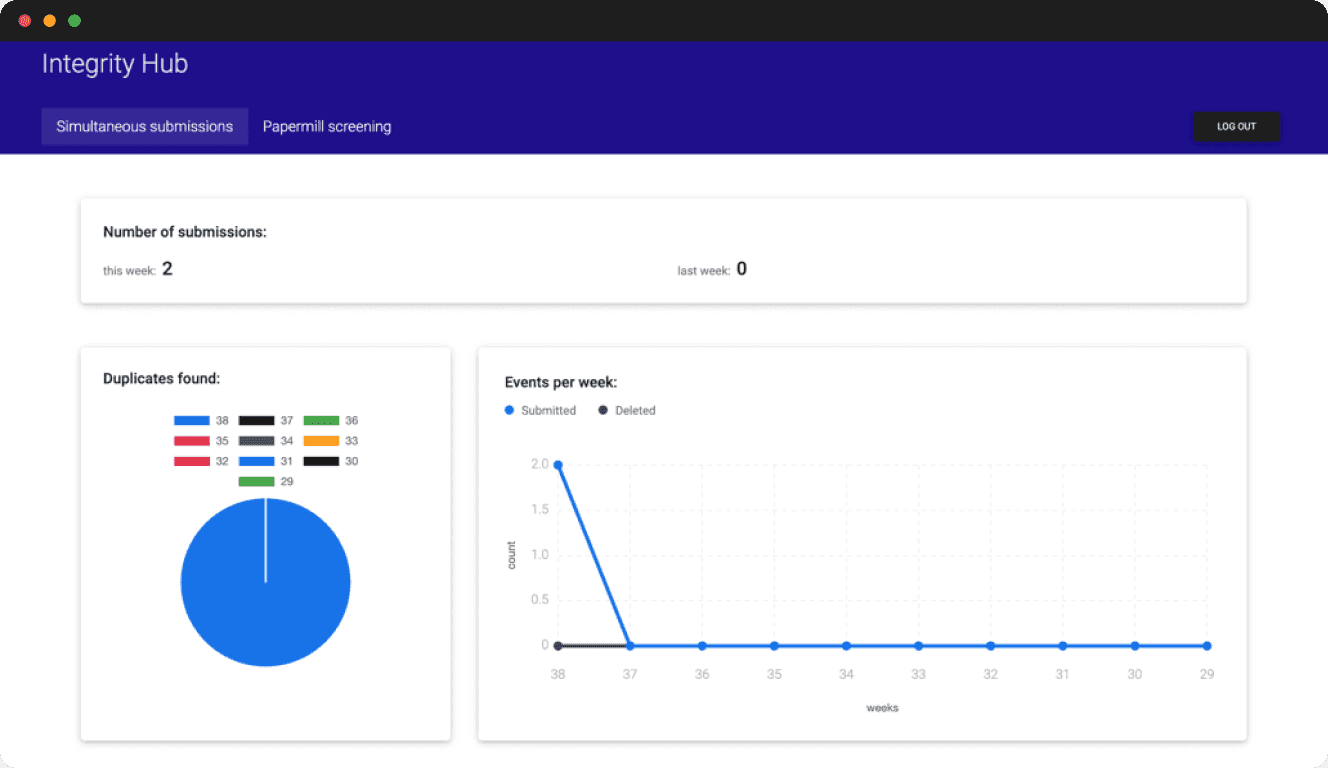
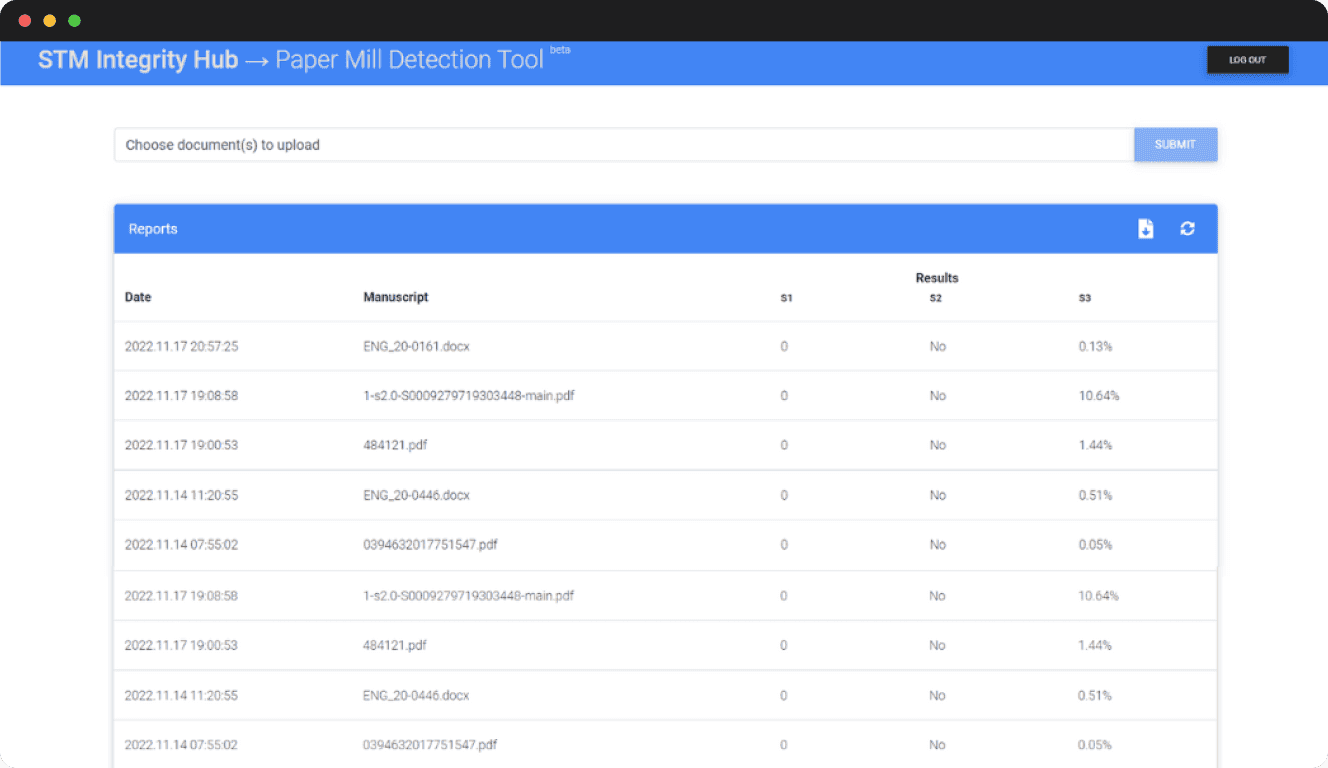
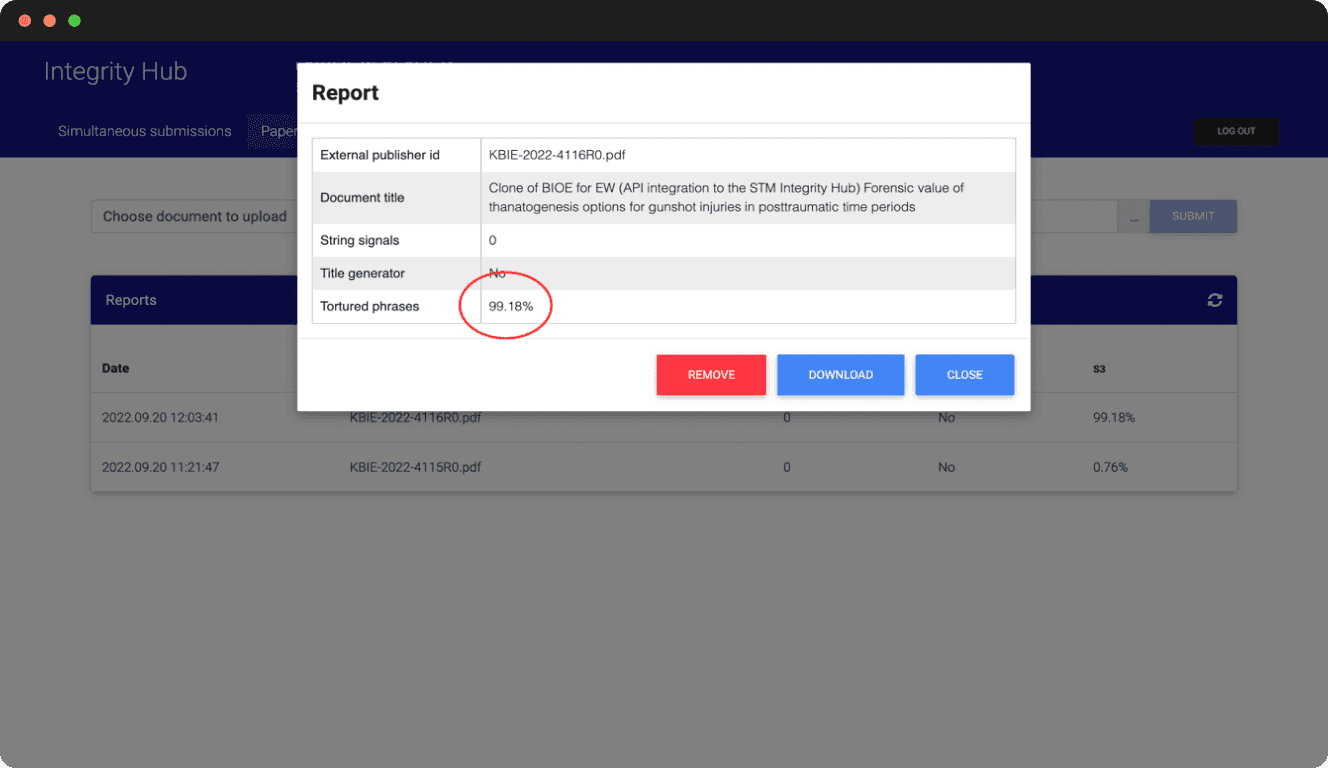
Though primarily API-driven, we also created essential user interfaces to support different platform users. This includes dedicated UIs for publishers to manage submissions, STM administrators to oversee the Hub’s operations, and specialized tools like Papermill detection that combines multiple screening mechanisms into a unified interface. Each interface was designed with security in mind in order to protect sensitive data and ensure a smooth user experience.
Cloud-Agnostic DevOps Services and Security:
ELITEX engineers built integrations that connect services across Azure and AWS environments. This multi-cloud approach allows clients to leverage specific services from different providers while maintaining smooth data flow and communication between platforms, providing flexibility without requiring full migration capabilities.
Security analytics dashboards provided clear visibility into threats and vulnerabilities across the entire infrastructure. Automated monitoring now detects security issues before they escalate, improving response times significantly. Datadog-based security tests eliminate human error during deployments by catching vulnerabilities automatically. This approach prevents major security incidents from reaching production and reduces costs associated with security.
Our Project Team
ELITEX’s development team included 6 dedicated specialists: two front-end developers for building user interfaces, two back-end developers handling server-side logic and API integrations, one DevOps engineer maintaining cloud infrastructure, and a project manager coordinating the entire workflow.
Regular communication with STM stakeholders and clear role distribution enabled the team to maintain steady development progress. This structure proved effective for both ongoing platform maintenance and implementing new features based on publisher feedback and evolving requirements.
The collaboration that started in 2019 continues nowadays.
The Result
ELITEX successfully delivered a scalable, secure platform, just as STM needed. The Hub processes manuscript submissions through various integrity checks while maintaining strict data privacy standards and enabling smooth integration with publisher systems.
As the technical partner for STM, we continue to enhance the platform’s capabilities, adding new features and improving existing ones. The Hub now serves as a crucial tool in the academic publishing industry’s fight against research misconduct, showing how technology supports maintaining scientific standards at scale.
Key numbers and facts:
- 6 specialists delivering the full platform end-to-end
- From near-zero to production-ready cloud system
- ~70% faster manuscript screening compared with previous manual review processes
- 2 cloud environments integrated through cloud-agnostic DevOps (AWS plus Azure)
- 4 core AWS services powering the backend (Lambda, DynamoDB, OpenSearch, Fargate)
- ~99.99% platform uptime maintained through automated monitoring and deployment safeguards
Why Partner With ELITEX?
Here’s why STM chose ELITEX as their development partner:
-
Cost-effective nearshore development
ELITEX offered high-quality development services at rates significantly lower than Dutch market prices. This cost advantage enabled STM to invest more in platform features and security measures.
-
Full dedication & legal understanding
Our team invested time in understanding specific industry regulations and data privacy requirements. We built our development process around these legal complexities while maintaining a focus on the publisher’s actual needs.
-
Transparent communication
Direct contact with developers and no unnecessary management layers ensured quick decision-making. Our team maintained regular updates with STM stakeholders through clear communication channels.
-
Technical & industry excellence
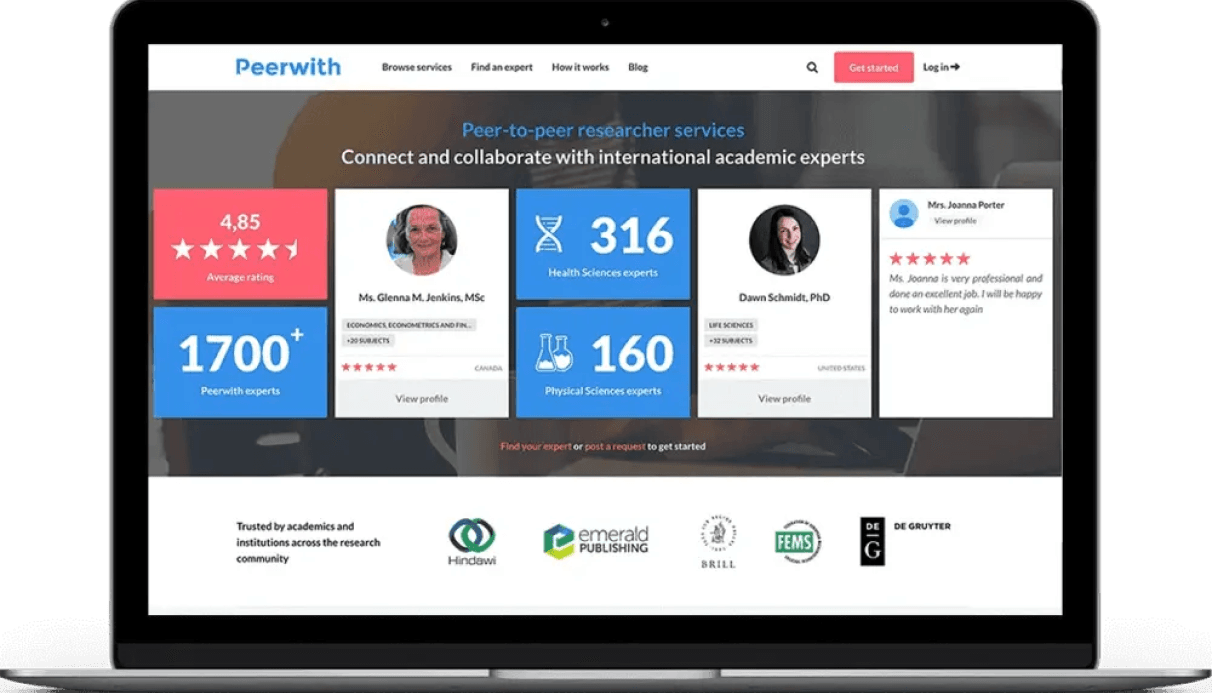
Our track record in publishing projects like Peerwith and OA Switchboard demonstrated our deep industry knowledge. Combined with AWS expertise and secure data handling capabilities, this publishing-specific experience proved essential for building STM’s platform.


Let's talk about your project
Drop us a line! We would love to hear from you.