



Why does front-end development matter so much for any business in the digital age? The answer is quite simple. It’s the first point of contact between the company and its user; it’s the face of the working processes; it offers visual appeal and ease of use; it’s often the first thing that comes to mind when thinking about the specific company. A solid front-end is way more than just making your site look good. Under various circumstances, resorting to the services of a reliable front-end development provider brings different advantages. Companies from various industries and economic sectors benefit from the front end in different and often subtle ways. So, today, we will try to find out the importance of front-end development for your industry and how you can take a competitive edge from it.
Defining the front-end development
But first, let’s explore front-end development itself. Front-end, or client-side development, shapes the visual and interactive elements of websites or applications that users interact with directly. This part of the application is traditionally called a user interface. The front-end development process typically involves coding and designing the user interface across various devices and browsers. This field blends technology and creativity to deliver seamless digital experiences. In a broader sense, front-end development also includes quality assurance and post-update maintenance, encompassing all aspects of the process of building a visual part of the application with which the user interacts directly.
Technical specifications
The entire process of client-side development covers a broad range of tools, languages, and best practices. Here are some important points we need to understand about front-end development:
Programming languages
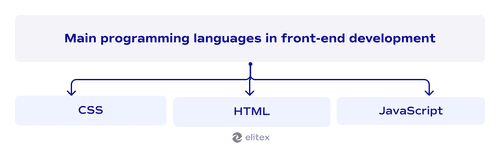
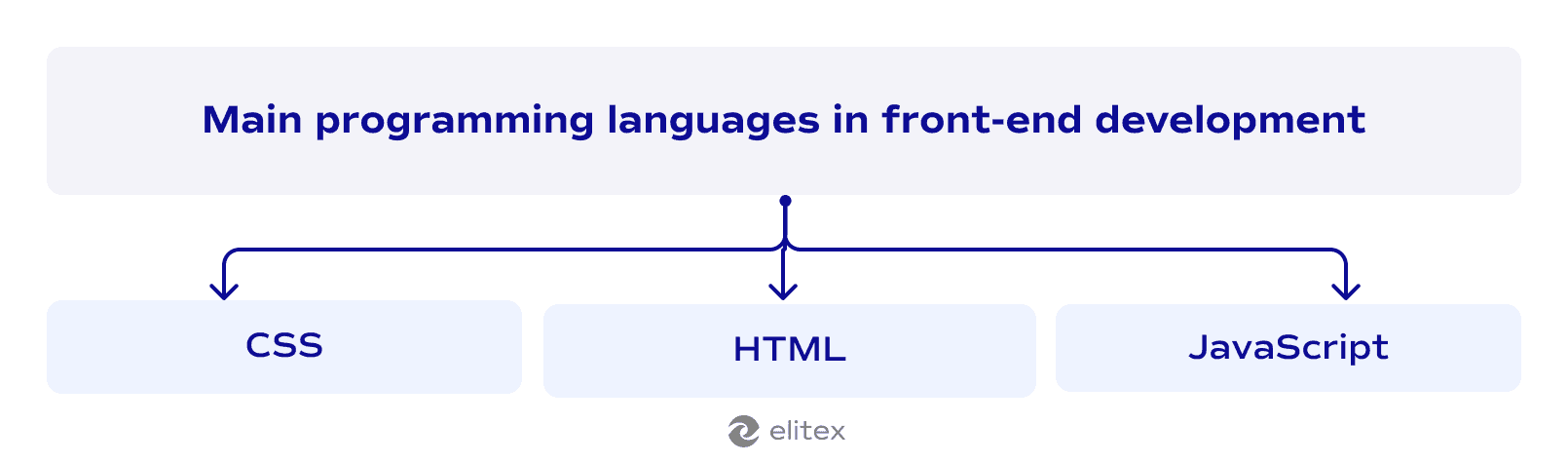
HTML
HyperText Markup Language (HTML) defines the structure and layout of the content located on the web page. It’s the “basic language” of the web.
CSS
Cascading Style Sheets (CSS) manage the visual presentation and design, including layouts, colors, and fonts. It makes your website look good.
JavaScript
JavaScript (JS), one of the most popular programming languages in the world, enables the interactivity and dynamic elements we see on modern web pages. JS allows dynamic updates, multimedia management, and animated graphics on the modern web. This language also goes paired with numerous front-end frameworks that significantly simplify building sites and web apps.
The role of front-end development
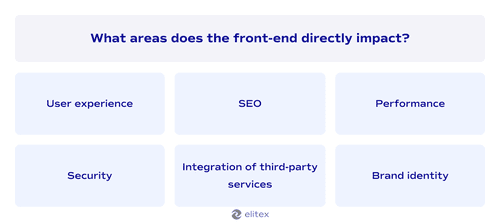
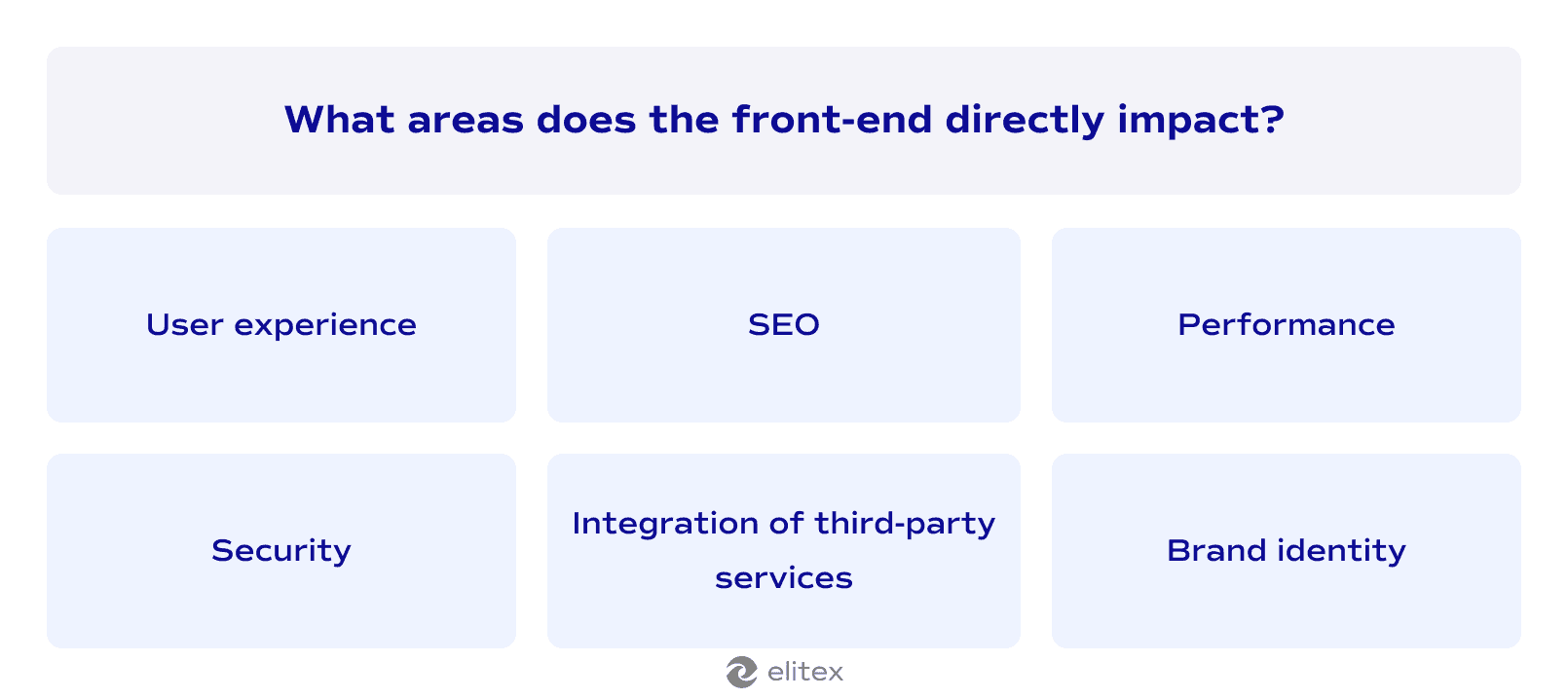
At the same time, front-end development is a bridge between your website or application’s digital interface and the user experience it delivers. The visual elements, design, and interactivity of the software solution crafted by front-end developers directly impact not only the visual perception of your website or application but also your search engine ranks, overall user journey, security of the software, and many other aspects critical to your business success. So, here are areas directly impacted by the quality of your front end:
Importance in user experience (UX)
A good front end directly enhances and creates a positive user experience by improving the usability, accessibility, and overall pleasure of the interaction between the website/product and the end user.
Importance in Search Engine Optimization (SEO)
When it comes to websites and web-based applications, efficient front-end code helps boost SEO rankings by optimizing the website’s speed of response for both desktop and mobile versions, which are key metrics for most search engines.
Performance
Good front-end developers focus on optimizing the speed and responsiveness of a site or app, reducing load times, and improving interaction readiness.
Brand identity
Strong branding requires consistent visual elements, typography, and color schemes, all of which also depend on UI and front-end development services.
Integration of third-party services
The level of challenge you will face when integrating third-party tools and systems, such as payment gateways, social media platforms, and analytics tools, also depends on the quality of front-end development services. A well-developed front-end connects to the backend well, eventually.
Security
Poor front-end security measures are frequent companions of outdated and poor graphical user interfaces. Effective front-end development automatically ensures robust security measures.
Why front-end development is important in different industries?
For a better understanding of why the front-end is important, let’s check some real-world use cases. Whether your industry relies on a strong website where users buy some products or obtain services (for instance, the retail industry or fintech) or merely use the website for marketing purposes (for instance, consultancy or real estate), the impact of user-friendly design and an engaging user experience is undeniable. The front end’s crucial role is that it directly impacts how users interact with your business, whether it’s building the front end from scratch or front-end migration or rewrite.
In every industry, the front end serves as the digital facade that either welcomes potential customers or turns them away. Therefore, denying the importance of front-end development for any business is difficult. However, there are several industries that benefit from well-crafted user interfaces the most.
We have previously written an article about the benefits of front-end for the real estate industry.
Retail/E-commerce
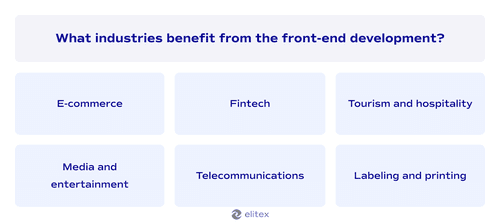
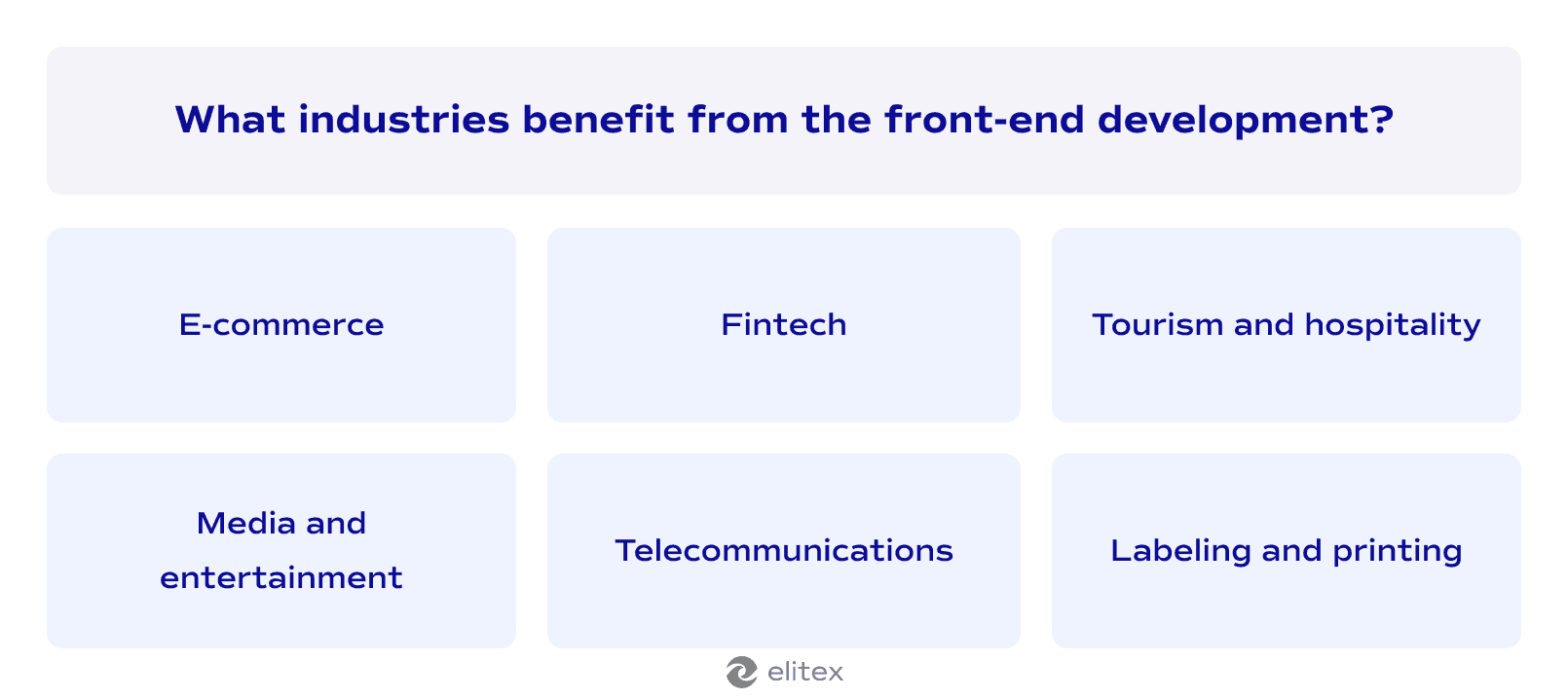
E-commerce, as well as e-commerce software solutions, has changed significantly lately. If you recall how online shops looked like at the beginning of the 2010s, the importance of front-end developers will become self-evident. In the retail and e-commerce sector, front-end development directly impacts sales by providing a compelling, easy-to-navigate shopping experience. Advanced features like dynamic product filters, quick-view modal windows, and smooth checkout processes minimize obstacles between discovery and purchase. E-commerce benefits immensely from client-side services like UI modernization, responsive design, and front-end development for headless CMS, a popular solution in the e-commerce domain. Such improvements are vital for keeping pace with the competitive digital marketplace, where the ease and enjoyment of the shopping experience can directly influence customer loyalty and sales volumes.
Fintech/Banking
Besides back-end development, which is obviously key for fintech, front-end development in fintech and banking directly impacts how users manage their finances online. A decent front-end (including a mobile app) ensures that complex financial and personal information is presented in a user-friendly way, enhancing user engagement through intuitive interfaces for banking transactions, investment management, and personal finance tracking. Secure, accessible, and easy-to-use front-end designs play a pivotal role in building trust with users who handle sensitive financial data, making it easier for them to perform transactions confidently and securely.
Tourism and Hospitality
In some ways, the tourism and hospitality industry resembles e-commerce. Although not all tourism websites and web apps have booking and payment options, good visual appeal still enhances the customer’s journey from discovery to booking. The importance of the front-end development process for tourism and hospitality is revealed in interactive maps, virtual tours, and streamlined booking interfaces that work flawlessly on various devices. Similar to other industries, an effective front-end boosts user engagement and conversion rates, but in contrast to others, here, it also converts interest into bookings. Here we have a dedicated guide on digital transformation in the hospitality industry, where we specifically covered the role of front-end development for this industry.
Media and Entertainment
In media and entertainment, a developer role is to build an intuitive and visually appealing system of content delivery and consumption, be it complex real-time single-page applications or simple news feeds. Front-end features like adaptive streaming, personalized content recommendations, and real-time social sharing capabilities keep audiences engaged and help media platforms stand out in a highly competitive space.
Telecommunications
The telecommunications industry benefits from front-end development by providing customers with robust self-service portals. These interfaces allow for easy management of accounts, plans, and services, significantly enhancing customer satisfaction and reducing operational costs. A well-designed front-end can facilitate complex interactions like plan comparisons, service customization, and real-time support, all within a secure and user-friendly environment.
Labeling and printing
In the labeling and printing industry, front-end development can be useful for both marketing purposes and printing management software itself. On the one hand, it reduces bounce rates among potential customers, and on the other hand, a decent front-end streamlines customization and the ordering process for end users. By leveraging the latest front-end technologies, companies offer interactive design tools that allow customers to visualize their final products in real time. You can read about how the modernized front-end changed labeling management software in our dedicated Kallik case study. Common functionalities, such as drag-and-drop design elements, instant price quotes based on customization options, and visual previews, all help enhance user satisfaction and optimize the operational process.
Future of front-end development
At the same time, the development itself does not stand still. The future of front-end development is shaped by evolving technologies, changing user expectations, and the growing importance of performance and accessibility. Here are some major trends:
1 . Frameworks and libraries evolution
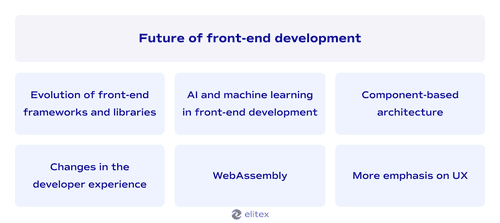
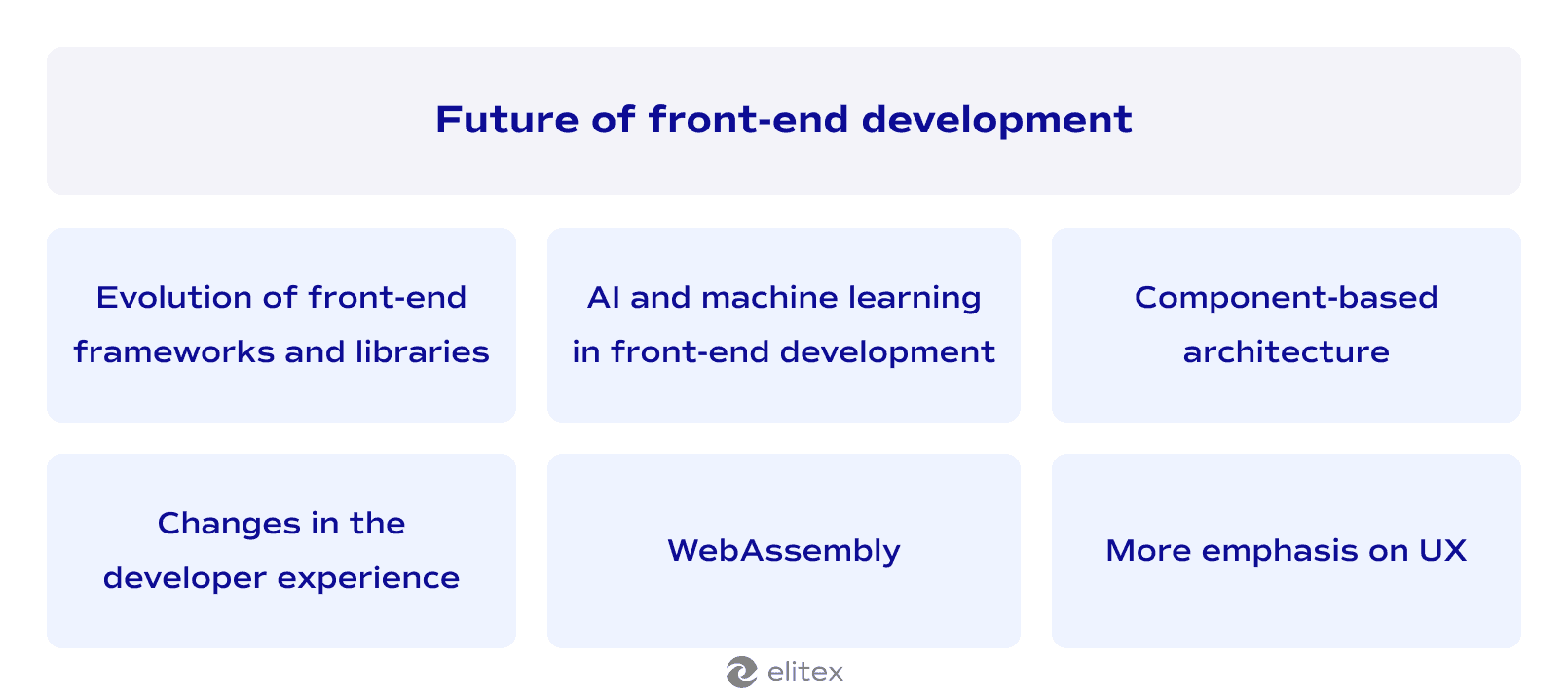
React, Angular, Vue.js: front-end frameworks importance is hard to overstate. These three big frameworks will continue to evolve, offering more and more robust features and tools for frontend developers. They will likely integrate more closely with such aspects of back-end development as server-side rendering and static site generation to improve the development process and, therefore, websites’ and apps’ performance.
New entrants: Emerging frameworks and libraries, such as Svelte, Preact, and Solid.js, are gaining traction due to their performance benefits and simplicity. Even now, we can see some large projects based on them going live. There is a big probability that some of them will join the “big three” in terms of popularity.
2 . AI and machine learning
Personalization: AI and ML will create more personalized user experiences, such as content recommendations and adaptive interfaces. With time, we will see more and more AI-powered interfaces.
Automation: At the same time, AI tools help front-end developers write code, debug, and optimize performance. Nothing can change this tendency, which has already become a reality.
3 . Component-based architecture
Design Systems: Design systems and component libraries will become more standardized than ever before, promoting consistency. This approach also encourages the usage of reusable code across applications.
New Architectural Approaches: Front-end architectures, such as web components and micro frontends, will let developers build and deploy independent front-end components, improving scalability and maintainability.
4 . Improved developer experience
Low-Code/No-Code Platforms: These platforms will let more people create web and mobile apps without deep coding knowledge, making web development more accessible.
DevTools: Improved developer tools for debugging, performance monitoring, and workflow automation will boost productivity.
5 . WebAssembly (Wasm)
Performance: Wasm lets developers run code written in various programming languages on the web at near-native speeds. This enables more complex and performant web applications.
Interoperability: Combining JavaScript with Wasm will open new possibilities for web applications, especially in gaming, simulation, and data visualization.
6 . More emphasis on UX
More user-friendly interfaces and experiences: The focus on user-friendliness of applications and sites will grow as users expect more intuitive, engaging, and seamless user experiences. Developers will prioritize accessibility, responsiveness, and ease of use, which means more attention to design principles, usability testing, and user feedback.
Mobile-first approach: As the number of mobile users continues to rise, ensuring your site looks good on all screen sizes becomes even more crucial. Together with more user-friendly interfaces, this will create a world of more UX-centric front-ends.
Final thoughts
When we initially began to talk about why front-end development is important, we expected to list the benefiting industries. However, when doing so, we realized it’s way easier to list industries that don’t benefit from front-end development. A well-designed website ensures users can easily navigate your business, increasing overall satisfaction. Therefore, virtually any business benefits significantly from the enhanced online presence. A strong front end helps users find what they need, engage with your content, and complete transactions smoothly, boosting customer retention and loyalty.
A decision to invest in the front-end is a strategic move that can lead to significant returns. Increased user retention rates and faster load times are critical to online success for any business, and that’s why front-end development is important. And that’s what we understand perfectly well at ELITEX. Being a front-end development company with a decade of experience building reliable software solutions that exceed expectations. So, whether you are looking for a trusted development partner or seeking a more detailed consultation on the impact reliable software solutions can have on your business goals, don’t hesitate to contact ELITEX, a team that cares about your success.
FAQs
What is front-end development, and what is the importance of front-end development for my business?
Front-end development basically creates the user interface (how the website looks like) of a website or app. It’s important because it shapes how users interact with your business online, affecting their overall journey and customer loyalty.
How can front-end development improve online services?
Front-end development makes online services easier to use and navigate, enhancing user satisfaction and overall engagement with the service.
What benefits can a well-designed front-end bring to businesses with a limited online presence?
A well-designed front-end can make a small online presence more appealing and user-friendly, attracting and retaining customers.
What are the advantages of front-end development for tech startups?
For startups from the tech industry, front-end development creates a professional and user-friendly interface, helping to attract both users and investors as well as building the credibility of new companies.
How does front-end development impact the UX of my website?
Front-end development directly affects the experience for users by ensuring that a website is intuitive, responsive, and visually appealing.
Why front-end is important for business success?
Front-end is a critical aspect of business success because it enhances user engagement, satisfaction, and eventually retention, driving growth and profitability.
POSTED IN: