



- TL;DR: This guide evaluates 10 development companies that build custom software solutions for real estate businesses, focusing on mid-sized service providers with proven track records in property technology
- Our selection criteria prioritize companies that demonstrate both technical expertise and deep real estate market knowledge, drawing research from industry platforms like Clutch, GoodFirms, and The Manifest
- The featured companies include DBB Software, ELITEX, Leobit, BluePixel, Jelvix, IIH Global, Anadea, Imaginary Cloud, TeaCode.io, and Aionys, spanning locations across Europe and Latin America with team sizes ranging from 50 to 150+ specialists
- We evaluate each company based on industry-specific experience, transparent communication, scalable architecture, and proven results, while exploring key selection criteria and future trends in property technology development
- The article also clarifies the distinction between custom development service providers and PropTech product companies like Zillow, Compass, and Opendoor, helping you understand when to use ready-made platforms versus custom-built solutions
| Company | Founded | Team size | Headquarters | Key specialization | Notable clients |
| DBB Software | 2015 | 70+ | Krakow, Poland | Full-cycle development, property platforms | JLL, WeWork |
| ELITEX | 2015 | 50+ | Edinburgh, UK | Property management SaaS, hospitality software | Fortune 500, Fortune Global 500 |
| Leobit | 2014 | 150+ | L’viv, Ukraine | PropTech, Investment platforms, AI integration | Fortune 500, Silicon Valley startups |
| BluePixel | 2017 | 50+ | Ciudda de Mexico, Mexico | UI/UX design, broker platforms | Pepsico, BBVA, Bimbo, Morada Uno |
| Jelvix | 2011 | 100+ | Tallinn, Estonia | Underwriting systems, property valuation, AI analytics | Tiber Capital |
| IIH Global | 2013 | 100+ | Herfordshire, UK | Mobile apps, payment platforms, booking systems | VIP Concierge Groups |
| Anadea | 2000 | 100+ | Alicante, Spain | MLS integration, property management, investment analytics | StreetEasy, ListingDoor |
| Imaginary Cloud | 2010 | 90+ | London, UK | Marketplace platforms, smart buildings, location analytics | Nokia, BNP Paribas, Invisible Homes |
| TeaCode.io | 2017 | 90+ | Warszawa, Poland | Building access platforms, virtual tours, AI integration | Buzzin, Hocomo |
| Aionys | 2016 | 65+ | Sofia, Bulgaria | AR/VR solutions, smart home systems, 3D virtual tours | Digital M.O.B. |
What does it take to transform a business in the real estate industry in 2026? In most cases, the answer can be quite easy. The right technology partner makes all the difference, as real estate tech companies create tools that automate tasks, analyze complex market data, and, eventually, drive conversions through software solutions that both look good and perform flawlessly. Custom real estate software development services can transform even the smallest nuance of the real estate business—from automating property management and streamlining client communication to enabling virtual tours and handling secure transactions.
What does this transformation mean for business in practice? It’s quite straightforward: more deals while using fewer resources. Basically, digital transformation in real estate means turning traditional workflows into more efficient and often automated systems that drive your business growth. We have previously written our detailed guide on the real estate app development process, real estate CRM development, and real estate app development costs, and today, we would like to discuss another critical aspect of building success in real estate: choosing the right technology partner for your business transformation.
What does the technology partner choice mean in real estate? As competition in the property market intensifies, selecting a technology partner means even more than just resorting to external technical expertise to realize your business vision. It means finding a reliable company that understands the specificity of the real estate industry from the inside out, can translate business requirements into technical solutions, and delivers systems that create measurable value. So, we’ve made our today’s top real estate software development companies to make finding a reliable tech partner an easier task. But before the top itself, let’s clarify a few critical moments.
Key Features to Look In Real Estate Software Development Company
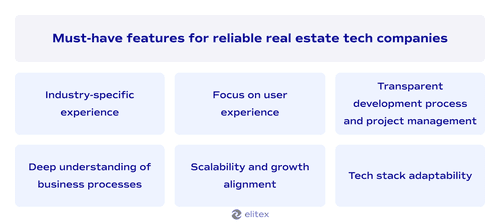
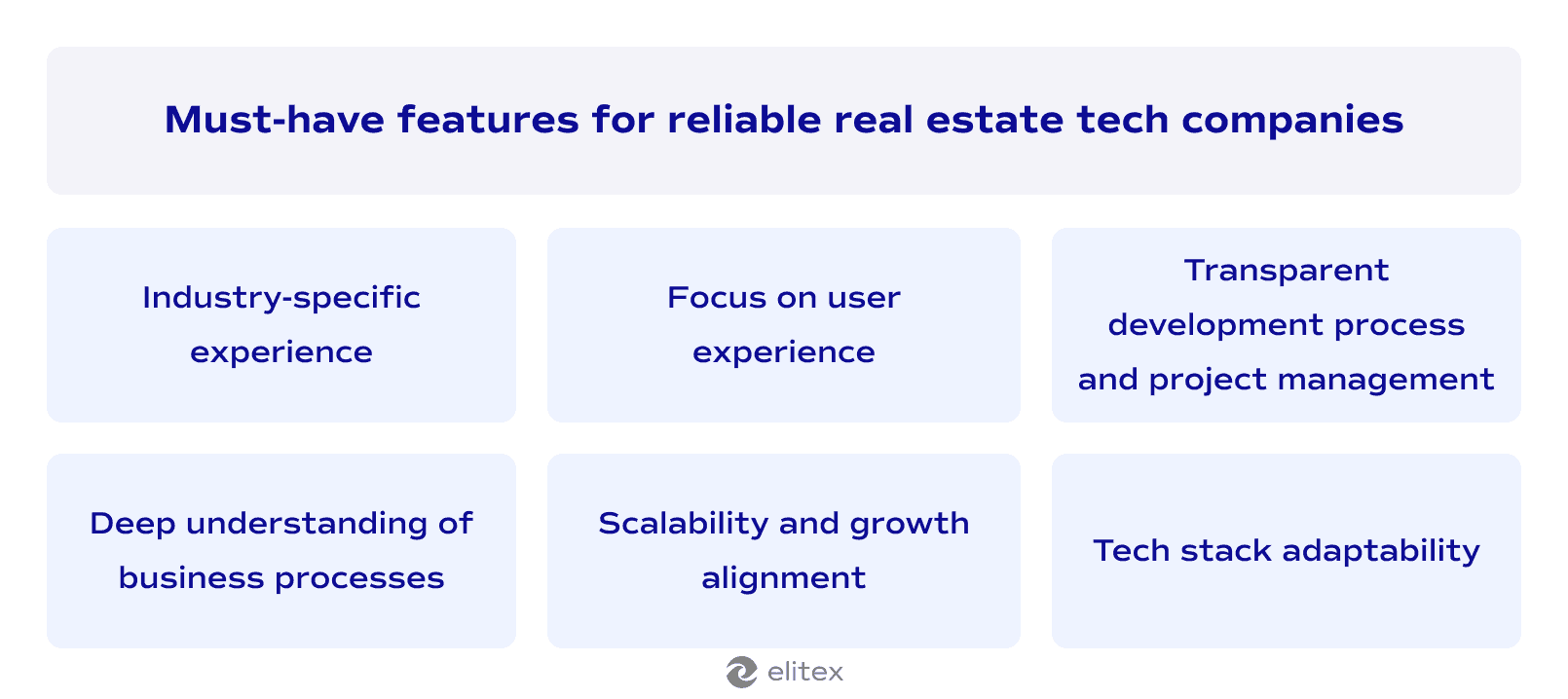
First of all, let’s define what differentiates good real estate tech companies from the rest. Quality providers combine technical expertise with deep industry knowledge, offering solutions that go beyond basic development. They understand real estate workflows, security requirements, and market dynamics while maintaining transparency in communication and costs. Their track record shows consistent delivery of scalable, secure systems that drive measurable business results. Here are some additional features to look at when choosing among real estate software development companies:
Industry-specific experience
A company should demonstrate deep knowledge of real estate operations. Their portfolio must include successful projects in property management, real estate marketplaces, broker tools, market analysis, or another sphere you are interested in. Look for case studies that show how they solved specific industry challenges. Teams with real estate experience understand common pitfalls and compliance requirements, saving your effort and money.
User experience focus
The best real estate technology companies create interfaces that work for both agents and clients. They understand how real estate professionals use software in daily operations. Look for companies that conduct user testing and iterate based on feedback. Experience in front-end development will also be a great advantage. Here we have written a separate article about the importance of front-end development in the real estate industry. Remember that designs made by good real estate tech companies will always make complex property transactions feel simple.
Transparent development process and project management
A transparent development process drives software delivery through clear timelines and regular progress updates. Quality real estate software development companies maintain detailed documentation of changes and share honest feedback about technical challenges that may impact software features. Their communication keeps stakeholders informed while preventing costly surprises during platform development. Choosing a partner with honest and transparent communication will save plenty of effort and time.
Deep understanding of business processes
When selecting among real estate software development companies, it is crucial to choose a company that understands business processes well. This deep understanding transforms the software solutions they build from a generic tool to a strategic asset. For instance, deep insights reveal hidden inefficiencies that directly impact transaction performance; comprehensive workflow mapping enables precise solution design for complex real estate operations, etc. These and other business process insights allow development companies to create adaptive technologies that anticipate market changes. By understanding intricate business mechanics, they develop solutions that solve challenges before they emerge. The result of choosing companies that understand how business works is always software that acts as a strategic partner, not just a technical tool.
Scalability and growth alignment
Traditional software bottlenecks business expansion. It practically means that business expansions demand adaptable technology partners. Quality development companies design systems that scale from the very beginning of the development: handling 10 or 10,000 with equal efficiency. Their solutions grow with your revenue, not your costs. When market opportunities arise, they deliver features that accelerate deals. Partner with developers who turn growth challenges into competitive advantages.
Tech stack adaptability
Markets evolve, technology advances, and your software must keep pace. Leading real estate tech companies build systems ready for tomorrow’s innovations today. Experienced developers know how to integrate emerging technologies like AI and blockchain without complete system overhauls and starting the development from scratch. The partnership with a reliable software developer transforms your software from an expense into an appreciating asset. Choose development partners who see market changes before competitors do.
But how did we find candidates for our top?
With hundreds or even thousands of real estate software development companies available in the market, selecting candidates for our list requires clear criteria. Our focus falls on mid-sized companies that handle multiple projects simultaneously, as they offer the right balance of capability and attention. They maintain enough staff and resources to handle major projects while still providing direct communication and personal attention to each client.
Rather than include product companies, we concentrate solely on service providers who specialize in custom development for the real estate market.
When it comes to location, our approach remains global yet balanced. While technology enables worldwide operations, we ensure our list represents different regions to showcase different development approaches. Our research is primarily based on trusted industry platforms like GoodFirms, Clutch, The Manifest, and TechReviewer, using their data and companies’ portfolios to identify proven real estate tech companies that are worth attention. With these criteria established, let’s explore the companies that earned their place on our list.
Best real estate software development companies
DBB Software
Founded: 2015
Number of Employees: over 70 employees
Headquarters: Krakow, Poland
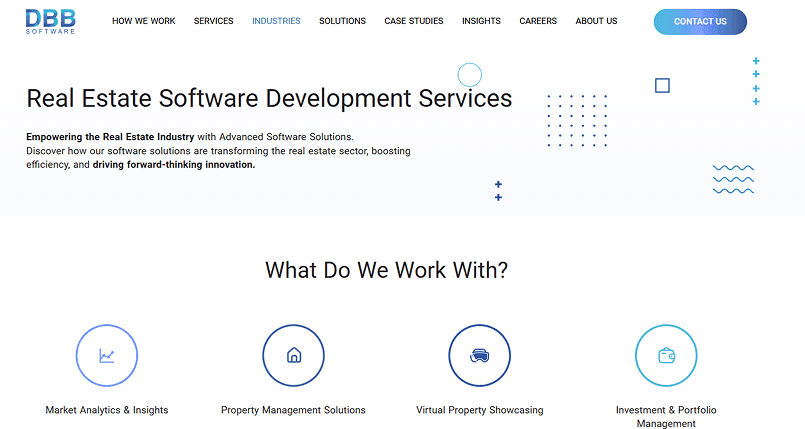
In real estate software development, DBB Software creates solutions that address core market challenges. Their experience covers creating systems that handle everything from property data management to client engagement portals, backed by modern technologies. Through their pre-built real estate component platform, they deliver custom real estate solutions 50% faster while maintaining security and scalability. Their track record shows particular strength in property management platforms and market analytics tools, one of which helped their client secure substantial $5M funding for their real estate platform.
ELITEX
Founded: 2015
Number of Employees: over 50 employees
Headquarters: Edinburgh, UK
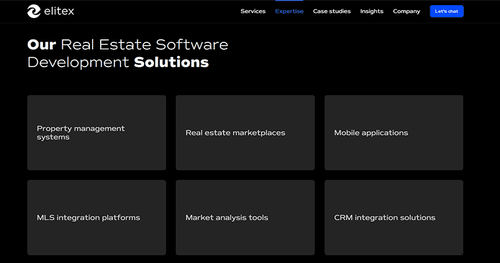
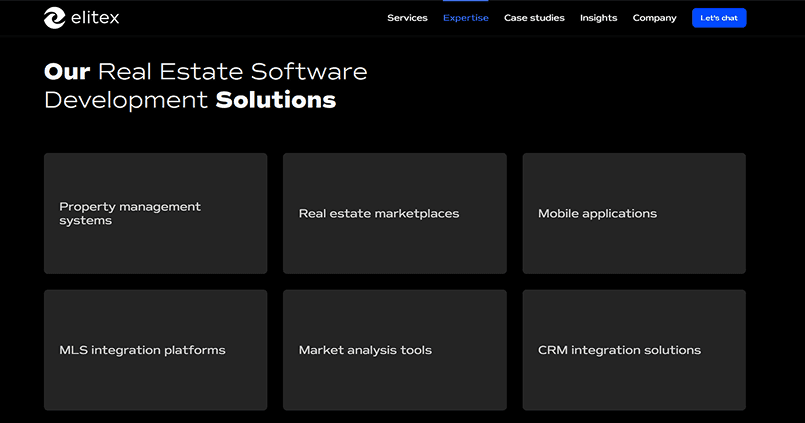
ELITEX demonstrate their industry-specific expertise through a portfolio of property management platforms. Their recent work includes developing a comprehensive SaaS solution that serves both US hotel chains and independent rental properties. This system integrates property management, powerful marketing tools, and booking features, showcasing their ability to handle complex hospitality software requirements.
The company brings a strong technical foundation to real estate projects, combining front-end development skills with a deep understanding of industry tools. Their team builds commission-free booking engines, implements native GDS integration, and creates revenue management systems. ELITEX structure their work around direct communication with senior engineers who adapt to client time zones. This approach, proven through their property management platform development experience, helps deliver solutions that match specific market needs while maintaining rapid development cycles.
Leobit
Founded: 2014
Number of Employees: over 150+ employees
Headquarters: L’viv, Ukraine
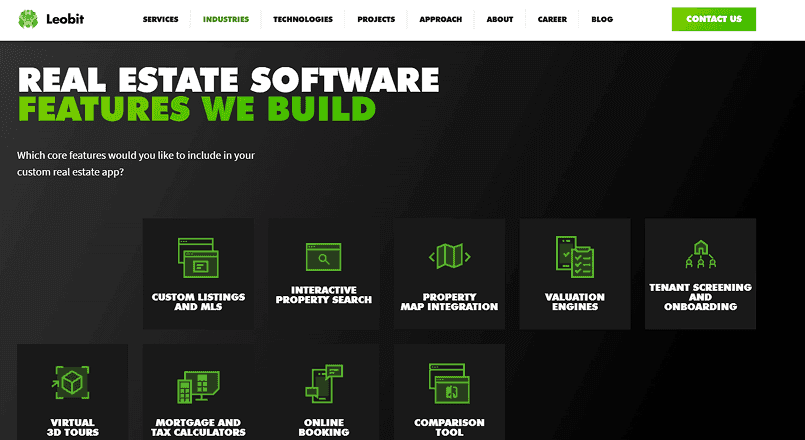
In the real estate tech industry, Leobit shows expertise through significant PropTech projects handling transactions worth $1.5 billion. Their portfolio includes a comprehensive real estate investment management platform that has facilitated $1.4 billion in property purchases and delivered 2,000+ investment wealth management plans. The company builds solutions ranging from property management systems to smart home applications, with recent projects including a dynamic real estate search portal enhanced with AWS cloud technologies. Their development approach combines artificial intelligence integration for predictive analytics with practical features like MLS integration, positioning them as specialists in complex property technology solutions.
BluePixel
Founded: 2017
Number of Employees: over 50+ employees
Headquarters: Ciudad de México, México
BluePixel showcases their capabilities through their work with Morada Uno, Latin America’s operating system for real estate brokers. They delivered a comprehensive UI/UX overhaul, including a broker platform diagnostic, design system implementation, and creation of sales materials. Their approach combines technical expertise with user research, demonstrated through stakeholder interviews and heuristic analysis by UX experts. The team excels in creating consistent design systems and brand guidelines that help companies maintain professional standards across their digital platforms.
Jelvix
Founded: 2011
Number of Employees: over 100+ employees
Headquarters: Tallinn, Estonia
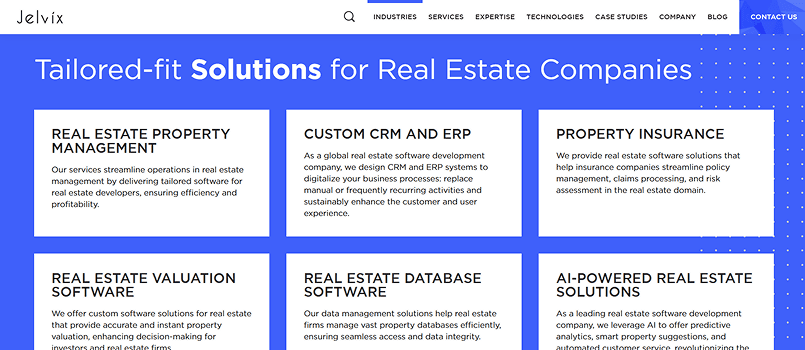
For real estate professionals, Jelvix delivers solutions that streamline property operations. Their recent work with Tiber Capital showcases their capabilities - they built an underwriting system that processes residential properties in under ten minutes and created a construction tracking platform. The company specializes in property valuation software, database management systems, and AI-powered advanced analytics tools. Their development approach includes bi-weekly client meetings and flexible scaling options, helping real estate teams adapt to market changes while maintaining project momentum.
IIH Global
Founded: 2013
Number of Employees: over 100+ employees
Headquarters: Hertfordshire, England
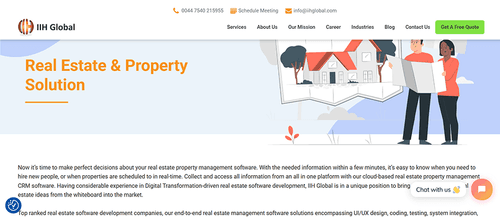
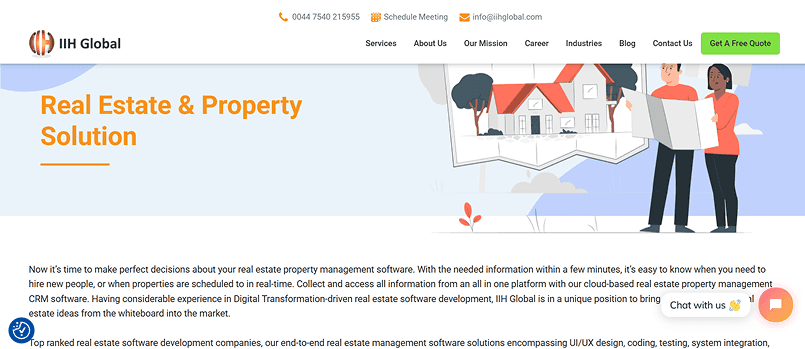
For real estate professionals, IIH Global creates custom applications that streamline business operations. Their portfolio includes the recent development of a comprehensive booking & payment platform for VIP Concierge Groups, demonstrating their ability to transform manual processes into digital workflows. The company specializes in building mobile applications with integrated payment systems, real-time tracking features, and user-friendly interfaces for online platforms. Their development process includes regular face-to-face meetings with project managers while maintaining quick response times for changes and updates.
Anadea
Founded: 2000
Number of Employees: over 100+ employees
Headquarters: Alicante (Alacant), Spain
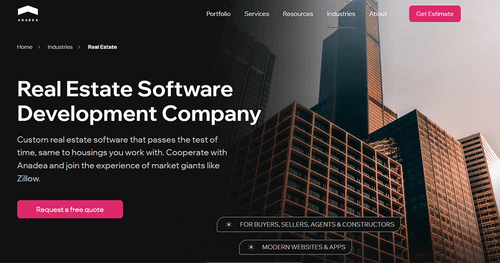
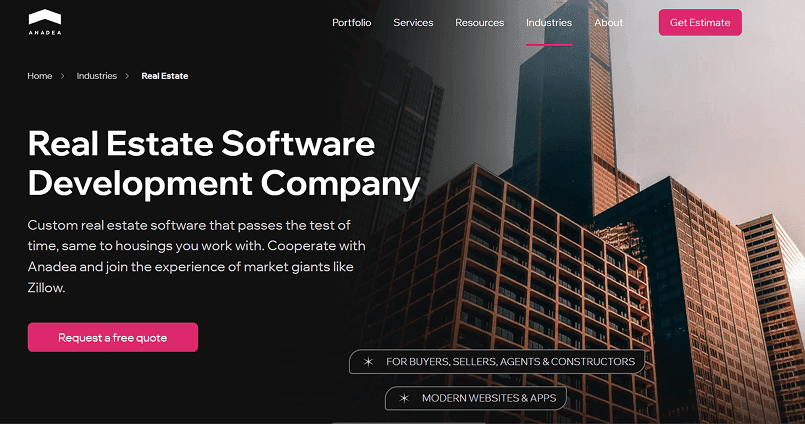
Anadea transforms property operations through specialized software for real estate investors and professionals. Their recent work with StreetEasy, which expanded six-fold since 2009, showcases their ability to build and scale major platforms. The company creates solutions for every aspect of real estate business - from MLS integration and property management to valuation tools and investment analytics. Their recent projects also include ListingDoor for broker-free sales and Agentfolio for real-time collaboration between real estate agents and their clients.
Imaginary Cloud
Founded: 2010
Number of Employees: over 90+ employees
Headquarters: London, England
For real estate companies, Imaginary Cloud builds custom platforms that streamline property operations. Their recent work with Invisible Homes showcases their ability to transform struggling platforms: they improved the codebase quality and user experience, helping the client grow to over 35,000 registered users. The company creates solutions across the property sector, from marketplace platforms and smart building systems to valuation tools and location analytics software. Their development approach combines technical assessment with user research, ensuring platforms meet both business goals and user needs.
TeaCode.io
Founded: 2017
Number of Employees: over 90+ employees
Headquarters: Warszawa, Poland


Among real estate technology companies, TeaCode demonstrates their impact through projects like Buzzin, a building access platform that saw 232% annual user growth. Their solutions span the property sector, from visual house configurations for Hocomo to virtual tours and property management systems. The company builds custom tools for both short and long-term rentals, including booking systems, tenant portals, and maintenance tracking platforms. Their development approach combines AI integration with practical features like secure payment systems and document automation.
Aionys
Founded: 2016
Number of Employees: over 65+ employees
Headquarters: Sofia, Bulgaria
A wide range of real estate solutions showcases Aionys’ expertise through several landmark projects. They created a luxury property platform with 3D virtual tours for a European real estate agency, developed a smart home system for utility management with Digital M.O.B., and built a community management platform for an elite cottage village. Their solutions span from automated meter readings and payment systems for real estate transactions to separate security features and resident communication tools. The company specializes in AR/VR solutions, combining web and mobile development with Unity-based virtual property tours.
Also read our top hospitality custom software development companies.
Understanding PropTech Product Companies
The real estate technology market includes both custom development service providers and product companies that build standardized platforms. While the companies above create custom solutions for individual businesses, another category of PropTech firms operates consumer-facing products that shape how millions of users interact with properties.
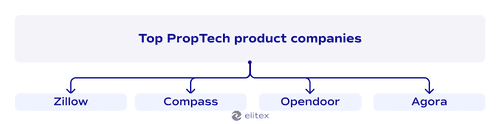
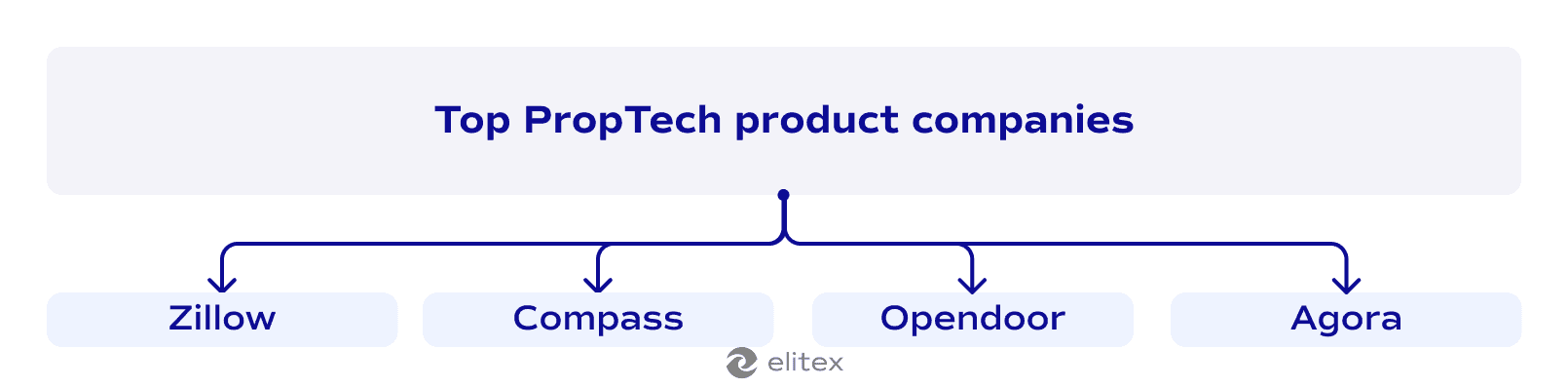
Product companies like Zillow, Compass, Opendoor, and Agora built platforms that serve end users directly. Zillow dominates online property search with its listing database and home value estimates. Compass equips real estate agents with transaction management and marketing tools. Opendoor pioneered the iBuying model, purchasing homes directly from sellers through algorithmic pricing. Agora provides fintech infrastructure for real estate investors, managing everything from fundraising to compliance reporting. These companies compete in the real estate market itself rather than serving as technology vendors.
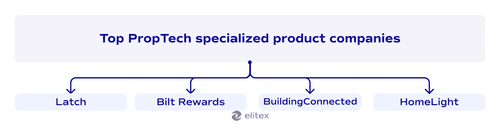
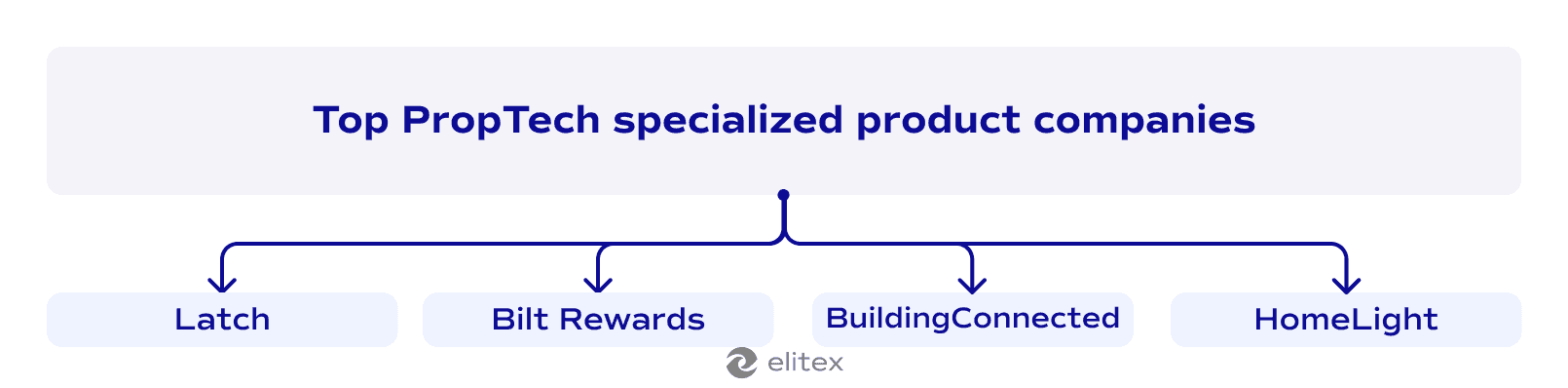
Specialized platforms address specific market segments. Latch creates smart-lock systems that integrate with property management software. Bilt Rewards transforms rent payments into loyalty points. BuildingConnected manages construction bids through cloud-based procurement. HomeLight matches agents with potential clients using performance data.
The distinction matters when choosing technology partners. Product companies offer ready-made solutions with established user bases and quick implementation timelines. Development service providers build exclusive capabilities that match your specific business model. Some real estate businesses use both approaches, relying on established platforms for standard functions while commissioning custom development for competitive advantages.
Future of real estate software development
As we can see from recent years, real estate software development is shifting toward cloud-based platforms, more automation, and data-driven solutions. Companies need tools that can process large amounts of property data, handle complex transactions, provide advanced analytics, and give users quick access to market insights. New technologies like machine learning and blockchain add upfront development costs but enable valuable features like instant property matching and secure digital transactions. The push for mobile-first development and API integration means real estate technology companies must rethink how they build and maintain software solutions.
Here are some additional changes we would expect to happen in the near future:
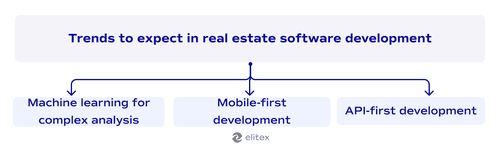
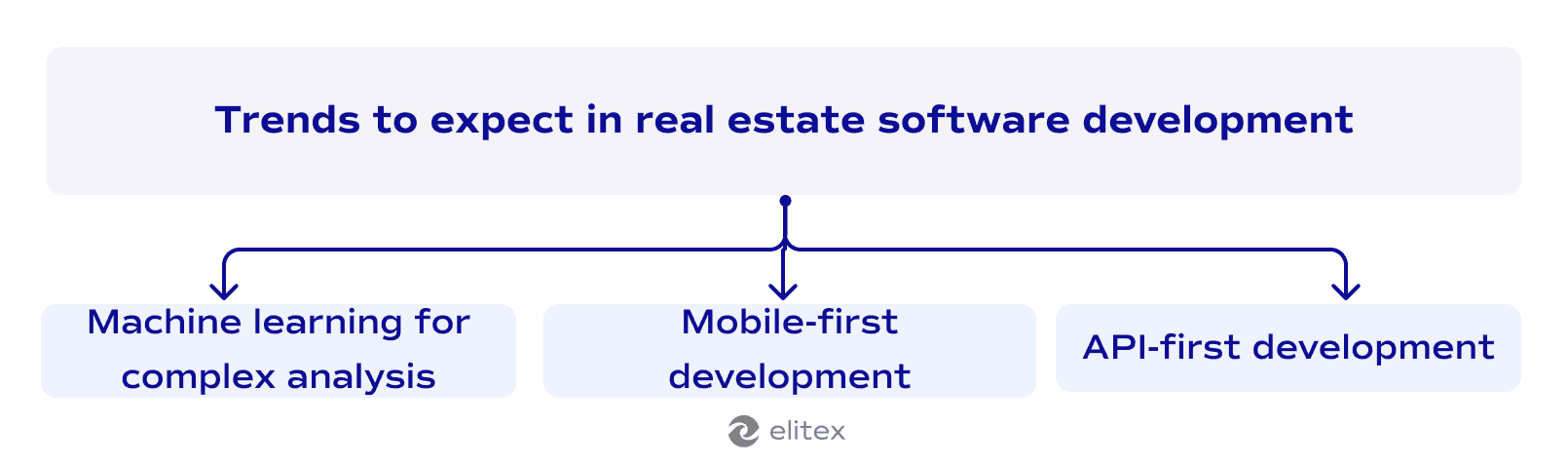
- Machine learning will transform property valuation and market analysis. The software will use data from multiple sources to predict property values and market trends with better accuracy than traditional methods. This will help agents price properties more effectively and give buyers deeper market insights.
- API-first development will become standard practice for real estate software companies. Developers will build modular systems that connect with other platforms through APIs, making it easier to add new features and integrate with third-party services. This approach will eventually cut development time and costs.
- Mobile-first development with offline capabilities will take center stage. Real estate apps will work smoothly on mobile devices even without internet access, syncing data when connection returns. This shift reflects how agents and clients prefer to access property information and complete real estate transactions.
The impact of real estate software development companies on your business growth
Want to learn how custom software can boost your real estate business? Let’s explore solutions that match your needs and budget. Talk to real estate software development company experts who understand property market demands and can build systems that grow together with your business. Book a free consultation and see how a partnership with a reliable software development partner transforms your business!
FAQ about real estate tech companies
What services do top real estate tech companies offer?
Well, this question has several answers. Most real estate software development companies offer legacy system modernization, custom software development, mobile development, and web development. Usually, the collaboration can be conducted in several models, such as end-to-end product development, a dedicated team, or staff augmentation. At the same time, when it comes to the type of software they offer, the range of services includes property management platforms, virtual tours, transaction systems, market analytics tools, mobile apps, etc.
How do I choose the right company from top real estate software development companies?
Check their track record, study property-related projects in their portfolio, and evaluate how well they understand real estate operations and compliance rules. Always look for companies that combine technical skills, soft skills, and market knowledge.
What makes real estate technology companies stand out from regular software developers?
Due to their vast experience in this realm, real estate technology companies know the property market inside out, understand specific industry workflows and ensure the reliability of the work the individual software development cannot match.
How much do real estate software development companies charge?
Costs for the typical development project in real estate vary from $20,000 for basic solutions to $500,000+ for complex platforms, depending on the features required and the scale of the application.
What support do real estate tech companies provide after launch?
Most real estate software development companies offer 3-6 months of bug fixes, updates, and technical support, with options for extended maintenance plans.
POSTED IN: