



Continuing our series on real estate software development subject, let’s explore one of the most sensitive aspects of the entire journey - project investment. In our previous article, we explored all the nuances of the real estate application development process. Now, let’s focus on understanding the budget of real estate development projects.
From luxury apps that help millionaires find dream homes to basic BNB-like rental platforms and real estate CRM development, each real estate project follows distinct pricing patterns. The market shows wide ranges: $50,000 can launch a very basic service, while big enterprise solutions often exceed $500,000. These numbers reflect way more than just the cost per hour*development time, they show how investment choices shape a product’s potential to attract and retain users. Bold statement? Let’s figure it out together!
Real Estate App Development Cost in 2026
Just like in our previous article, we’ll examine two basic scenarios: mobile applications for property search and full-scale property management platforms.
Let’s begin with small things. In our cases, the entry point differs markedly: mobile solutions launch at $50,000 with minimalist interfaces and listing features, while property management platforms command a $70,000 minimum to handle the fundamental tasks of leases, maintenance, and tenant relationships.
Remember that we are speaking about products with basic features without any unnecessary complexity. Thus, we don’t recommend you guide by $50,000-$70,000 price in case you think about developing your own product. These numbers represent basic MVP price tags rather than the market-ready products. To build a competitive solution that can truly capture market share, businesses should expect to invest significantly more.
But how much more?
Well, today’s successful real estate software demands substantial investment in both features and infrastructure. While basic mobile apps offer property galleries and basic search functions, market leaders need complex functionalities, such as virtual tours, smart AI recommendations, or seamless communication tools to gain an edge compared to actual competitors. Similarly, successful management platforms require robust automation, detailed analytics, and integration capabilities that far exceed MVP functionality. Competitive solutions typically start at least at $150,000 for mobile apps and $200,000 for management platforms, reflecting the resources needed to build software that stands out in today’s crowded market.
First of all, let’s examine what shapes the development budget. While each project is unique, our experience shows that development costs follow clear patterns based on project goals, technical choices, and business requirements.
Key drivers of real estate app development cost
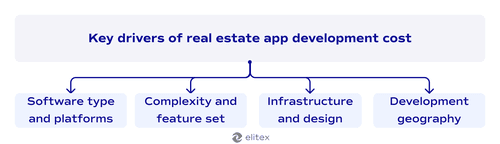
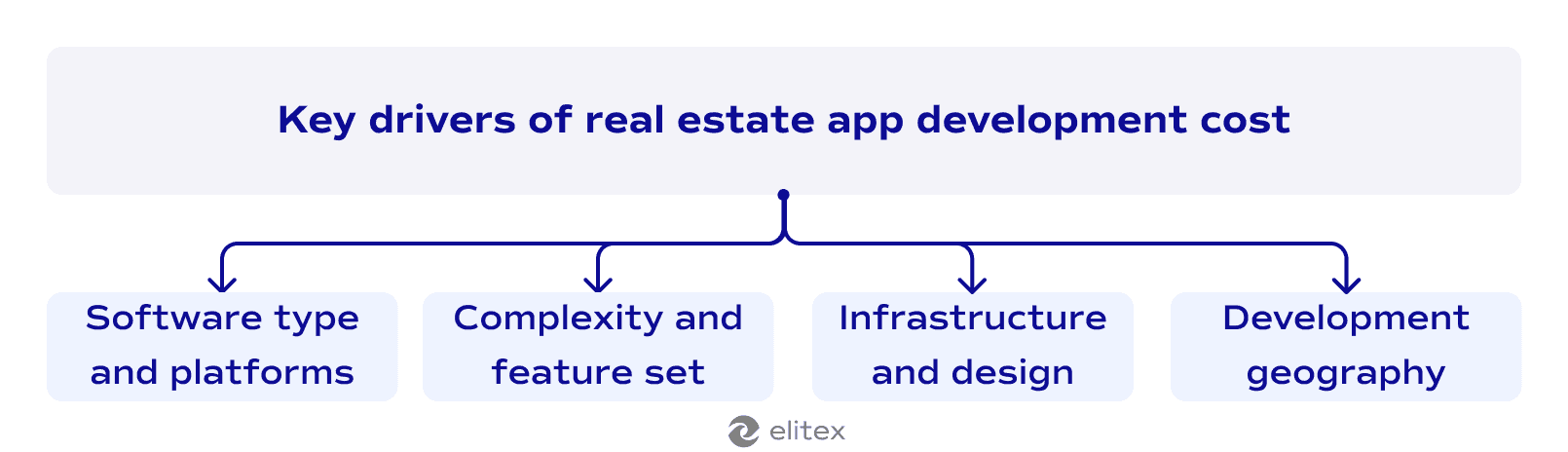
From our practice, there are 4 main factors impacting the project’s cost:
Software type and chosen platforms
The choice between mobile and web platforms fundamentally shapes the development approach. Mobile apps leverage established patterns and components, reducing initial development time but requiring platform-specific optimization. Native development for iOS and Android separately can double the cost compared to cross-platform solutions.
Web-based management platforms demand more complex architecture and extensive back-end development, increasing the initial investment. The platform choice also affects long-term maintenance costs—native apps need regular updates for new OS versions, while web platforms require ongoing browser compatibility testing.
Complexity and feature set
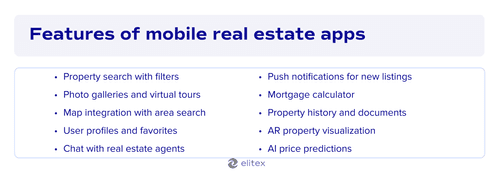
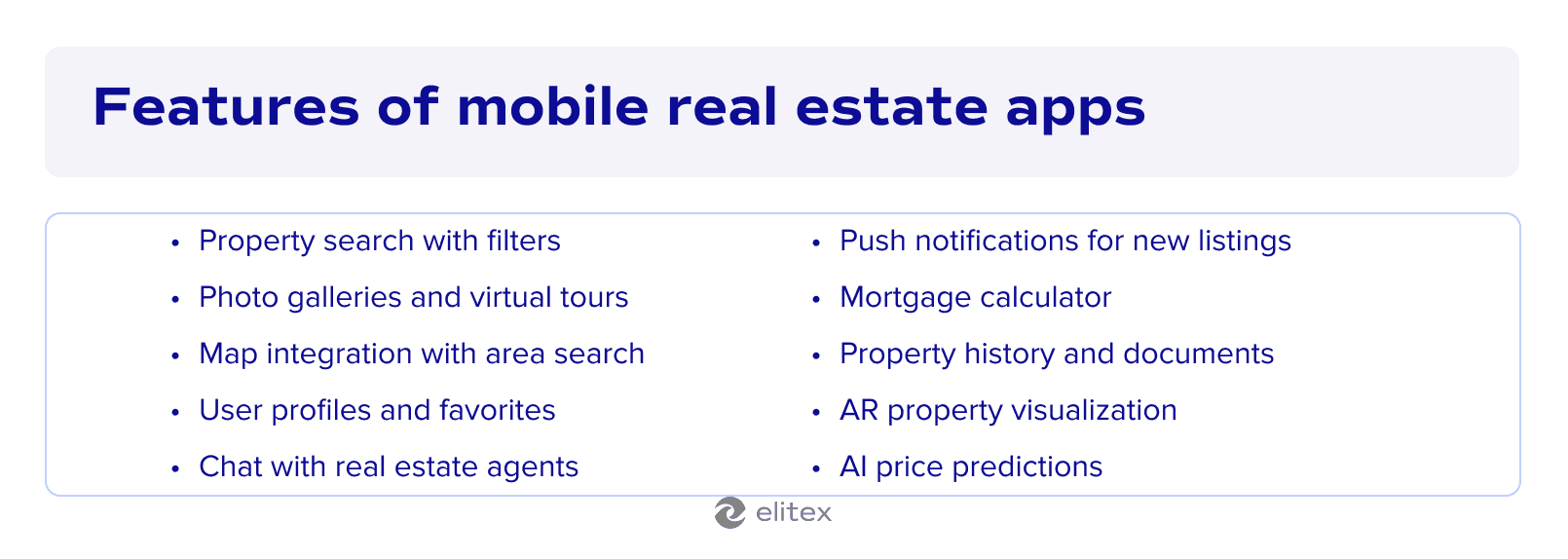
Feature selection drives both development time and technical complexity. Basic features like property search and user profiles form only the very foundation of a successful app, consuming 20-30% of the budget. Advanced capabilities typically push the cost of mobile app development for real estate higher: virtual tours require specialized development skills and increase storage costs; AI recommendations need data scientists and ongoing model training; automated workflows demand careful business process analysis and custom development. Each premium feature adds $15,000-50,000 to the project cost, but the return on investment varies.
Of course, this statement works for both mobile app development and web-based property management systems.
Technical foundation and infrastructure
Beyond development hours themselves, projects need ongoing investment in cloud services, security measures, and third-party integrations. Monthly operational costs range from $1,000 (for MVPs) to dozens of thousands of dollars depending on user load and data complexity. On average, expect at least $3,000-4,000 monthly for a full-fledged project with active traffic.
Development geography
The location of your development team significantly impacts the budget. North American and West European development teams charge $150-200 hourly, bringing local market knowledge and timezone alignment but at premium rates. Eastern European teams ($50-80/hour) provide strong technical skills at moderate rates, while Asian developers ($30-50/hour) offer the most competitive pricing. However, geography affects more than hourly rates: communication overhead, cultural alignment, and project management complexity all vary by region.
How software and platform types impact the price
Now, let’s look at the real estate app development cost in more detail. As we said before, native real estate mobile apps are the most expensive solution. The basic native apps with separate iOS and Android development will probably cost around $150,000-200,000 with only very essential features involved. On the one hand, this solution is more expensive at its core as it requires extra development hours, but on the other hand, it allows your app to deliver some features seamlessly, for instance, maps and photo galleries. Cross-platform mobile apps using React Native or Flutter can cut costs to $90,000-120,000 while reaching both markets, though they may sacrifice some performance and features like seamless map integration.
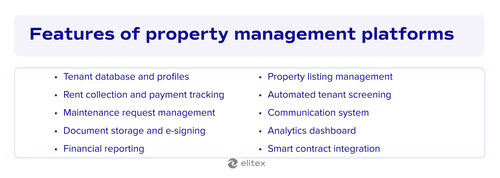
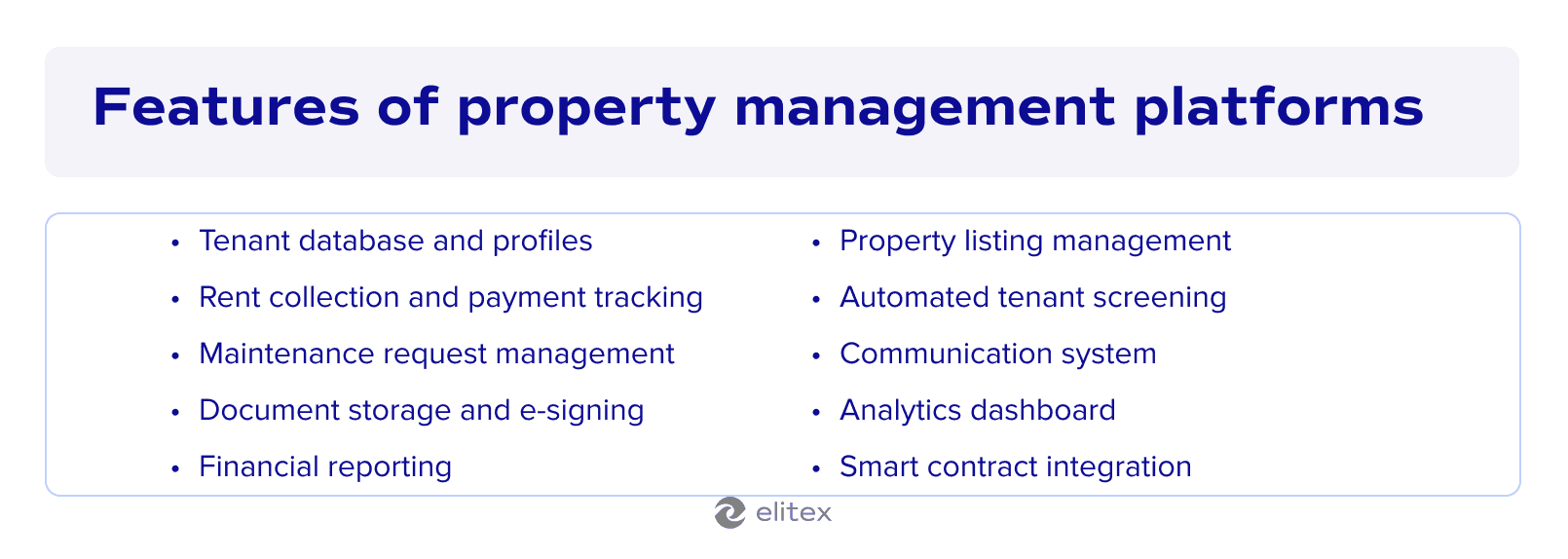
Property management platforms also follow different cost patterns based on technical choices. A full-scale web-based solution starts at $200,000 for a set of basic required features like tenant management and rent collection. These platforms need complex databases and security measures, pushing costs higher than mobile apps. A single platform managing all aspects of 1,000+ property units will probably require $250,000-300,000 in initial development. And that’s even without a desktop version! Creating a separate desktop app will likely add 30-50% to the overall project costs.
In both cases, the platform type shapes development time and team structure. For instance, single-page applications offer faster development but cost more to maintain, while traditional web platforms need more initial work but prove stable long-term. Most management platforms require 2-3 backend developers and separate frontend teams, pushing costs higher than mobile apps. Enterprise solutions with additional features like automated maintenance scheduling and financial reporting systems will likely exceed $400,000 due to complex business logic and data processing needs.
Let’s talk about additional features a bit
Also read our article about digital transformation in real estate.
However, let’s talk about the key features themselves. The logic is quite straightforward: the number and complexity of features involved directly impact development hours, and therefore, costs.
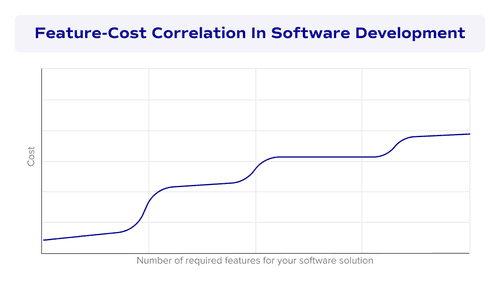
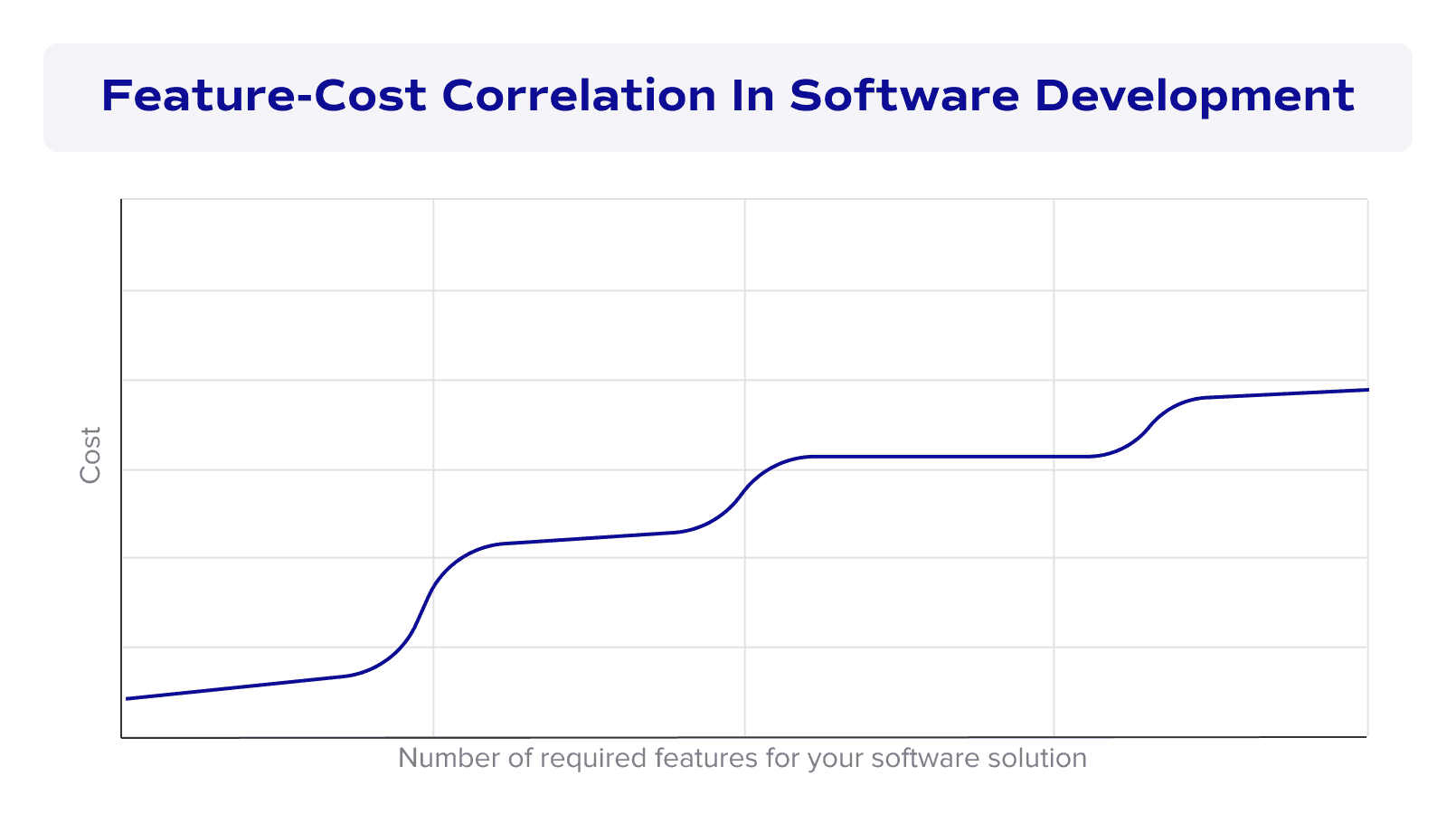
Previously we have talked about real estate application development costs that cover must-have features rather than something extra. For example, adding a virtual tour feature needs at least 80-120 hours of work: 20 hours for the frontend interface, 40 for the tour functionality, 20 for testing, and 20 for fixes. With North American or Western European rates, this feature costs $8,000-24,000, depending on team size and technical complexity.
Most mobile real estate apps focus heavily on user experience and search functionality. While must-have features like property search and basic filters form the foundation, advanced features dramatically increase user engagement. Real estate businesses invest heavily in AR property viewing, AI-powered recommendations, virtual tours, mortgage calculators with integrated AI, area analytics, voice search, and other features that allow market leaders to gain a competitive edge. Each of these advanced features requires specialized development skills and careful optimization for mobile performance, significantly impacting the overall cost of mobile app development for real estate.
Here are some ideas for additional features that can be implemented in your real estate mobile app and their cost impact:
| Feature | Development Hours | Business Impact |
| Advanced AR property tours | 150-300 | Essential for luxury properties and remote buyers; |
| AI value prediction | 250-400 | Suit well property catalogs. Helps investors and real estate agents analyze market trends and property potential; |
| Blockchain property history | 180-220 | Important for markets with ownership verification issues; |
| Virtual staging | 150-180 | Valuable for empty properties and renovation planning; |
| 3D floor plans | 120-160 | Useful for new developments and major renovations; |
| Live video tours | 120-150 | Key for international and out-of-state buyers; |
| Mortgage calculator with AI | 180-200 | Helps qualified buyers make faster decisions; |
| Area analytics | 160-180 | Critical for investment properties and relocations; |
| Voice search | 120-200 | Enhances accessibility and mobile experience. |
Property management software, in turn, focuses on automation and data processing features. Property owners often request features that reduce manual work and improve efficiency. Each automation tool requires careful planning to handle various business scenarios. While basic platforms manage leases and payments, advanced systems add financial forecasting, maintenance automation, detailed analytics, and other features that make property management easier, all adding to the final price tag.
Here are some examples of additional features for property management platforms:
| Feature | Development Hours | Business Impact |
| Predictive maintenance AI | 300-350 | Vital for large property portfolios and aging buildings; |
| Real-time portfolio analytics | 250-300 | Essential for investment firms and property funds; |
| Smart contract integration | 200-250 | Streamlines operations for large-scale leasing; |
| AI tenant screening | 180-220 | Important for high-turnover properties; |
| Market intelligence dashboards | 220-260 | Critical for competitive markets and pricing strategy; |
| Revenue optimization AI | 280-320 | Key for vacation rentals and dynamic pricing markets; |
| IoT building management | 240-280 | Valuable for modern buildings and eco-focused properties; |
| Multi-property automation | 180-220 | Crucial for property management companies with a vast portfolio; |
| Risk assessment engine | 160-200 | Important for lending decisions and investment analysis/ |
Also read our article about legacy software integration in real estate.
What is infrastructure and how can it impact real estate application development cost?
Beyond the basic number of hours*rate formula, businesses must consider infrastructure costs. Cloud architecture quality dramatically affects expenses: poor architecture can multiply costs 2-10 times compared to a well-tuned one despite appearing functional.
Cloud services from AWS, Azure, and Google Cloud charge based on usage. A growing real estate app with 50,000 monthly users needs at least $2,000 monthly for cloud servers, databases, and content delivery. Property media storage can easily add around $100 per terabyte.
Property management platforms handling 1,000+ units require robust infrastructure that may easily cost $4,000-6,000 monthly. Each property increases data volume while automated workflows boost processing needs. Large companies can see infrastructure reaching 10-20% of the total development budget.
Last but not least: How the development geography impacts the cots
Development geography shapes real estate application development costs through varying hourly rates. While US developers charge $150-200 per hour, a lot of destinations offer compelling alternatives. Here, in our guide to the best countries to outsource software development, we have a detailed review of all popular destinations. For instance, Eastern European teams command $50-80 hourly, Asian developers work at $30-50, while nearshore software development in Latin America averages $40-70/hour.
A six-month $300,000 real estate mobile app development cost with a US team might require only $120,000-150,000 when outsourced to experienced international developers.
The geographic choice affects more than just rates. US teams offer market familiarity and timezone alignment but at premium prices. Eastern European developers bring strong technical skills and cultural compatibility, while Asian teams provide the lowest rates but often face communication challenges. So, consider it when estimating your project.
Costs to build a real estate app: To wrap up
So, eventually, how much does it cost to build a real estate app? Let’s make a brief conclusion:
- MVP of mobile app with basic listings, search, filters, and photo gallery — $50,000-70,000
- MVP of property management platform with minimal functionality — $70,000-100,000
- Basic mobile app with user profiles, advanced search, maps, and agent chat — $120,00-150,000
- Basic property management platform with tenant management and automation - $150,000-200,000
- Full-featured mobile app with virtual tours, AI features, and third-party integrations — $250,000+ (plus $20,000-$30,000 for each advanced feature);
- Enterprise property management system with complete automation — $300,000 (plus $20,000-$30,000 for each advanced feature).
Hidden costs to consider when estimating the cost to build a real estate app
When we were talking about the main factors of real estate application development cost, we didn’t mention several indirect expenses that impact the total investment. While development and infrastructure form the foundation, market success typically demands investment in legal compliance, user acquisition, and ongoing support services, with nothing to say about marketing.
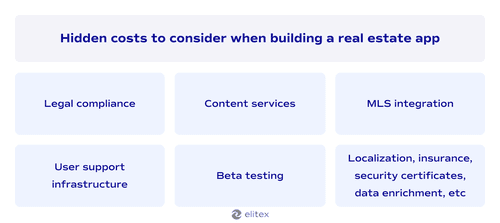
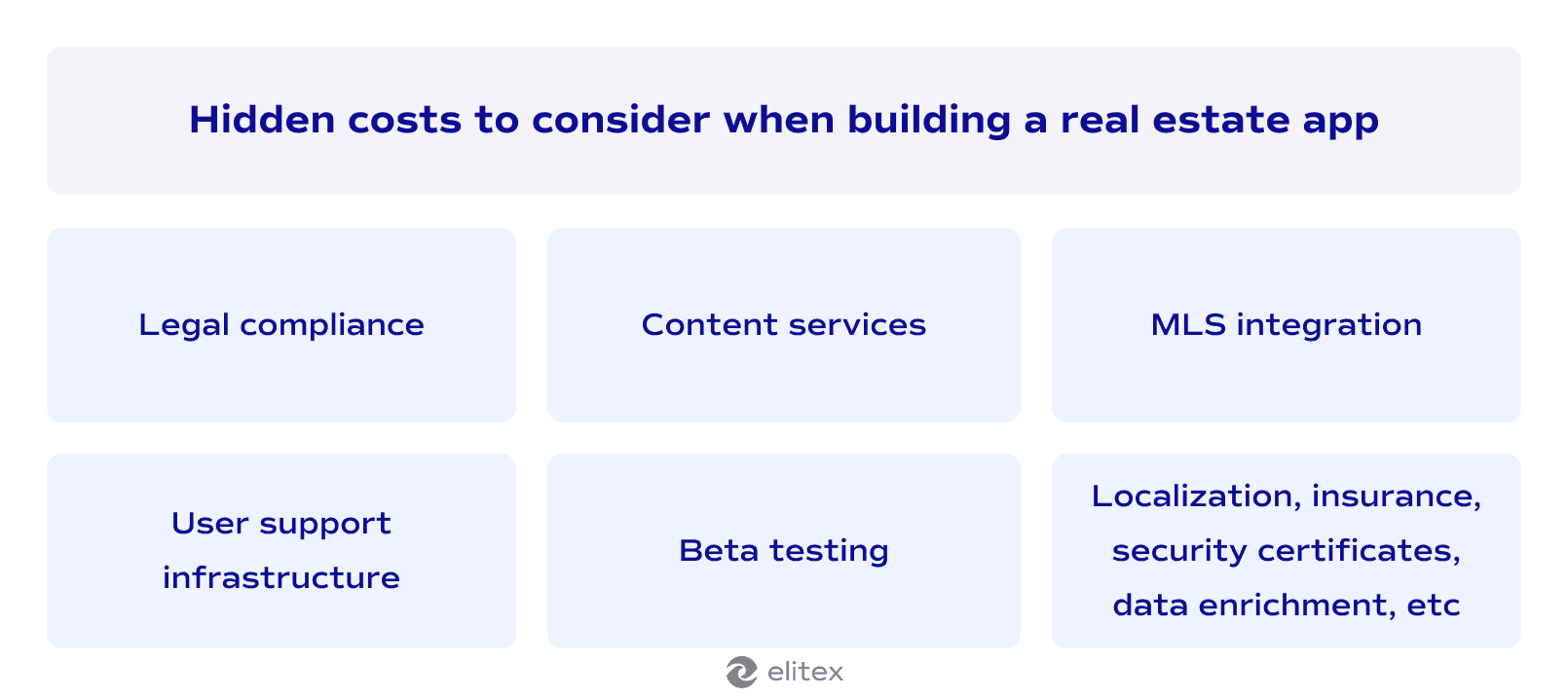
- Legal compliance: Privacy policy, terms of service, cookies, CCPA & GDPR compliances, etc (can easily cost $400-2000/month);
- Content services: Property descriptions, area guides, SEO optimization ($1,000-2,000 monthly);
- MLS integration: Real estate listing database access ($100-1,000 per region);
- User support infrastructure: Ticketing systems, chatbots, etc ($300+ monthly);
- Beta testing: User feedback and bug detection ($3,000+);
- Other nuances include localization, professional insurance, security certificates, professional insurance, data enrichment, etc. (costs vary).
Tips to reduce real estate app development costs
Developing software solutions for the real estate market often offers several ways to optimize costs through smart technical decisions. Our experience shows that strategic choices in development approach and technology stack can reduce project costs by 30-50% without compromising quality. The key lies in efficient resource use rather than aggressive cost-cutting. Here are key optimization strategies:
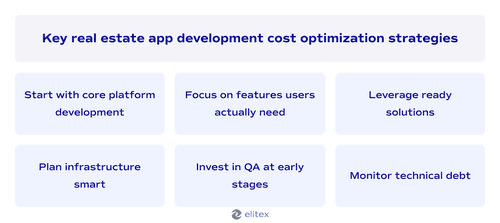
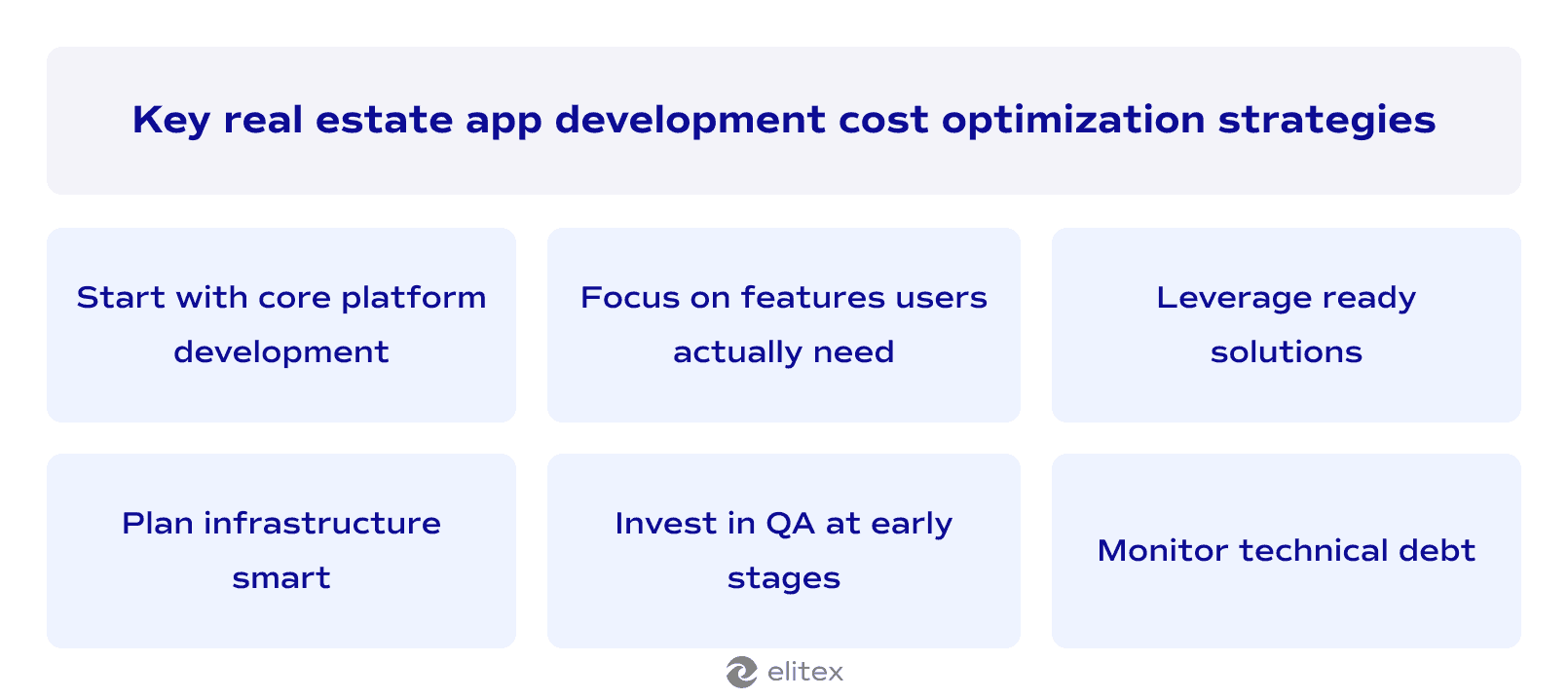
- Start with the core platform: Build foundation features first - search, listings, and basic profiles. Test these core functions with real users before adding complexity. This approach validates your business model while keeping initial costs low.
- Choose features users need: Research target audience pain points before development starts. Focus on solutions that address common user problems. Skip trendy features that don’t serve your market’s needs.
- Leverage ready solutions: Use existing APIs for maps, payments, and authentication. Third-party services often work better than custom solutions. This cuts development time and reduces future maintenance.
- Plan infrastructure smart: Start with basic cloud services that match your current needs. Set up auto-scaling to handle traffic spikes without overpaying. Monitor usage patterns to optimize resource allocation.
- Invest in QA: We have a separate article regarding why businesses need reliable quality assurance. In a nutshell, regular testing catches code problems before they grow expensive. To reduce testing quality, you can reduce the amount of manual testing and build automated tests. Regular code reviews ensure maintainable solutions.
- Monitor technical debt: Choose clean architecture over quick fixes. Regular code maintenance prevents growing support costs. Small fixes now prevent major rebuilds later.
In-house vs. outsourcing development: Choosing the best path for your real estate app
However, one of the most interesting points to cut development costs is outsourcing. Almost every software development project faces this choice at some point, that’s not only about the real estate sphere. And here, the key to success here lies in balancing control, costs, and development speed. Here’s our full guide on real estate software development tech companies.
On the one hand, building an in-house team offers direct control. But it demands patience. Companies spend 3-6 months assembling a team, invest in office space and equipment, and commit to long-term employment costs. A basic 5-person team in the US can easily take $750,000 annually—yet this investment builds internal expertise and market knowledge that grows with each new feature and new project.
On the other hand, the outsourcing path trades some control for speed and flexibility. Teams start within weeks instead of months, scale based on project needs, and often cost 40-60% less than local development. Success hinges on partner selection rather than hourly rates—the best collaborations emerge from shared quality standards and communication practices, not just attractive pricing.
| Factor | In-house | Outsourcing |
| Time to launch the development process | 3-6 months | 2-4 weeks |
| Annual cost (5-person team) | $500,000-750,000 | $150,000-450,000 |
| Control | Direct, immediate | Through managers |
| Knowledge | Deep market expertise | Varies by partner |
| Flexibility | Fixed team size | Scale as needed |
| Focus | Your product only | Varies by partner |
| Team growth | Build company asset | Partner-dependent |
| Technology stack | Limited by team skills | Wide tech expertise |
| Global expertise | Limited to local talent | Access to diverse skills |
While outsourcing offers significant cost advantages, success depends heavily on partner selection. Development teams must share your quality standards, match communication styles, and bring relevant technical expertise. The best partnerships balance cost savings with reliable delivery—look for proven real estate experience, strong technical standards, and established project management processes rather than focusing solely on attractive rates.
Looking for the cost breakdown for your real estate app?
Ready to build your real estate app? Contact ELITEX for a detailed breakdown of the development cost of the real estate app and further technical consultation. Our team will analyze your requirements and provide a clear development roadmap tailored to your business needs. Let’s discuss your project.
How can ELITEX help with real estate app development?
ELITEX have built a strong portfolio in real estate software development, with a last standout case of a US-based hotel management SaaS platform. Our team helped create a comprehensive system that combines property management, booking engines, and channel management in one place. The project showcases our ability to handle complex features, from revenue management to GDS integration, while maintaining strict security standards and performance requirements. Also, our engineers solved one of the most critical outsourcing challenges by shifting schedules to match US time zones, ensuring real-time collaboration with our clients.
Whether you need to expand your existing team or build from scratch, we adapt to your needs. From initial discovery to launch, ELITEX provide end-to-end real estate software development services. Our teams handle requirement analysis, UI/UX design, development, testing, and deployment phases. We work closely with our clients to define optimal tech stacks and development approaches that match real business goals and implement what’s really important for your success.
FAQs
What is the typical real estate application development cost?
Basic apps start at $50,000-70,000 for MVP versions. Full-featured solutions range from $150,000 to $300,000 depending on complexity and features.
How does platform choice affect the cost of building a real estate app?
When it comes to mobile development, native solutions for iOS and Android separately cost $150,000-200,000. Cross-platform solutions developed with React Native and Flutter can reduce costs to $90,000-120,000 but offer worse performance.
What real estate mobile app development costs up the most?
Advanced features like AR tours, AI recommendations, and virtual staging add $15,000-50,000 to the final price each. Infrastructure and cloud services can also add $2,000-5,000 monthly.
How can businesses reduce real estate application development costs?
Start with core features and add premium ones based on user feedback. Use ready-made solutions for standard functions like authentication and payments.
What impacts the cost of mobile app development for real estate beyond coding?
Legal compliance, content creation, and user support can easily add $3,000-5,000 monthly. MLS integration and security measures also typically require extra investment. Also, don’t forget about infrastructure and third-party integration expenses.
POSTED IN: