



- TL;DR: In this article, we break down how continuous compliance monitoring works and what it takes to implement it effectively.
- Continuous compliance monitoring is the practice of automatically verifying that your infrastructure meets regulatory and security requirements in real time, rather than through periodic audits.
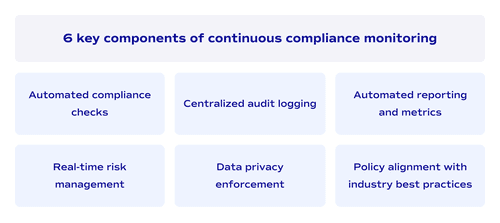
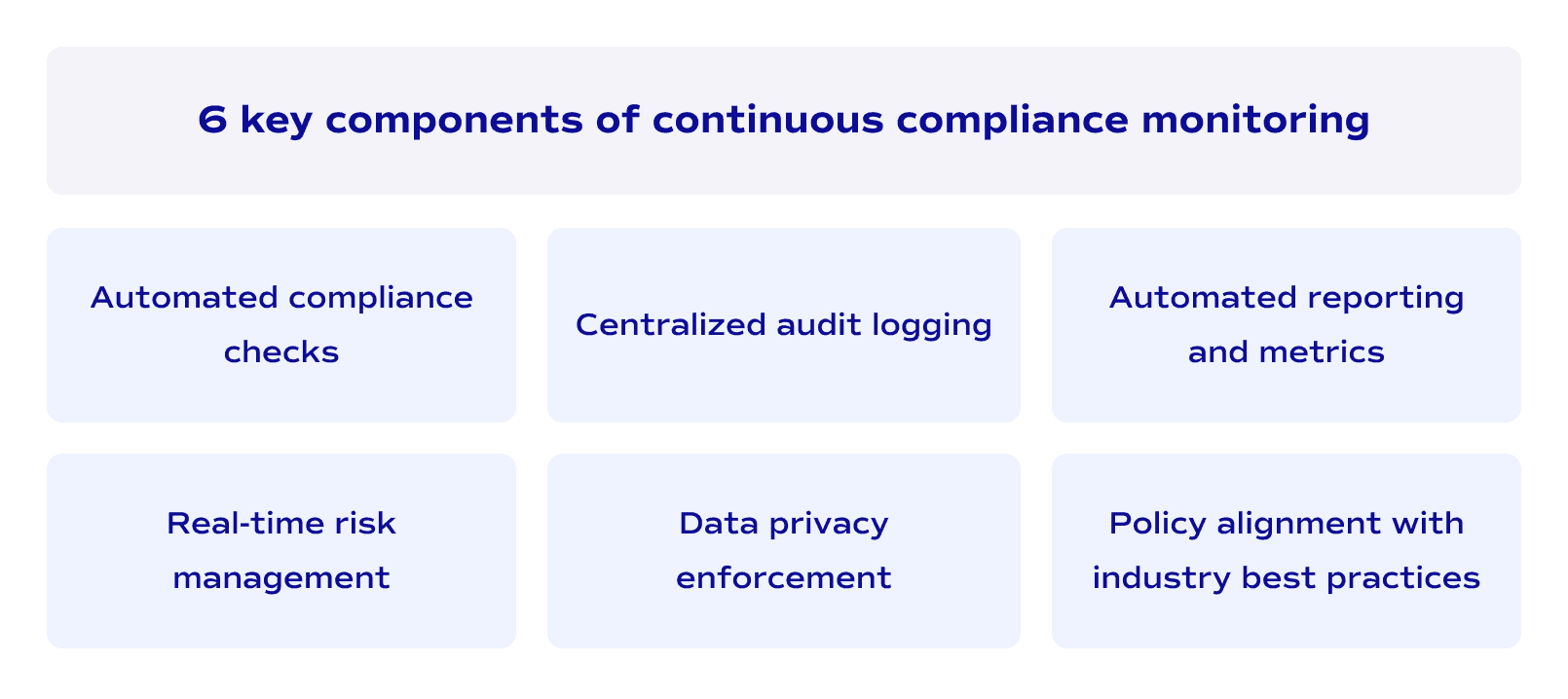
- It consists of six core components: automated compliance checks, real-time risk management, centralized audit logging, data privacy enforcement, automated reporting and metrics, and policy alignment with industry best practices.
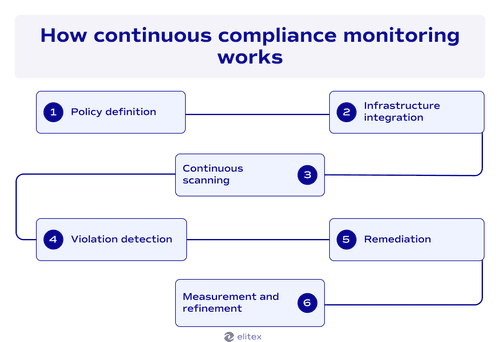
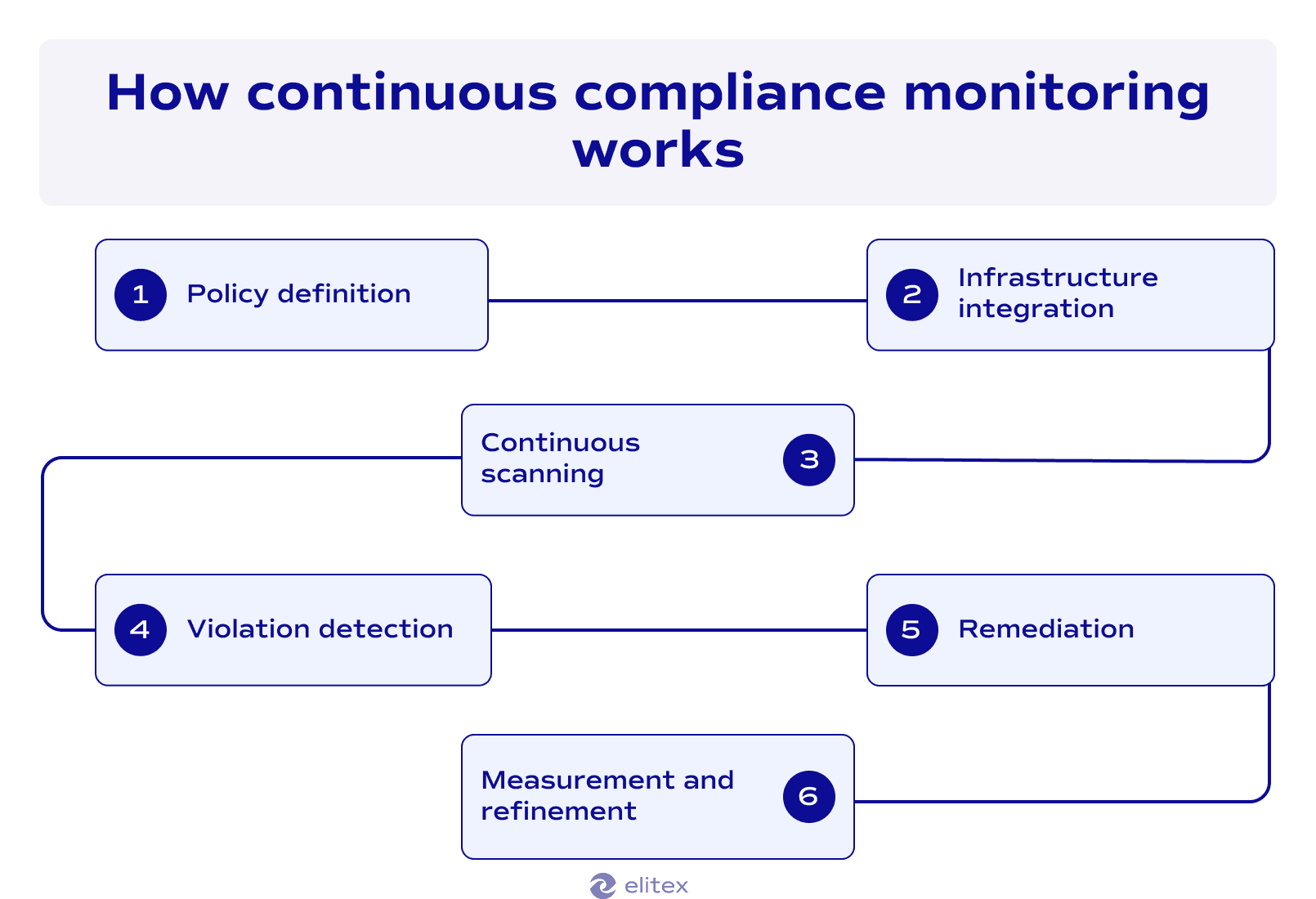
- The monitoring process follows a six-step cycle: policy definition, infrastructure integration, continuous scanning, violation detection, remediation, and measurement.
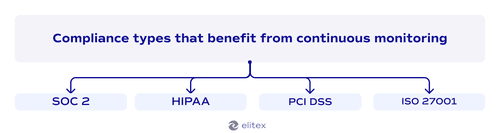
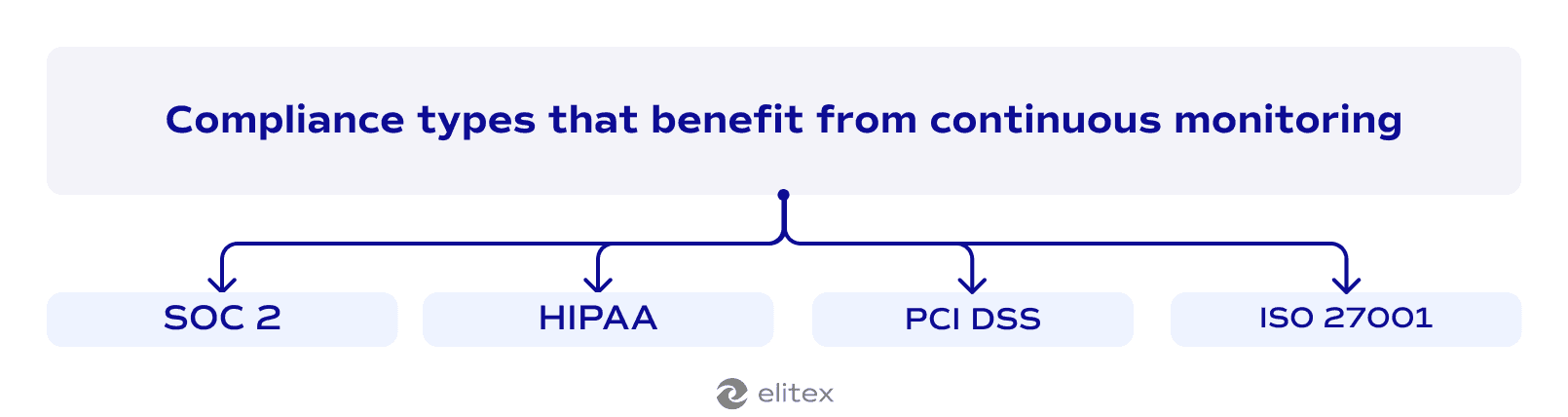
- Four major compliance frameworks benefit from continuous monitoring most: SOC 2, HIPAA, PCI DSS, and ISO 27001.
- We also cover several professional tools worth evaluating, seven common challenges with best practices to overcome them. Additionally, as a bonus, at the end, we cover a lifehack on the easiest way to build automated compliance monitoring from scratch.
Not so long ago, passing an audit once a year used to be enough. You'd spend weeks gathering evidence and then survive the review, only to forget about compliance until the next cycle. That approach made sense when infrastructure changed slowly and compliance frameworks had fewer teeth. But modern cloud environments shift daily. New deployments and configuration changes happen faster than any quarterly review can catch. So by the time auditors arrive, the compliance posture they evaluate is already outdated. Continuous compliance monitoring solves this by replacing periodic snapshots with real-time oversight that tracks your regulatory standing as your infrastructure evolves.
This guide breaks down how continuous compliance monitoring works and where most teams struggle with implementation. All that you’ll read today is built on over ten years of our hands-on experience at ELITEX, a DevOps automation services and solutions provider that has spent the past decade helping companies in hospitality, healthcare, fintech, e-commerce, scientific publishing, and other regulated industries keep their systems audit-ready without slowing down delivery. So, without any further ado, let’s go!
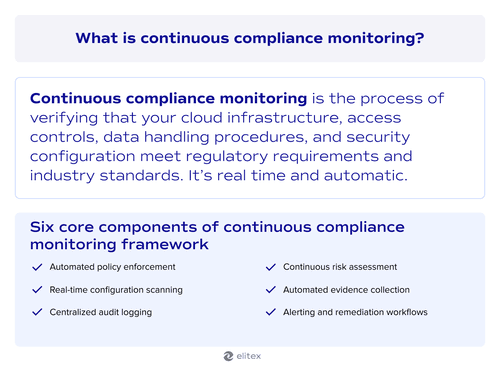
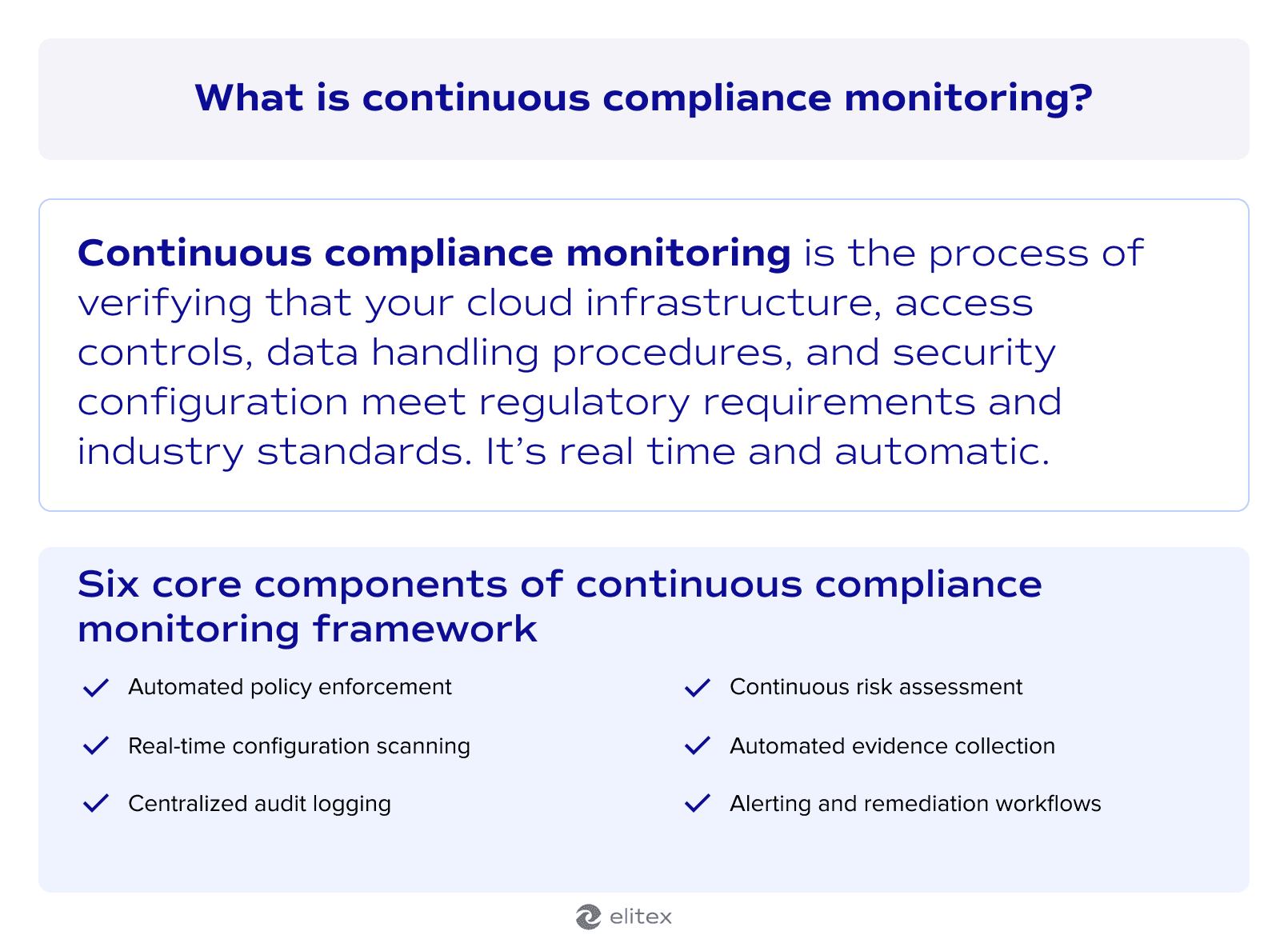
What is continuous compliance monitoring?
First, let's answer what is compliance monitoring. Compliance monitoring is the process of verifying that your cloud infrastructure, access controls, data handling procedures, and security configuration meet the regulatory requirements and industry standards that apply to your business. Think of it as a health check for your organization's legal and operational obligations.
Continuous compliance monitoring is the practice of performing that same verification automatically and in real time, rather than through periodic audits. It tracks your compliance posture in real time, flagging violations as they happen rather than months after the fact. So instead of proving compliance once a year, you maintain it every day.
Continuous vs. traditional compliance monitoring
The difference between traditional and continuous compliance comes down to timing. Traditional approaches catch compliance issues after they've already caused damage. Continuous compliance approach catches them the moment they appear. Here's how the two approaches compare across the areas that matter most:
| Aspect | Traditional compliance monitoring | Continuous compliance monitoring |
| Frequency | Periodic audits (annual, quarterly) | Real-time monitoring, 24/7 |
| Detection speed | Compliance issues surface weeks or months after they occur | Violations flagged within minutes of occurrence |
| Evidence collection | Manual gathering before each audit cycle | Automated, ongoing collection with audit-ready logs |
| Policy enforcement | Teams manually verify adherence to internal policies | Automated security checks validate internal policies continuously |
| Infrastructure visibility | Point-in-time snapshots of system state | Full DevOps observability across live environments |
| Remediation | Reactive fixes after audit findings | Proactive remediation triggered by real-time alerts |
| Audit readiness | Weeks of preparation before each review | Always audit-ready with up-to-date documentation |
| Scalability | Becomes harder as infrastructure grows | Scales together with infrastructure as a part of the comprehensive infrastructure automation process |
| Cost pattern | Large periodic expenses during audit seasons | Steady operational cost distributed over time |
Importance of continuous compliance monitoring
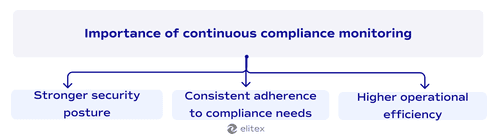
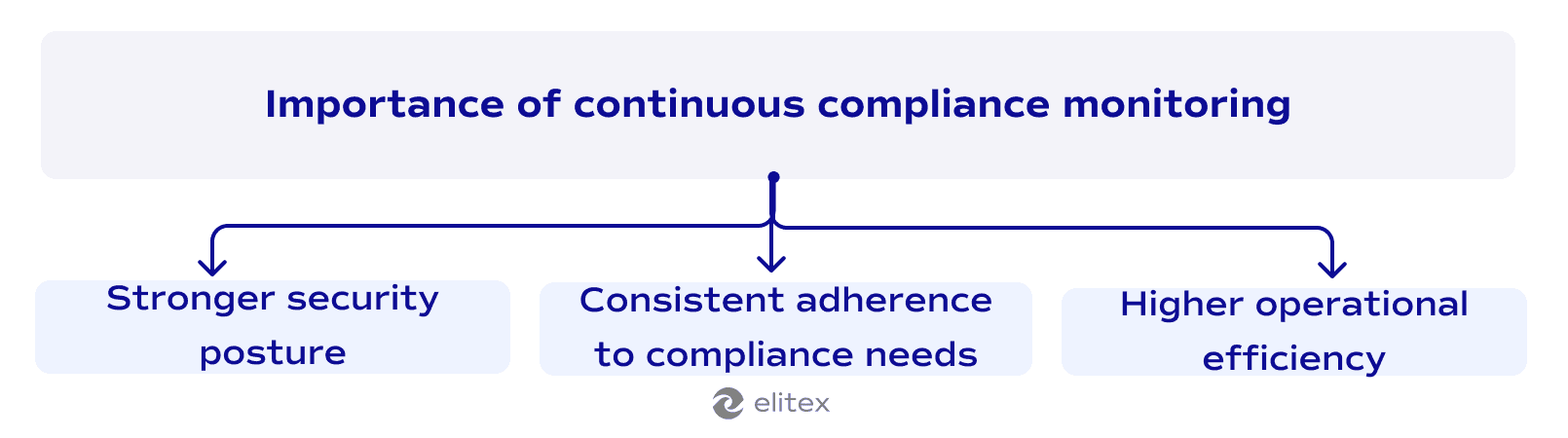
Stronger security posture. Continuous compliance monitoring benefits your security posture by eliminating the blind spots between audits. Automated systems are designed in a way that when a misconfiguration or access violation happens at 2 AM on a Saturday, you'll know about it before attackers do.
Consistent adherence to compliance standards. Regulations like HIPAA and PCI DSS don't pause between audit cycles, and neither should your monitoring. Continuous oversight makes sure your infrastructure stays aligned with compliance standards every day, not just during review windows.
Higher operational efficiency. Manual audit preparation eats up engineering hours that could go toward product work. Automated evidence collection and real-time policy validation give your team that time back, turning compliance from a quarterly fire drill into a background process that runs itself. That boost in operational efficiency compounds as your infrastructure scales.
Key components of the continuous compliance monitoring framework
Here are 6 core components that form a continuous compliance monitoring framework:
Automated compliance checks
Automated compliance checks scan your infrastructure against predefined rules and flag violations the moment they appear. In practice, this means the system continuously evaluates whether your S3 buckets are publicly accessible, whether database encryption is enabled, or whether IAM roles follow least-privilege principles, logging every failure with full context on which resource broke which rule and when. These checks cover everything from access permissions to encryption settings, running continuously so nothing slips through between reviews.
Real-time risk management
Effective risk management in a continuous monitoring framework means identifying threats before they escalate into data breaches. The system evaluates each configuration change and access event against your risk thresholds, then prioritizes alerts based on severity. That way, your team responds to what actually matters first.
Centralized audit logging
Every action, change, and access event gets recorded in a single, tamper-proof log. Instead of pulling evidence from CloudTrail, application logs, and identity provider records separately, the system aggregates everything into one searchable timeline that maps each event to the relevant compliance control. This transforms your audit processes from stressful evidence hunts into simple exports. When auditors ask for proof, you hand them a report rather than spend weeks digging through scattered systems.
Also, read our article about logging in microservices.
Data privacy enforcement
Data privacy rules vary across frameworks and jurisdictions, and manual tracking across all of them breaks down at scale. Continuous monitoring validates data handling practices against applicable regulations automatically, catching violations like unencrypted PII storage or unauthorized cross-border data transfers as they occur.
Automated reporting and metrics
Automated reporting replaces spreadsheets and manual summaries with dashboards that reflect your compliance state in real time. These dashboards typically surface data like pass/fail rates by framework, mean time to remediation, violation trends over time, and the number of open findings by severity. Well-defined metrics for continuous compliance monitoring give leadership a clear view of where the organization stands without waiting for the next scheduled review.
Policy alignment with industry best practices
Continuous compliance monitoring tools let you turn written compliance rules into automated checks that your infrastructure enforces on its own. So when a standard like PCI DSS releases a new version with updated controls, your team updates the rule definition in one place, and the system starts applying it across every environment automatically. No manual rollout, no room for inconsistency between staging and production.
How continuous compliance monitoring works
Continuous compliance monitoring follows a 6-step cycle that runs without interruption. Each step feeds into the next, creating a closed loop where compliance management posture improves with every iteration.
- Step 1: Policy definition. The process starts with mapping each control from applicable regulatory requirements into specific infrastructure rules. A HIPAA data protection requirement, for instance, becomes a rule that checks whether PHI databases enforce encryption at rest and restrict access to authorized roles only. The compliance team owns these definitions, but engineers review them to make sure the rules are technically enforceable.
- Step 2: Infrastructure integration. Once policies are defined, continuous compliance automation tools hook into cloud environments, CI/CD pipelines, and identity providers through APIs and agents. This integration gives the monitoring system full visibility into what's running, who has access, and how data moves between services.
- Step 3: Continuous scanning. When the system is set, it runs automated scans against policy definitions on a continuous basis. Every new deployment, every permission change, every configuration update gets evaluated against the rules defined in step one. These scans happen in near real time, not on a schedule.
- Step 4: Violation detection. When a scan detects a policy violation, the system generates an alert with full context: what failed, where, when, and how severe the exposure is. Severity scoring ensures that a publicly exposed database gets escalated immediately, while a minor tagging inconsistency lands in the backlog.
- Step 5: Remediation. Some violations trigger automated fixes. An overly permissive security group rule, for instance, can be reverted automatically. Others route to the responsible engineer with remediation instructions. Every action, whether automated or manual, gets logged as audit evidence. This is what cuts audit costs dramatically: proof of compliance generates itself instead of requiring weeks of manual collection.
- Step 6: Measurement and refinement. Dashboards and scheduled reports give leadership visibility into compliance trends over time. Tracking metrics like mean time to remediation and violation frequency by category reveals where the framework needs adjustment. This feedback loop is also where ROI of continuous compliance monitoring becomes measurable: fewer audit findings, lower remediation costs, and engineering hours redirected from compliance busywork to product development.
Compliance frameworks that benefit from continuous monitoring most
SOC 2
SOC 2 audits evaluate how well an organization protects customer data across five trust service criteria. Because SOC 2 Type II requires evidence of controls operating effectively over time, continuous monitoring generates that proof automatically. Every access event, configuration change, and policy enforcement gets logged, so the internal audit preparation shrinks from weeks to hours.
HIPAA
Healthcare organizations handle protected health information that falls under strict regulatory compliance obligations. A single misconfigured database or unauthorized access event can trigger a reportable breach. Continuous monitoring catches these violations in real time, which is critical in a world where the average cost of a HIPAA breach runs into millions of dollars. For companies building DevOps in healthcare, automated compliance scanning is the only practical way to keep pace with both deployment speed and HIPAA's strict data handling rules.
PCI DSS
PCI DSS enforces rigorous security standards for any organization that processes payment card data. The framework requires ongoing validation of network segmentation, encryption, and access controls. Continuous monitoring maps directly to these requirements by scanning payment infrastructure around the clock and flagging deviations before they become findings in the next assessment.
ISO 27001
ISO 27001 certification demands a functioning information security management system with documented evidence of continuous improvement. Maintaining certification between surveillance audits requires ongoing proof that controls are active and effective. Continuous monitoring provides that evidence automatically, keeping organizations aligned with ISO 27001 requirements without relying on periodic manual reviews to catch gaps. It also reinforces DevOps security best practices by embedding ISO 27001 controls directly into deployment pipelines rather than treating them as a separate process.
Tools for continuous compliance monitoring
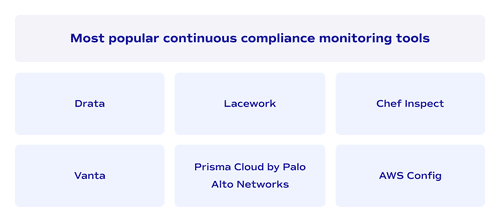
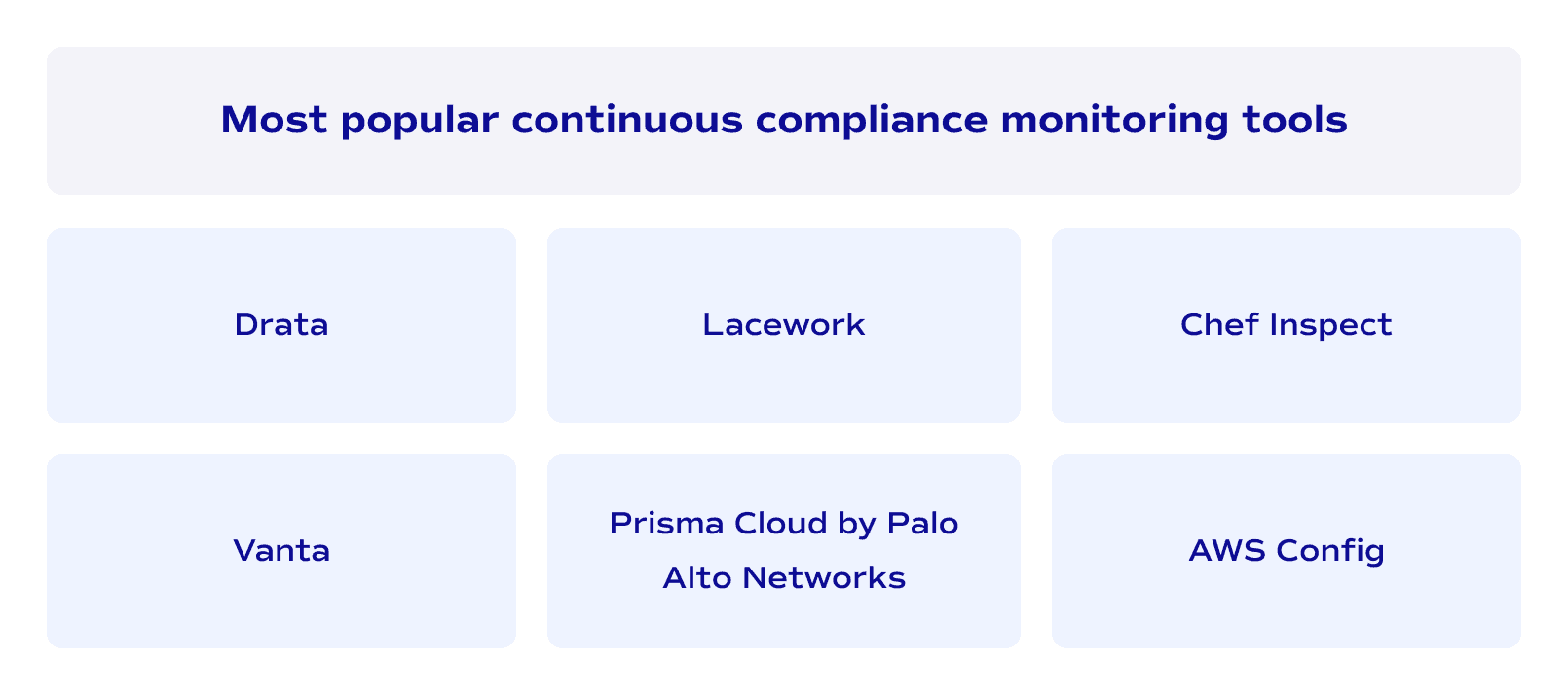
Several continuous compliance monitoring platforms have matured enough to cover most major frameworks out of the box. Here are 6 compliance monitoring tools worth evaluating:
Drata
Drata automates evidence collection and control monitoring across SOC 2, HIPAA, PCI DSS, and ISO 27001. It connects to cloud providers, identity systems, and developer tools to track compliance posture in real time. For teams running multi-framework programs, Drata consolidates everything into a single dashboard.
Vanta
Vanta is one of the most widely adopted continuous compliance monitoring software solutions on the market. It continuously scans infrastructure and automatically maps findings to the relevant framework controls.
Lacework
Lacework focuses on cloud security and compliance monitoring with deep visibility into AWS, Azure, and GCP environments. Its behavioral analytics engine detects anomalies that rule-based tools often miss.
Prisma Cloud by Palo Alto Networks
Prisma Cloud provides compliance monitoring across the full application lifecycle, from code to runtime. It covers over 30 compliance frameworks and flags misconfigurations before they reach production.
ChefInSpec
Chef InSpec takes an infrastructure-as-code approach to compliance by letting teams define policies as testable code. This makes it a strong fit for engineering-driven organizations that want compliance checks embedded directly into their CI/CD pipelines.
AWS Config
AWS Config tracks resource configurations and evaluates them against compliance rules natively within AWS. For teams running primarily on AWS, it eliminates the need for a separate third-party platform, though multi-cloud environments will require additional tooling.
Also, read our article about the best DevOps automation tools.
Challenges in continuous compliance monitoring and best practices to overcome them
Now, when we are done with the tools, let’s take a look at the last point on our list, challenges and best practices that can help you navigate them.
| Challenge | Best practice to avoid it |
| Alert fatigue from too many low-priority notifications | Implement severity-based scoring and route only critical alerts to on-call engineers. Funnel low-severity findings into weekly review backlogs. |
| High initial setup complexity | Start with a single compliance framework and expand gradually. Trying to cover SOC 2, HIPAA, and PCI DSS simultaneously overwhelms most teams. So, move step by step. |
| Keeping policies aligned with evolving regulations | Assign a dedicated owner for each framework who reviews regulatory updates quarterly and translates changes into updated policy definitions. |
| Adapting monitoring for AI workloads | Continuous compliance monitoring for AI systems introduces unique challenges around model governance, training data lineage, and bias auditing. Extend your existing monitoring framework with AI-specific policy checks rather than building a parallel compliance process from scratch. |
| Tool sprawl across multiple platforms | Consolidate monitoring into one primary platform that supports your core frameworks. Use integrations rather than standalone tools for edge cases. |
| Lack of engineering buy-in | Embed compliance checks into existing CI/CD workflows rather than adding separate review steps. Engineers adopt compliance faster when it doesn't slow down deployments. |
| Measuring ROI to justify ongoing investment | Track concrete DevOps metrics: mean time to remediation, audit preparation hours saved, and number of violations caught before audit cycles. Present these to leadership quarterly. |
How ELITEX can help with continuous compliance monitoring
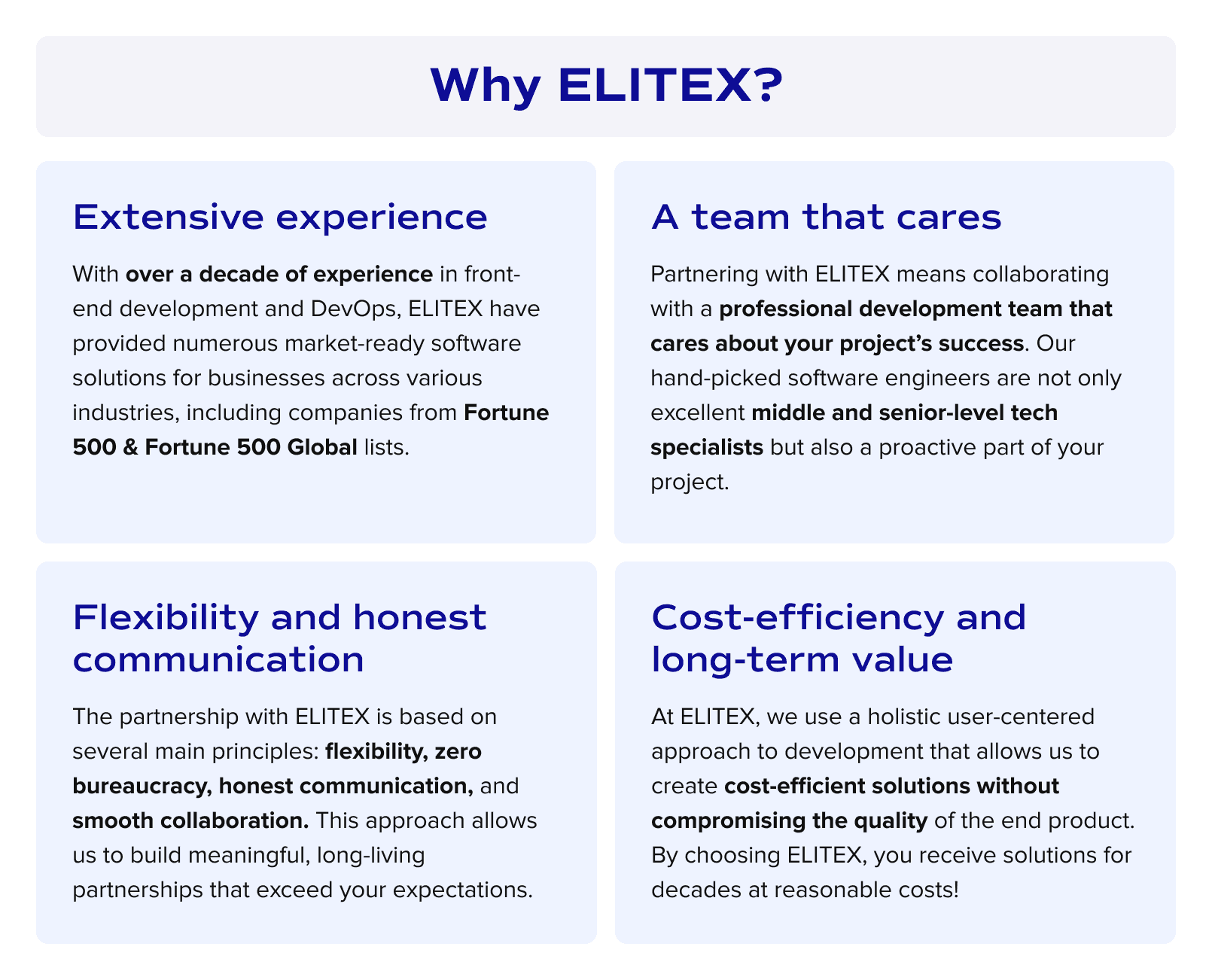
Building a continuous compliance monitoring framework from scratch takes time, specialized knowledge, and a clear understanding of which regulatory frameworks apply to your specific business. That's where we come in. ELITEX has spent over a decade helping companies across healthcare, fintech, e-commerce, and hospitality build infrastructure that stays audit-ready without draining engineering resources. Our automation strategy consulting engagements start with evaluating your current compliance gaps and end with a fully automated monitoring pipeline tailored to your regulatory landscape. We've helped clients cut infrastructure costs by up to 90% through smart automation, and that same focus on cost efficiency carries into how we approach compliance. No overengineered tooling, no unnecessary platform sprawl. Just the right setup for your frameworks, your team size, and your budget.
If you’re looking for the technical partner that cares, don’t hesitate to contact us. By choosing ELITEX, you choose a software engineering team beyond all initial expectations.

FAQs
What is the continuous compliance monitoring definition?
Continuous compliance monitoring, also referred to as CCM monitoring, is the practice of automatically verifying that your cloud infrastructure, access controls, and security configurations meet applicable regulatory and security requirements at all times, rather than only during periodic audits.
What is the approach to maintain continuous compliance?
The most effective approach to maintain continuous compliance starts with translating your regulatory controls into machine-readable policy definitions. From there, automated scanning tools evaluate your infrastructure against those policies on a continuous basis, flag violations in real time, and log every action as audit evidence. The key is treating compliance as an ongoing operational process, not a periodic project.
How does CCM monitoring differ from traditional auditing?
Traditional auditing evaluates your compliance posture at a single point in time, usually annually or quarterly. CCM monitoring runs around the clock, catching violations the moment they occur. This means your organization stays audit-ready every day instead of scrambling to gather evidence before each review cycle.
How to ensure continuous compliance monitoring works effectively?
Start with a single framework, automate evidence collection from day one, and assign clear ownership for policy updates. Knowing how to ensure continuous compliance monitoring also means tracking performance metrics like mean time to remediation and violation recurrence rate. These numbers tell you whether your framework is actually improving over time or just generating alerts nobody acts on.
Which industries benefit most from continuous compliance monitoring?
Any industry operating under strict regulatory oversight sees the biggest impact. Healthcare (HIPAA), fintech (PCI DSS, SOX), and SaaS companies handling customer data (SOC 2) are the most common adopters. That said, the approach applies wherever regulatory penalties for non-compliance outweigh the cost of implementing automated monitoring.
POSTED IN: