



Did you know that 61% of consumers are willing to spend more with hospitality businesses that offer a customized experience, yet more than half recall situations where brands failed to deliver on promised personalization? Together with the fact that 73% of guests are more likely to return to hotels that meet their technology needs, it directly highlights the direct connection between digital innovation and loyalty in the hospitality sector. Facts like this highlight the clear development vector for hospitality businesses: invest in personalization technology that delivers on promises rather than creates disappointment. But what exactly is hiding under the mask of personalization in the hospitality industry? Let’s find it out!
In 2026, personalization in hospitality has moved beyond remembering guests’ names during check-in. Hotels, airlines, and restaurants now harness AI and big data to predict needs, tailor services, and create memorable stays that drive the loyalty of their customers. As a travel and hospitality software development company, we see this transformation firsthand through systems that track preferences across multiple touchpoints.
The quest for personalized experiences has become critical in an era where travelers expect individualized attention, instant recognition, personal care, and tailored recommendations across all channels. This shift requires not just technology investment but a complete rethinking of how guest data flows between property management systems, mobile apps, and service delivery platforms. But let’s begin with a deeper dive into the concept of personalization itself.
Introduction to personalization in hospitality
Personalization in hospitality is the strategic customization of services based on individual preferences to enhance customer satisfaction. It transforms standard guest experiences into memorable journeys by adapting room settings, dining options, communication channels, and activity suggestions to match specific guest profiles.
Here are some examples of such personalization:
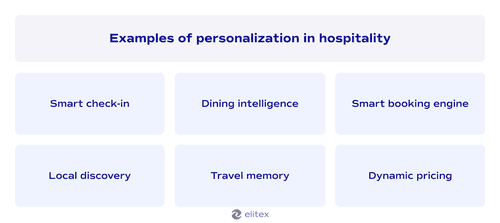
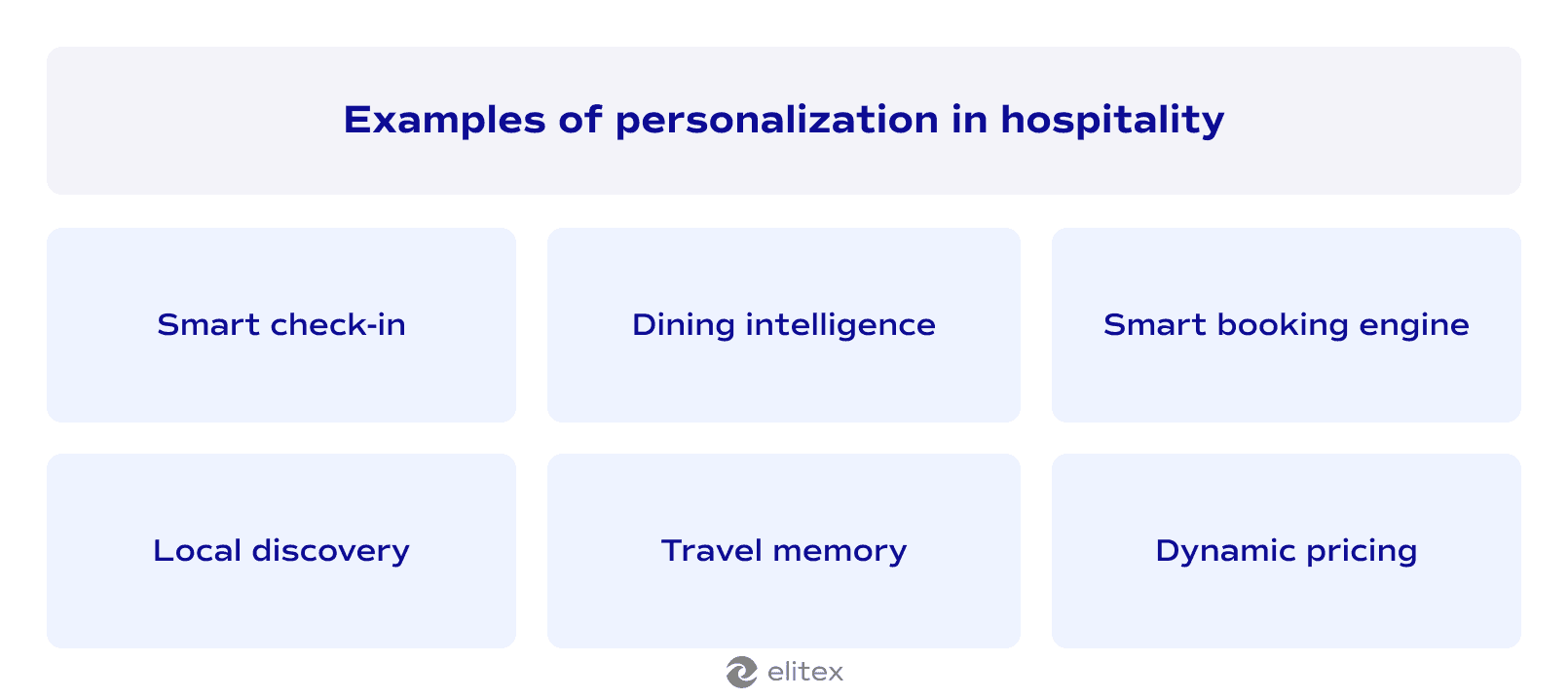
Preference-Based Check-In: Systems storing guest preferences for room type, number of beds, floor preferences, pillow types, temperature settings, etc;
Dining Intelligence: F&B platforms tracking dietary restrictions, favorite dishes, preferred dining times, wine selections, etc;
Smart Booking Engine: Streamlined booking process remembering payment details, typical stay duration, loyalty status, etc;
Local Discovery: Personalized recommendations for nearby attractions based on interests, previous activities, weather conditions, travel purposes, etc;
Travel Memory: Systems recalling special occasions, previous complaints, service recovery history, communication preferences, and other nuances;
Dynamic Pricing: Custom rate offerings based on booking history, loyalty ties, seasonal preferences, typical spending patterns, etc.
Also read our guide to digital transformation in hospitality.
The benefits of personalization in the hospitality industry
Here are 4 main benefits of implementing personalization in your hospitality business written in clear business language:
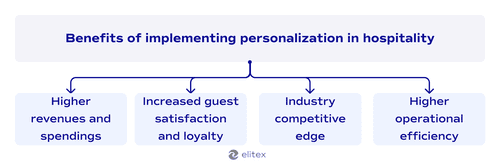
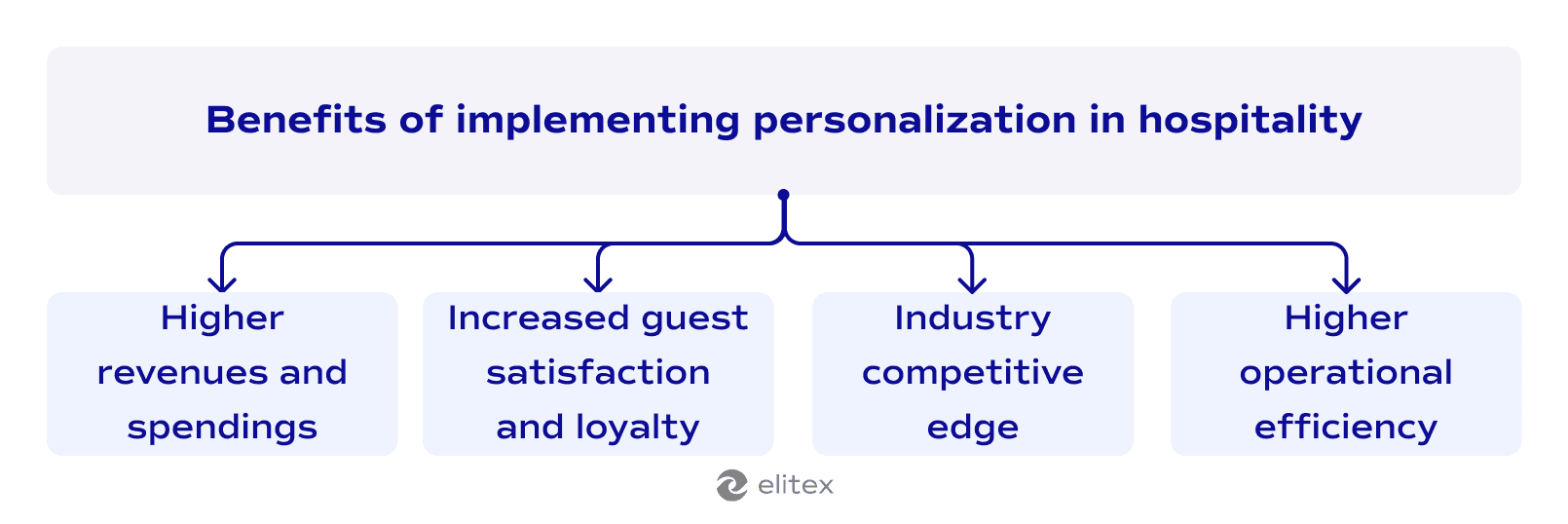
Higher revenue and spending
Personalization enables hotels to offer tailored pricing, packages, and upselling opportunities that match guest preferences. By understanding individual spending patterns and preferences, hotels can create attractive offers that guests are more willing to pay premium prices for. This strategic approach transforms standard services into high-value experiences worth the additional cost.
Increased guest satisfaction and loyalty
Personalized services directly boost guest satisfaction by meeting or exceeding guest expectations at every touchpoint. By crafting memorable experiences based on individual preferences, hotels create emotional connections that standard service cannot match. The level of personalization directly correlates with loyalty—guests who feel genuinely recognized are more likely to become loyal guests who return repeatedly and recommend the property to others.
Competitive differentiation
In today’s overcrowded market, the level of personalization offered becomes a key differentiator when travelers choose accommodations. Hotels that excel at creating memorable experiences through customization stand out among similar-priced alternatives. Properties that identify unique opportunities for personalization can transform ordinary stays into distinctive experiences that guests specifically seek out.
Operational efficiency
Understanding guest expectations in advance allows staff to prepare personalized services more efficiently. Special offers can be tailored to specific guest segments without requiring additional resources. When hotels track the preferences of loyal guests, they can anticipate needs proactively, reducing service delays and optimizing staff allocation while simultaneously delivering higher-quality experiences.
Understanding the Personalization Process
As a custom software development company, we approach hospitality personalization from a technical perspective, focusing on the systems and data architecture needed to create truly tailored guest experiences. Of course, the exact process will largely depend on your project’s specific objectives and requirements, however, here’s a versatile approach we used for several our personalization projects:
1 . Data collection
In the beginning, we should create a way to gather as much guest information as possible across all touchpoints, including booking history, preferences, and on-property behavior. At this stage, we build a foundation of a robust customer data platform that unifies fragmented data from various hotel systems into comprehensive guest profiles.
2 . Data analysis
In the second stage, we design the processing of collected information using advanced machine learning and artificial intelligence development. This analytical approach allows us to transform raw data into valuable insight into guest preferences, spending habits, and service expectations.
3 . Segmentation strategy
During this stage, when we have comprehensive analytics data, you should group your guests based on common characteristics, behavior, and spending patterns. Creating precise segments enables targeted marketing campaigns (often also AI-driven) to resonate with specific guest types rather than generic one-size-fits-all messaging.
4 . Experience design
When we’ve done with segmentation, it’s time to design customized journeys for each identified segment with special offers tailored to their unique preferences. Map out personalized guest experiences from pre-arrival through post-stay communications to ensure consistency. Then, we’ll further integrate analytics, personalized guest journeys, and existing software solutions.
5 . Technology implementation
At this stage, our development teams deploy the technical infrastructure needed to deliver personalization at scale across all touchpoints. This includes integrating mobile apps, property management systems, and communication platforms for seamless execution.
6 . Measurement & refinement
From your side, at this stage, it’s crucial to track key performance indicators to evaluate the impact of existing personalization efforts on satisfaction and revenue. Continuous analysis creates a feedback loop where satisfied guests provide new data that further improves future personalization initiatives.
Key technologies powering hospitality personalization.
But again, first of all, ELITEX is a technology partner, so let’s focus on what we handle best—the technology. Here are several hospitality IT solutions that power hotel personalization:
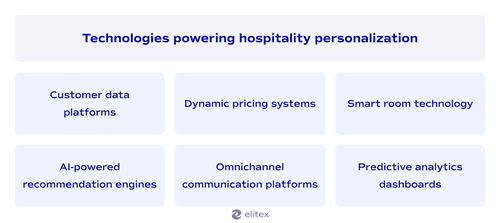
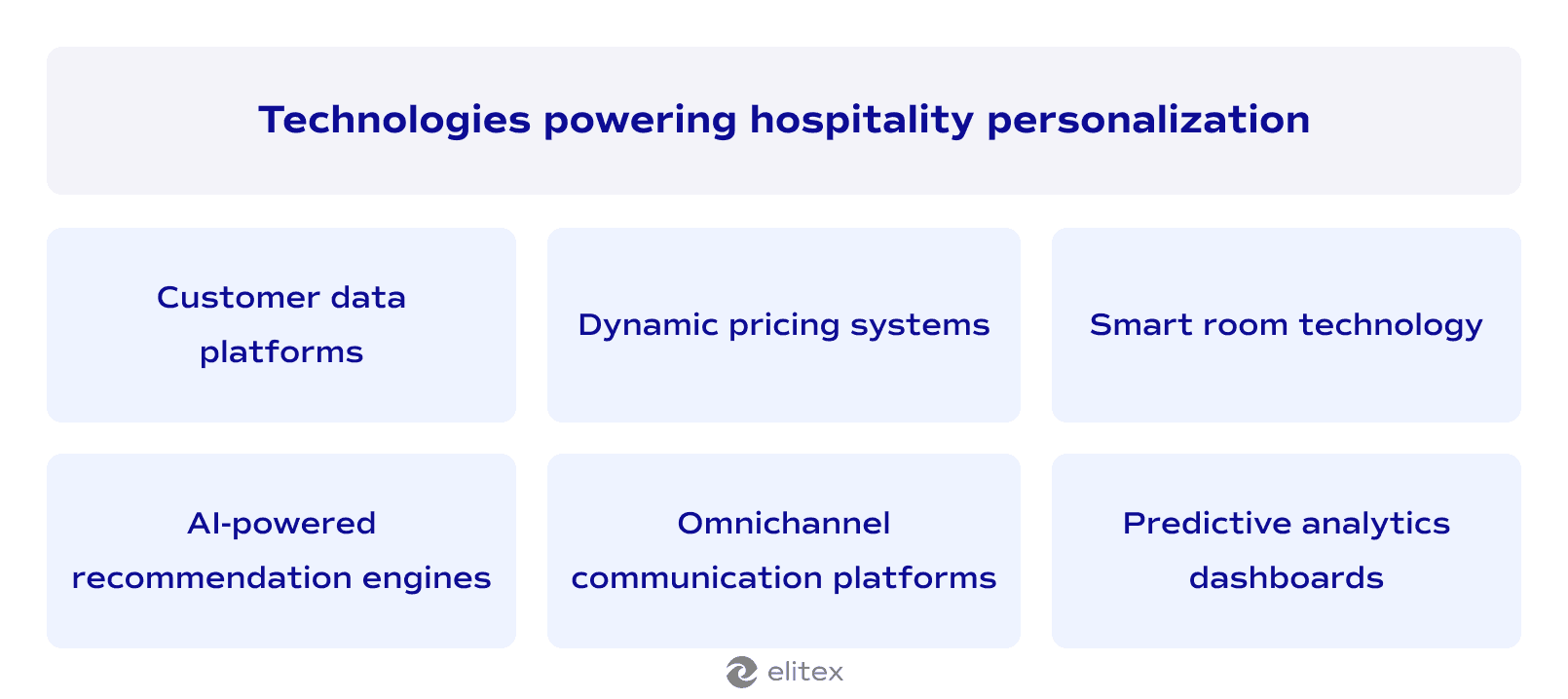
- Customer Data Platforms (CDPs): Centralizes systems that unify guest data from multiple touchpoints to create comprehensive profiles (mentioned in an example of the personalization process, above);
- AI-Powered Recommendation Engines: Algorithms that analyze behavior patterns to suggest relevant activities and amenities;
- Dynamic Pricing Systems: Software that adjusts rates based on guest history, booking patterns, and willingness to pay;
- Omnichannel Communication Platforms: Tools ensuring consistent personalization messaging across email, SMS, mobile apps, and in-room systems;
- Smart Room Technology: IoT in hospitality allows guests to customize the environment through mobile controls for temperature, lighting, and entertainment;
- Predictive Analytics Dashboards: Visualization tools providing staff with actionable insights about guest needs before arrival (with decent predictive analytics your staff may even guess which bottle of wine will fit the customer’s taste best).

Real-world examples of personalization in hospitality
Here are 3 real-world examples of personalization in the hospitality industry:
Marriott
Marriott International has partnered with Adobe Experience Cloud to implement personalization across their entire guest journey. Using Adobe’s Real-Time Customer Data Platform, Marriott builds comprehensive guest profiles that update in real-time as interactions occur across both digital and physical touchpoints. This technology enables them to deliver tailored experiences through online reservations, the Marriott Bonvoy app, and on-property interactions. By orchestrating one-to-one personalization at scale, Marriott can match guests with optimal options across their portfolio of 30+ brands and nearly 8,800 properties, enhancing loyalty and supporting direct bookings.
Airbnb
Airbnb’s Smart Pricing tool exemplifies AI-driven personalization in hospitality by analyzing massive datasets to recommend optimal pricing for individual properties. The system examines property characteristics, seasonality, special events, and market demand to generate dynamic pricing recommendations tailored to each listing. According to research, hosts who adopted this personalization technology saw a 13% increase in revenue while actually decreasing rates for guests by 5.7%—demonstrating how AI personalization can create value for all parties. The tool color-codes calendars to show hosts the probability of booking at different price points, making complex data accessible to non-hospitality professionals.
Hilton
Hilton’s Smart Room Technology creates personalized environments by remembering guest preferences across stays and properties. Through their Connected Room Experience available in over 2,400 hotels globally, guests can control room settings, access streaming content, and now benefit from wellness features like Calm’s guided meditations and Sleep Stories—all from their in-room TV. This personalization technology extends to Digital Key access, temperature controls, and entertainment preferences, addressing the growing consumer demands for wellness during travel, particularly addressing sleep as the second-highest unmet need in health and wellness according to McKinsey’s research.
Also read our top 9 hospitality custom software development companies.
The future of personalization and hyper-personalization in hospitality
Hyper-personalization is a concept that involves even more frequent leveraging of AI and data analytics than “standard personalization,” creating truly anticipatory experiences for guests. And as of 2026, it’s quite hard to say whether the hospitality sector is already in the hyper-personalization age or not. When it comes to other trends, they are always a bit tricky to predict, but let’s try anyway.
Probably, by 2035, we’ll see hotels deploying neural interfaces that capture guest behaviors during virtual property tours, predicting preferences before they’ve even booked. The most innovative personalization strategies will use ambient sensing technology that reads microexpressions and voice patterns to detect when individual guests are dissatisfied before they complain. It’s all together with the no-effort check-ins and deep personalization that follows guests automatically through their entire stay.
Imagine walking into a hotel room where the lighting, temperature, and soundtrack automatically adjust to your current mood rather than just your stored preferences: with AI concierges that distinguish between your business and leisure personas, delivering completely different experiences accordingly.
However, that’s all about the kind of magic. We don’t know the future, but what we do know at ELITEX is that partnering with the right technology partner makes all the difference. The ideal provider doesn’t just develop solutions but reads market shifts accurately, turning complex trends into practical tools that enhance guest experiences while maintaining operational efficiency. And if you’re looking for this kind of technology partner, you’re at the right place!
Challenges in personalization in hospitality and how to overcome them
| Challenges | Solutions |
| Privacy concerns limit the data collection needed for personalization | Implement transparent opt-in policies clearly communicating benefits; secure guest data with advanced encryption and allow guests to control what information they share |
| Balancing technology with human touch in personalized service | Train staff to use technology as an enabler rather than replacement; ensure AI recommendations are delivered with personal warmth by hotel guests-facing employees |
| Identifying and tracking individual guest preferences across multiple stays and properties | Implement cross-property CDP that creates unified guest profiles; use AI to detect pattern changes indicating evolving preferences |
| Measuring ROI of personalization investments | Track conversion uplift, positive review mentions specifically citing personalization, and correlation between personalization level and spend/return rate |
| Scaling personalization for properties with diverse guest segments | Create adaptive personalization frameworks that adjust depth based on guest value/frequency, develop segment-specific strategies that remain authentic to the brand |
| Maintaining guest engagement without being intrusive | Use contextual personalization that responds to current behavior rather than just history; create natural opportunities for guests to provide preference feedback |
Also read our article about hotel management software cost.
How to implement personalization in your hospitality business
The key to successful personalization in hospitality is establishing effective data collection processes and selecting the right technology partner. ELITEX deliver exactly what forward-thinking properties need—cutting–edge AI expertise combined with deep hospitality industry knowledge. We understand the business value of properly implemented personalization, from increased guest loyalty to higher revenue per stay.
Our team doesn’t just build technical software systems; we create seamless personalization ecosystems that capture individual guest preferences, apply advanced behavioral analytics, and deliver tailored experiences that feel natural rather than automated. Partner with ELITEX to transform your guest engagement strategy and implement personalization that delivers measurable ROI while maintaining exceptional hospitality service level.
FAQs
What are the current personalization trends in the hospitality industry?
The leading trends include AI-driven preference prediction, smart room technology that adapts automatically to guest preferences, hyper-personalized pricing based on guest history; and omnichannel communication that maintains consistency across all potential touchpoints. As of 2025, Mobile app personalization and biometric-enabled experiences are also gaining momentum.
How does hotel personalization impact customer loyalty?
Effective personalization directly increases loyalty by creating emotional connections when guests feel recognized and valued. It’s complicated from the perspective of psychology, but most people will really appreciate it. From practice, hotels implementing personalization see higher repeat booking rates, increased spending per stay, and more positive online reviews. The power of personalization lies in making guests feel the hotel truly understands their individual needs.
What role does customer relationship management play in delivering relevant offers?
A robust CRM system is the foundation of effective personalization, centralizing guest data from all possible touchpoints. It enables hotels to analyze past behavior, track preferences, and automate personalized communications. This CRM-based systematic approach ensures offers are timely and relevant, eventually increasing conversion rates and driving business growth.
How can hotels balance guest privacy concerns with personalization?
Balance privacy and personalization by implementing transparent opt-in data collection, clearly communicating the benefits guests receive, maintaining strong data security, and giving guests control over what information they share. Always obtain explicit consent and provide options to adjust personalization levels according to comfort.
What technologies are essential for implementing the latest personalization trends in the hospitality industry?
Essential technologies include customer data platforms (CDPs), AI-powered recommendation engines, dynamic pricing systems, IoT-enabled smart rooms, predictive analytics dashboards, and omnichannel communication platforms. For smaller properties, even implementing a basic CRM with guest preference tracking can significantly enhance the guest experience.
POSTED IN: