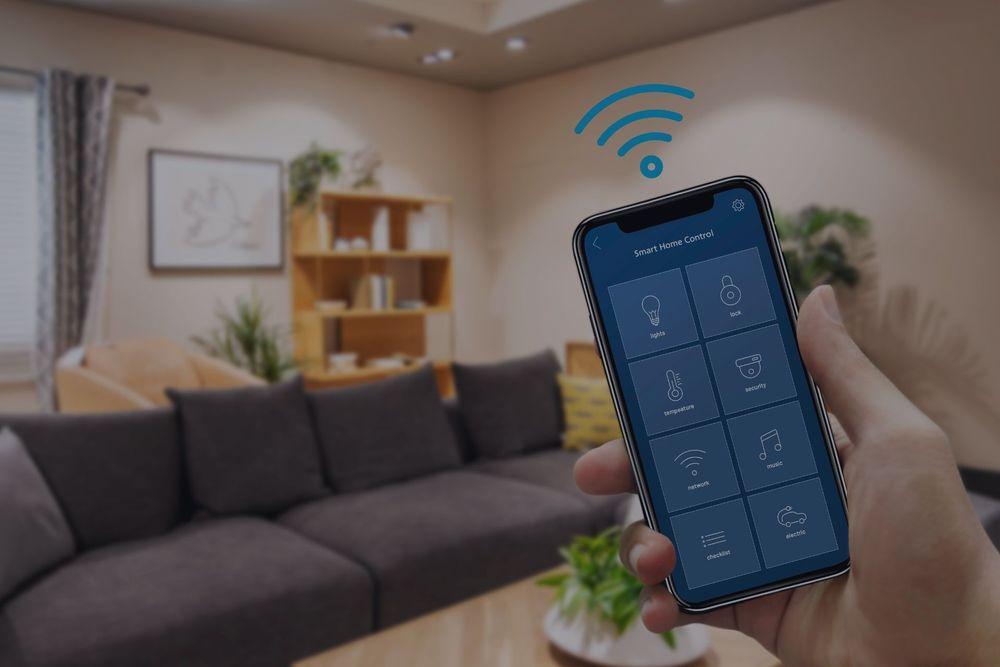


- TL;DR: In this article, we talk about IoT, one of the most impressive technologies in the hospitality industry of the last decade, showing real implementations at Hilton and Iberostar with verified energy savings.
- IoT in hospitality is a network of connected devices that automate operations without human intervention, from smart thermostats learning guest preferences to sensors catching equipment failures weeks before breakdown.
- We actually talked about the benefits of this technology for both businesses and guest experiences.
- Key sectors of implementation of IoT in the hospitality industry include smart room controls, occupancy sensors, energy management systems (delivering 20-30% utility savings), keyless entry, predictive maintenance, and IoT-enabled security systems.
- We demonstrated real results that prove the ROI of IoT: Hilton's Washington property cut HVAC energy by 41%, Iberostar achieved 25% HVAC reductions while maintaining 95%+ comfort levels, and Hilton's LightStay platform generated $1 billion in cumulative savings.
- Also, we take a precise look at challenges associated with this technology and possible mitigation strategies, as well as future trends that will shape the industry in the near future.
IoT in hospitality is just a fact. This technology already changed how hotels run. Thermostats now adjust temperatures before guests arrive, learning patterns from occupancy data. Maintenance teams receive instant alerts when equipment starts failing, catching problems before guests notice. Smart locks eliminate physical keys, while voice assistants handle basic room requests. The technology isn’t perfect, and implementation costs can sting. But when hotels get it right, IoT in the hospitality industry reduces energy waste and frees staff from hunting down broken ice machines so they can focus on guests.
We at ELITEX have worked for a decade as a hospitality software development services company, so we see what happens behind the glossy case studies. The entire journey often starts with one isolated system (maybe smart thermostats) and expands from there. The tricky part isn’t buying devices themselves, but seamlessly connecting them to existing property management software and training staff to actually use the data.
Hotels that rush deployment without clear goals often end up maintaining expensive gadgets that nobody uses. However, from our practice, the secret is quite simple. The successful approach means starting small with pilot deployments, then scaling only what actually works. So, let’s look at where IoT actually delivers value and where it just burns budget.
What is IoT in hospitality?
IoT (Internet of Things) is basically a network of connected devices that collect and share data without human intervention. Different operators across the world deploy the Internet of Things in hospitality to automate operations that traditionally required manual oversight. Such IoT solutions monitor different conditions, for instance, the environment, and adjust systems (things) in real time.
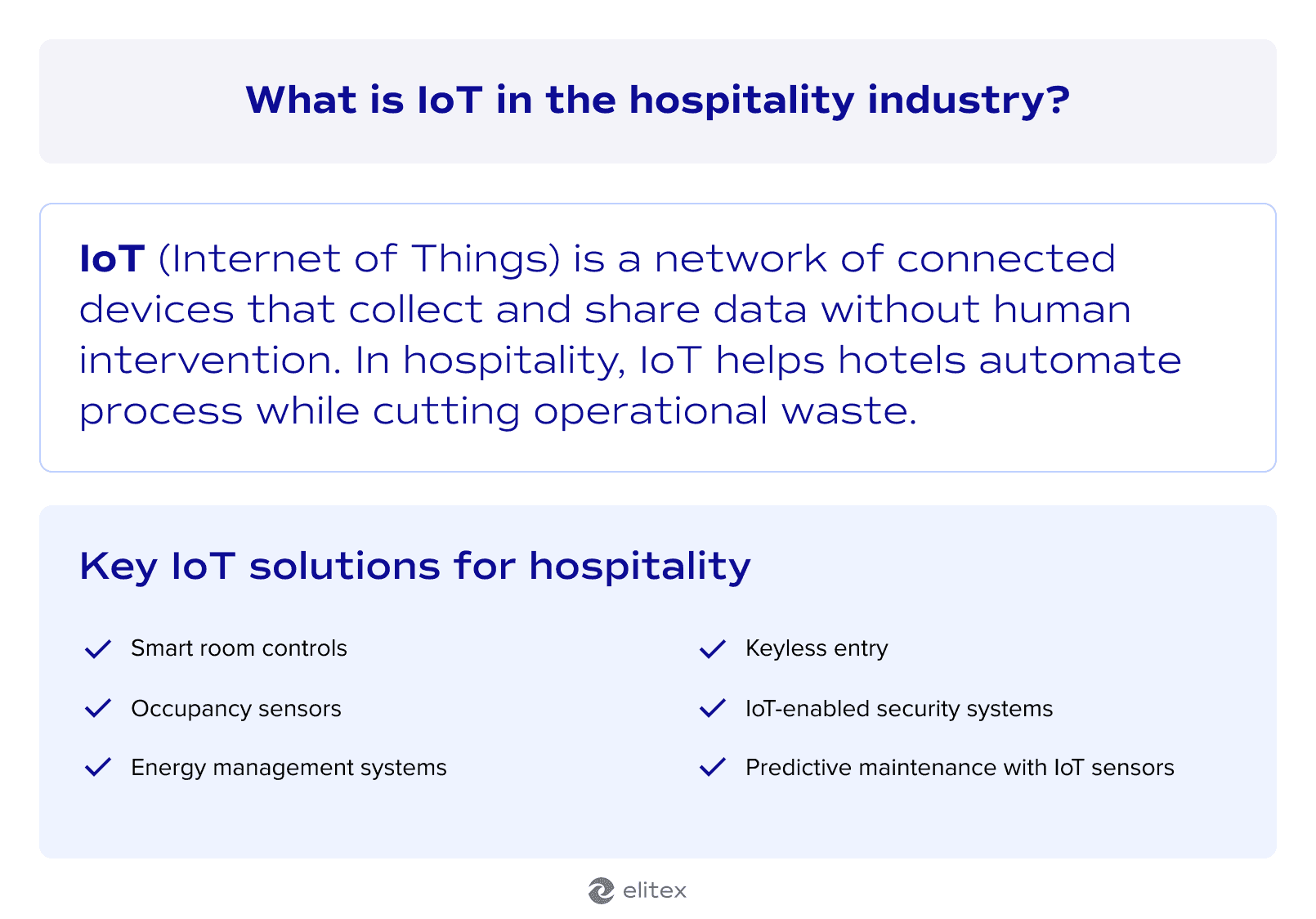
The ultimate goal of IoT here is to improve the guest experience while cutting operational waste. The principle is simple: connected devices communicate through a central platform, either automatically adjusting themselves or giving staff visibility into every room and system to simplify their operations. Let’s look at how it works in practice:
Key IoT solutions for hospitality
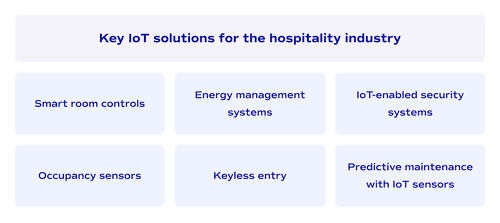
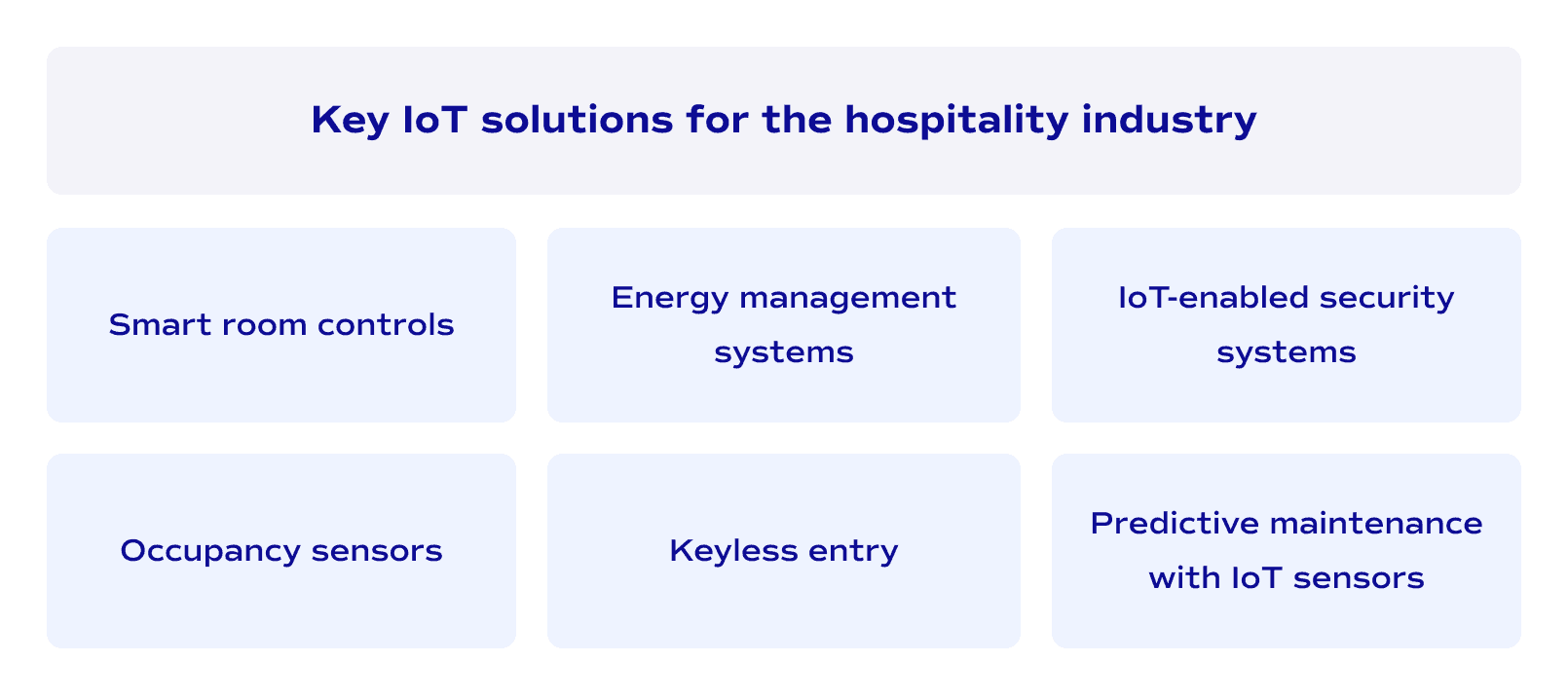
- Smart room controls: A smart room responds to guest commands through voice or mobile app. An example of this is the temperature that adjusts automatically based on learned preferences or the lighting that dims when guests watch movies. In such a case, technology works when it’s simple, but frustrates guests when they need instructions to operate blinds.
- Occupancy sensors: Occupancy sensors detect when guests enter or leave rooms. Hotels use this data to trigger climate control only when spaces are actually occupied. Housekeeping teams also rely on these sensors to see which rooms need cleaning first.
- Energy management systems: An energy management system tracks power consumption across the property. Smart lighting adjusts based on natural light availability and room occupancy. Hotels report up to 30-35% savings in energy consumption by lighting after deploying these systems properly.
- Keyless entry: Keyless entry replaces physical keys with smartphone-based access. Guests check in remotely and head straight to their rooms. The system creates audit trails showing access history for security and compliance needs.
- IoT-enabled security systems: Modern security systems connect cameras with motion sensors through a single IoT system. Staff get immediate alerts when something unusual happens. Centralized monitoring helps properties respond to safety issues faster than traditional approaches.
- Predictive maintenance with IoT sensors: IoT sensors monitor equipment health through vibration analysis and temperature tracking. The system flags potential failures before they cause guest-facing problems. Maintenance teams schedule repairs during quiet periods rather than scrambling through emergency fixes.
Benefits of IoT in hospitality
There are 3 main benefits of using IoT in hospitality:
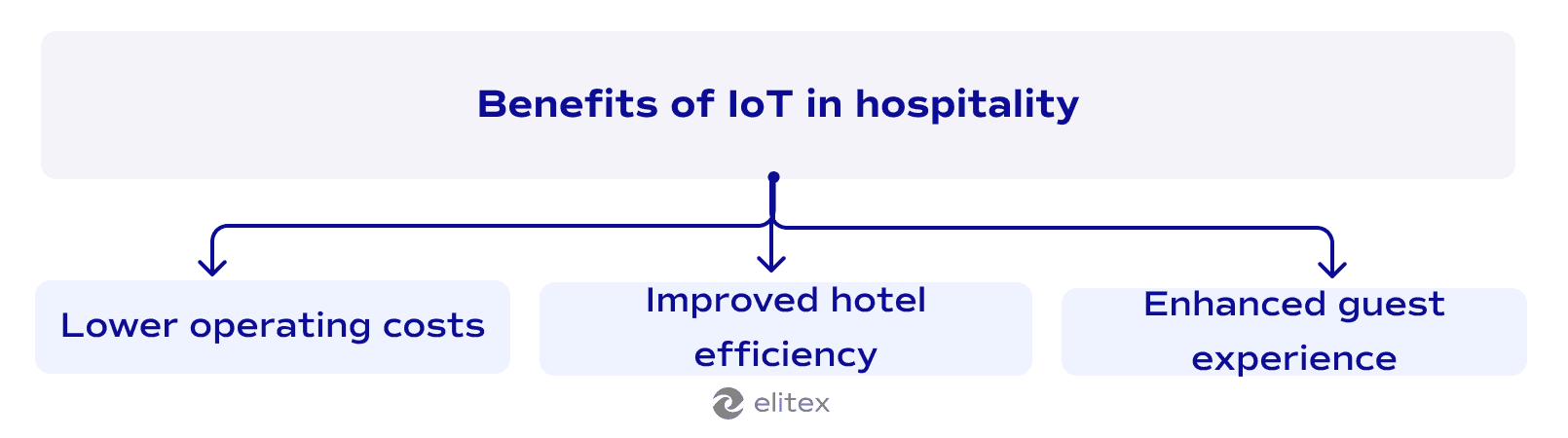
Lower operating costs
The technology cuts expenses by automating what staff used to handle manually. Energy management drops utility bills by 20-30% through smart climate and light control. Predictive maintenance prevents expensive emergency repairs. This case of digital transformation in hospitality allows properties reduce waste without sacrificing service quality.
Improved hotel efficiency
Real-time data helps managers make faster decisions about staffing and resource allocation. Housekeeping teams see which rooms need attention through connected sensors. The front desk tracks room readiness without phone calls to different departments. Operations run more smoothly when systems communicate automatically.
Enhanced guest experience
Guests controlling their room ambience with their smartphones or voice commands sounds already impressive, doesn’t it? Contactless check-ins happen remotely, skipping the front desk entirely. Requests get routed to the right staff member instantly. For many travelers, this convenience matters more than flashy technology. But guest experiences themselves are such an important topic that we should take a closer look at it:
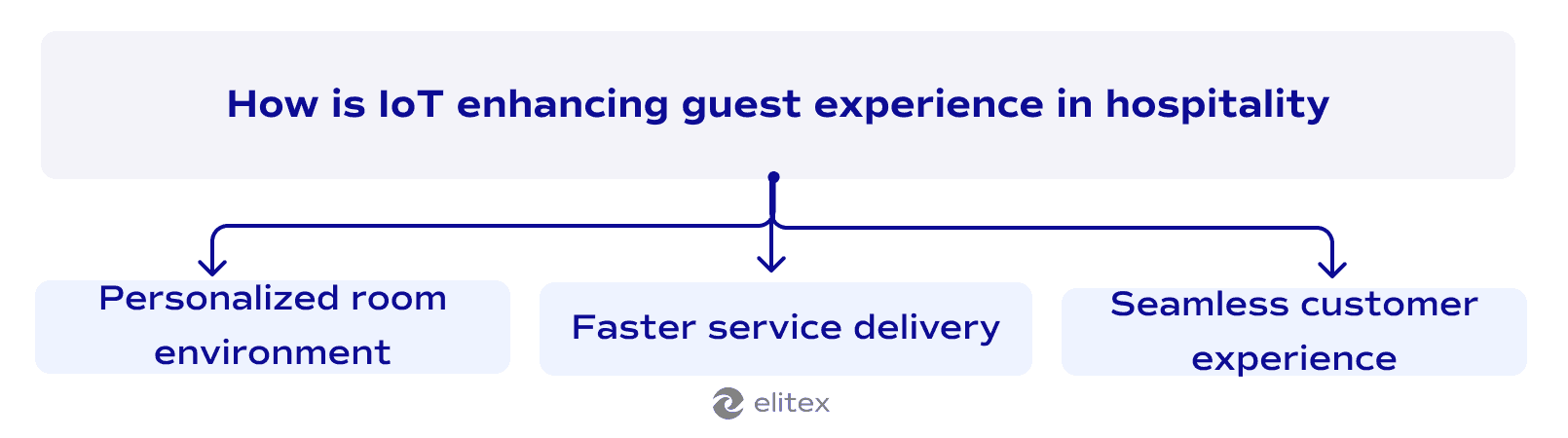
How is IoT enhancing guest experience in hospitality?
Here are just 3 examples of how guest experiences are enhanced with IoT technology.
Personalized room environment
As mentioned before, smart rooms remember temperature preferences from previous visits. Lighting adjusts to match the time of day or guest activities. Music systems connect to personal playlists automatically. This level of customization and personalization in the hospitality industry is appreciated by many travelers who want spaces that feel more like home than a hotel.
Faster service delivery
IoT systems route guest requests to available staff members immediately. Housekeeping receives notifications the moment guests leave rooms. Maintenance issues trigger work orders before guests even report problems. This speed is especially valued when someone needs extra towels or has a broken air conditioner.
Seamless customer experience
Digital keys eliminate waiting at reception desks, which guests clearly prefer. In 2026, mobile apps handle everything from room selection to checkout. Guests interact with hotel services on their own schedule without depending on staff availability. This independence tends to drive guest satisfaction scores higher than traditional service models.
IoT in hotels: Real-world applications and case studies
Hilton
Hilton’s Connected Room platform operates across 1,700+ properties, connecting climate and lighting systems through centralized IoT that processes over one million daily interactions. At the Washington Hilton, independently metered testing showed IoT-equipped rooms consumed 41% less HVAC energy than standard controls. Also, the hotel industry leader uses its own artificial intelligence-driven LightStay platform to deliver predictive maintenance that flags equipment failures weeks in advance. This approach has generated over $1 billion in cumulative savings across the Hilton’s portfolio.
Iberostar Hotels
Iberostar Hotels deployed BRAIAN, an AI virtual operator, at properties including Iberostar Waves Royal Andalus and Iberostar Selection Playa de Palma. The system integrates environmental IoT sensors with weather forecasts to achieve 25% HVAC energy reductions while maintaining comfort levels above 95% of the time. BRAIAN functions as a smart device network that predicts maintenance needs by identifying inefficient equipment before failures occur.
Challenges of implementing IoT in the hospitality industry and mitigation strategies
| Challenge | Mitigation strategy |
| Integration with legacy systems | Start with standalone pilot deployments in new construction or renovated wings. Test compatibility before full property rollout. |
| High upfront costs | Calculate ROI based on energy savings timelines. Prioritize HVAC systems automation where payback periods are shorter (typically under 2 years). |
| Data security vulnerabilities | Segment IoT networks from guest WiFi and payment systems. Implement device-level encryption and regular security audits. |
| Staff resistance and training gaps | Involve maintenance teams early in vendor selection. Provide hands-on training before deployment, not after. |
| Device maintenance at scale | Choose vendors with proven hospitality portfolios. In order to connect them properly, collaborate with the best hospitality software development companies. Establish clear SLA agreements for device replacements and firmware updates. |
| Guest privacy concerns | Disclose sensor locations in the room materials. Allow guests to disable occupancy tracking through in-room controls. |
What to Expect in the Future of IoT in Hospitality?
Here are 3 future IoT trends to expect in 2026 and beyond, carefully grouped by ELITEX:
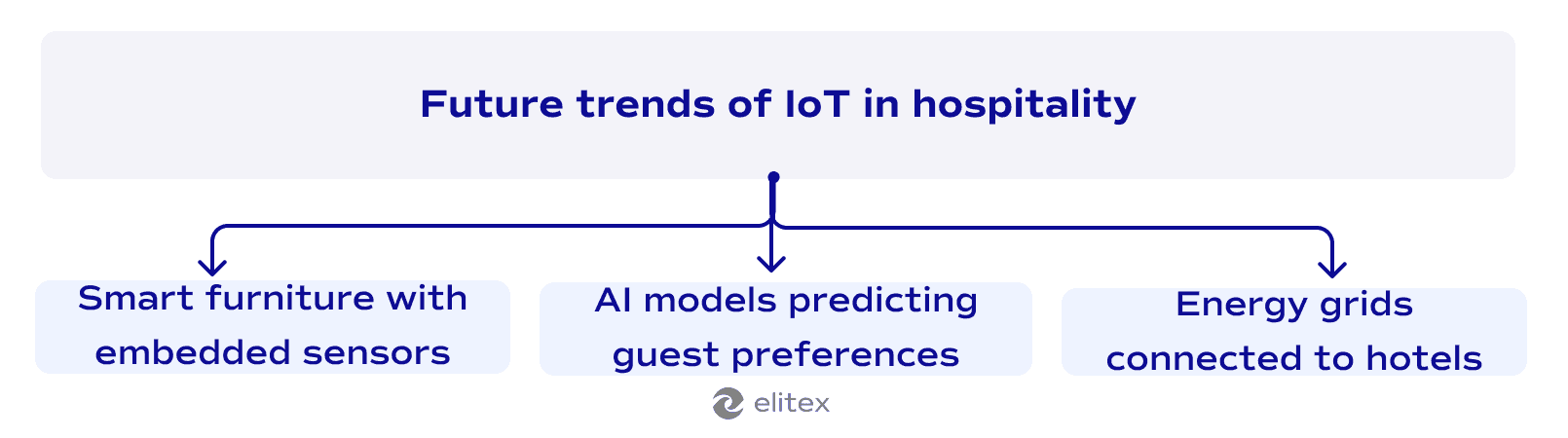
- Smart furniture with embedded sensors: The hotel industry will shift from retrofitting rooms with separate smart devices to furniture that arrives with built-in IoT capabilities. Beds will track sleep patterns through embedded sensors that monitor movement and adjust mattress firmness automatically. Desks will detect posture and adjust lighting accordingly. This integration eliminates visible technology while delivering personalized comfort.
- AI models predicting guest preferences: Future IoT in hospitality will move beyond reactive automation to predictive personalization. AI models will analyze data from previous stays to preconfigure room settings before arrival. The system learns individual preferences for temperature, lighting schedules, and even minibar restocking based on consumption patterns. Hotel managers will receive actionable insights about guest satisfaction trends across properties.
- Energy grids connected to hotel operations: Hotels will participate in smart grid programs where their IoT systems communicate directly with utility providers. During peak demand periods, buildings automatically reduce non-essential loads without impacting guest comfort. Properties earn credits by shifting heavy equipment usage to off-peak hours. This two-way communication between hotels and energy providers optimizes costs while supporting grid stability.
Looking for a trusted technology partner that will support your growth through the digital transformation process?
ELITEX have spent more than a decade building custom software for hotels and hospitality companies. We know how to connect IoT sensors to existing property management systems without forcing you to replace your entire infrastructure. Our 50 + developers (mostly middle and senior level) work with mid-sized hotel groups that need serious technical capability but can’t justify full in-house teams. We start by integrating your sensor networks with current systems, then build the operational dashboards your staff will actually use. Contact ELITEX to receive your custom step-by-step IoT integration plan.
Choosing ELITEX, you choose a result beyond your initial expectations!


FAQ
Why IoT is a game-changer for the hospitality industry?
The internet of things in the hospitality industry automates operations that previously required constant manual oversight. Hotels cut energy costs by 20-30% through smart climate control. Predictive maintenance catches equipment failures weeks before they impact guests. Staff receive instant alerts about room status and service requests. The technology shifts labor from reactive problem-solving to proactive guest service.
What are the main costs of implementing IoT in hotels?
It depends on what exactly we are talking about. Let’s take a look at HVAC systems. Upfront hardware costs here will include sensors and smart thermostats. Additionally, integration with existing property management systems also requires custom development work. Staff training also takes time and budget. Ongoing expenses cover device management and software subscriptions. However, in the case of HVAC-IoT integration, most mid-sized properties see payback within 18-24 months through energy savings alone.
How does Hotel IoT improve energy efficiency?
Smart systems adjust heating and cooling based on actual room occupancy. Lights turn off automatically when guests leave. The technology learns usage patterns and preempts waste before it happens. Just as we’ve written above, Washington Hilton reduced HVAC energy consumption by 41% using networked controls. Unoccupied rooms receive deep temperature setbacks that manual systems miss.
Is guest data safe with IoT hospitality systems?
Security depends entirely on network architecture. IoT devices should run on segregated networks isolated from payment systems. Device-level encryption prevents unauthorized access. Hotels must disclose what sensors collect and give guests opt-out controls for occupancy tracking. Also, regular firmware updates patch vulnerabilities as they emerge.
How long does it take to implement IoT across a hotel property?
Pilot deployments in 20-30 rooms typically take 2-3 months. Full property rollout depends on building age. New construction integrates IoT during the build phase. Legacy properties need phased approaches that avoid guest disruption. System integration with property management software adds another 4-8 weeks. Most cases of the implementation of the Internet of Things in the hospitality industry start with one wing before expanding to the entire hotel.
POSTED IN: