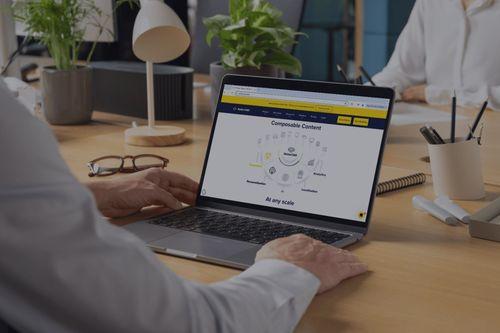
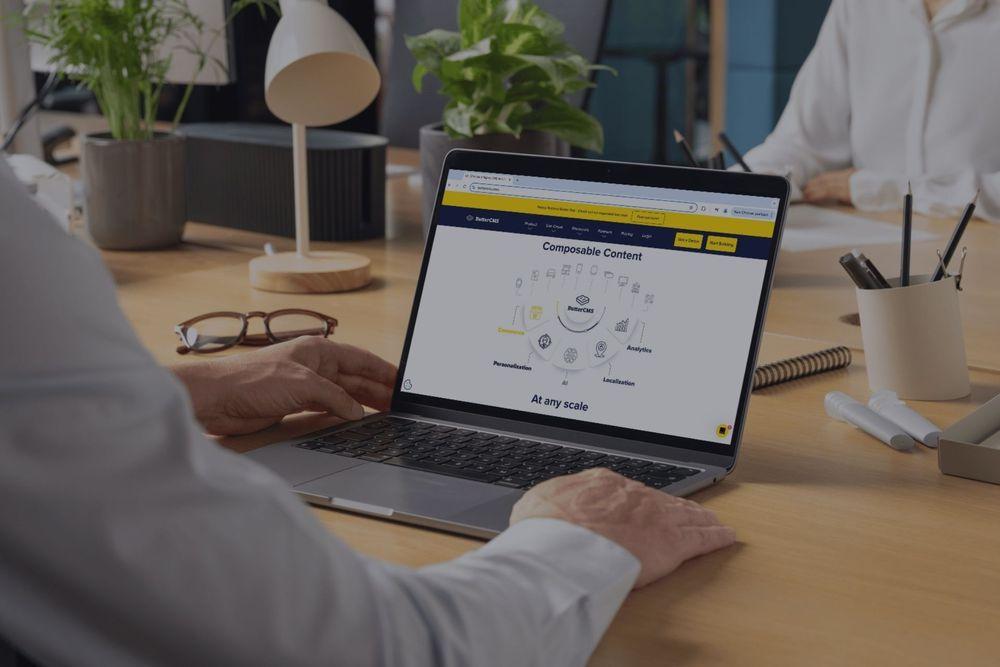


“If your business isn’t on the Internet, it will be out of business soon.” Some attribute this quote to Bill Gates, while others to modern business gurus, but the truth remains: most customers nowadays meet companies through screens first—from local shops to global brands. At some point, digital storefronts have become as vital as physical ones once were, or maybe even more important.
Building such an online presence puts businesses at a crossroads: create a hand-coded website or utilize a Content Management System (CMS). As a front-end development service provider with a decade of experience building websites and web applications, we’ve seen how this choice shapes the growth paths of many companies. However, in practice, this “choice” may be easier than it might seem at first glance. Want to know which option fits your business best? Let’s explore this topic together!
CMS vs. hand-coded websites: A clear comparison
Let’s begin with a short introduction to these two concepts.
Hand-coded websites are built line by line with raw programming code. Developers write every function, design every page, and create each feature from scratch. This approach, of course, gives complete control over everything that is going on on the website: its structure, performance, and functionality; however, it may be pretty slow and expensive. In some way, it can remind us of building a custom house where the architect designs every detail to exact specifications.
Content Management Systems (CMS), in turn, offer pre-built components and templates, as well as all tools required to create your own website. Back to our building analogy, it’s like using several standardized pre-made building blocks rather than crafting each element from scratch. CMSs handle basic functions like content updates and user management, letting teams focus on customization and content rather than technical details.
| Feature | Hand-coded websites | CMSs |
| Control | Complete control over everything | The control scope is limited by the pre-defined platform capabilities |
| Development speed | Slow initial development | Fast launch with ready-to-use components |
| Maintenance | Requires technical expertise | Typically have user-friendly admin interfaces |
| Costs | Higher upfront development costs | Lower initial costs, however, possible subscription fees |
| Flexibility | Unlimited customization options | Customization options dependent on platform and plugins |
| Performance | Can be optimized for maximum speed | May include unused features that affect speed |
| Security | Custom security implementation | Regular platform security updates |
| Content updates | A developer needed for any change | Easy updates by non-technical staff |
To make it as clear as possible, let’s make a brief conclusion:
Choose hand-coded sites when you require unique functionality that CMS platforms don’t offer, when performance is critical, or when building a specialized web application with complex technical requirements. This solution fits custom web apps with truly unique digital experiences.
Choose a CMS when you want to launch quickly with a proven solution. Also, consider CMSs when you want to build a content-heavy site with a non-technical team.
CMSs: When content matters
Now, let’s return to the last point in our comparison table. There is one significant challenge in the general rule “to choose hand-coded websites if you need something really special from a technical perspective”. This challenge is managing content.
So, basically, if your business plans include producing content regularly, in most cases, the choice becomes clear: use a CMS. Even the most advanced custom website turns into a burden when you need regular content updates. Every new blog post, product update, or landing page would require a developer’s assistance, creating bottlenecks and significantly slowing your marketing efforts.
CMS platforms remove the barriers between your non-technical staff, such as marketing specialists, content editors, or even HRs, and the content itself. All team members can now write and publish digital content through simple dashboards. Product managers can update catalogs with a few clicks. Social media teams can share news without asking developers for help. This freedom to create and update content makes CMSs the ideal choice for businesses that want to compete through digital marketing.
Is the scalability of CMSs only about the content?
No, it’s not only about content. From our front-end development company’s perspective, 80% of businesses don’t really need to reinvent the wheel and hand-code their website from scratch. Here are several simple reasons why a CMS can be a good choice for your business.
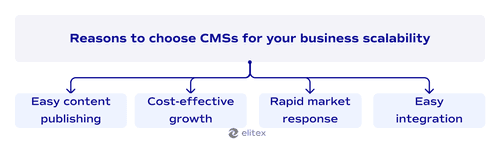
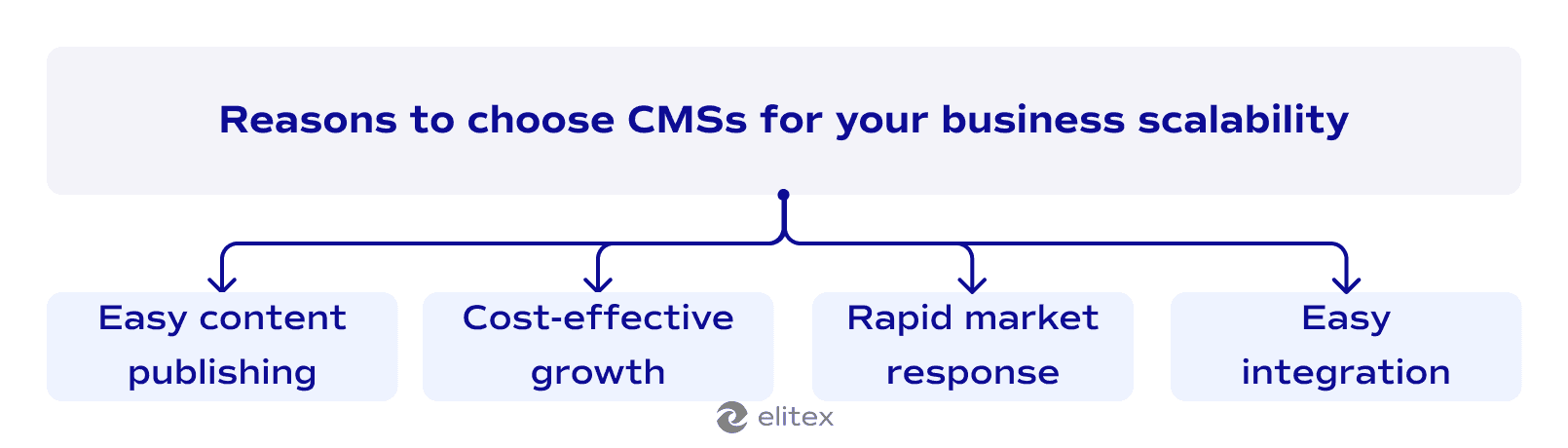
- Easy content publishing: CMSs allow your non-tech teams to create and update website materials without development skills;
- Cost-effective growth: As your business grows, CMS grows with you. Adding new pages, features, or content types doesn’t require extensive development. The platform handles increased traffic and content volume without major rebuilds. This scalability keeps costs predictable and lets your business expand at its own pace.
- Rapid market response: CMS lets you react to market changes really fast. Launch new product pages, make minor edits, update prices, or start promotions within minutes. This speed gives your business an edge in competitive markets where timing matters.
- Integration ready: Connect your CMS to other business tools, from email marketing to customer service platforms. These integrations automate workflows and help manage growing customer interactions without adding staff.
What kind of CMS do I need?
For this, let’s answer the question: what are the types of CMSs?
There are three main types of CMSs:
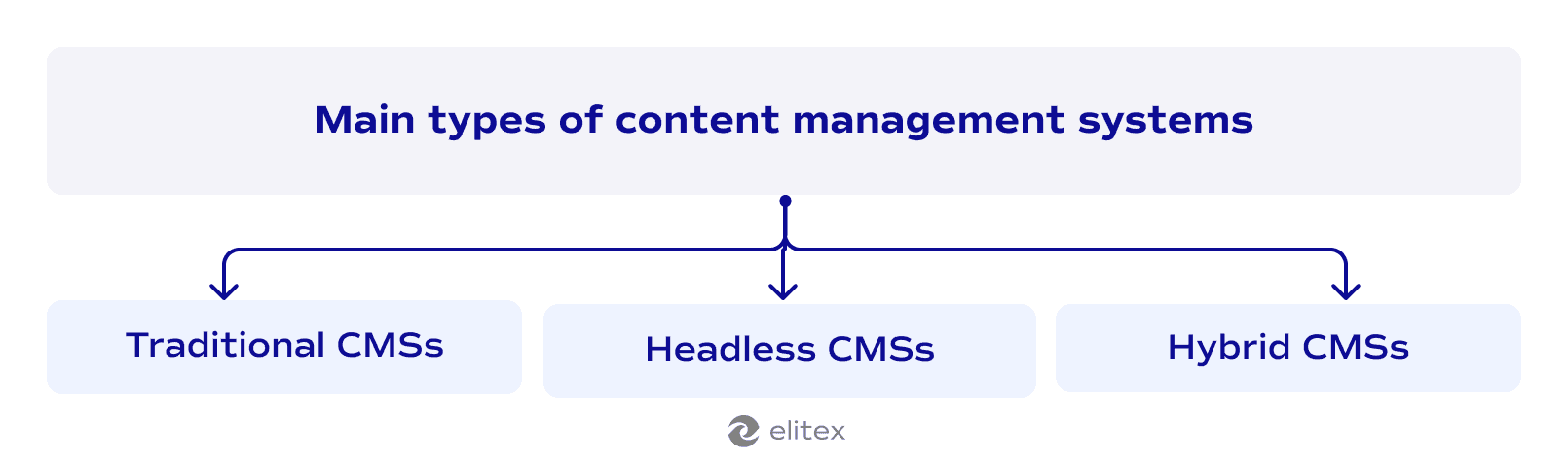
Traditional CMSs: The classic approach where content and presentation exist on the same platform. These systems store your content, manage files, and deliver pages to visitors all in one place. Perfect for standard websites, blogs, and small to medium businesses. WordPress, an example of a traditional CMS, powers over 40% of all websites nowadays because it balances ease of use with flexibility.
Headless CMSs: A modern take that separates content from the presentation layer. Content lives in the CMS, but developers can send it anywhere—websites, apps, or digital displays—through APIs. Here, you can read in detail about the front-end for headless CMS. Such flexibility makes headless CMS ideal for companies that need content across multiple platforms or want to build custom user experience.
Hybrid CMSs: A blend of both worlds. These systems can work like traditional CMS with ready-to-use templates, or serve content through APIs like headless platforms. This versatility suits growing businesses that might need simple solutions now but want room to build custom features later.
But which type of CMSs should I choose?
From our experience, the most versatile and flexible CMSs for real-world scenarios are headless CMSs. They are akin to smart content hubs – you can create content once and share it everywhere your business needs it. Your marketing team can write blog posts that appear on your website, mobile app, social media, and newsletters without extra work. Unlike older systems that lock you into specific designs, headless CMS lets you present your content in a way that aligns with your brand and business goals. When your company grows or changes direction, your content stays ready for use in new ways without starting over.
Looking for a good headless CMS? Meet ButterCMS!
ButterCMS transforms how teams create and manage website content. This headless CMS not only lets marketers build and update pages without asking developers for help but also turns content management into a smooth and highly efficient process. From blogs to product catalogs, teams can easily launch new content in minutes through a simple and intuitive dashboard of ButterCMS. The platform integrates with many modern technologies as well, making it a perfect fit for growing businesses with multiple content needs and big marketing goals.
With a solid portfolio consisting of dozens of successful businesses, ButterCMS proves that a good headless CMS delivers results. The platform handles everything from SEO to multi-language support, letting teams focus on creating great content. Marketing teams get a friendly interface to work with, and developers receive powerful tools to build customized web experiences. The result? Faster A/B testing, smoother website redesigns, and improved profit margins.
G2 reviews rank Butter CMS as a top headless CMS for a good reason. It cuts development time, removes technical barriers for marketers, and scales with your business needs. The platform takes care of security and maintenance, while marketing teams enjoy features like instant previews and version control. Whether you run a small website for marketing-only purposes or manage a multi-brand online store, ButterCMS offers the tools to grow without the usual tech headaches.
Looking for a more custom solution?
Need help choosing the right technology for your web application? Looking for someone to help you build something beyond what CMSs can offer? At ELITEX, we’ve helped dozens of companies implement web solutions perfectly tailored to their specific needs. Our team knows everything about building modern applications and creating unique digital experiences. From complex web apps to high-performance websites, we turn your ideas into working solutions. Ready to discuss your project? Let’s talk about it!
POSTED IN: