

Climate Karma: Environmental Impact Awareness
Building a functional MVP for environmental initiatinve within tight budget and timeframes

Industry
Environment
Technology
React
JavaScript
HTML/CSS
Node.JS
Services
Customer’s Location

the USA
A Brief Summary
- TL;DR: Our client is Climate Karma, a US-based environmental awareness initiative that scores personal climate impact the same way a credit score measures financial behavior. Each daily decision moves the user's environmental rating.
- The client needed a fully functional MVP fast enough to impress investors and lean enough to fit a strict budget. They had design concepts in hand but no technical execution path.
- ELITEX delivered a full-stack MVP covering cloud infrastructure, authentication, the scoring algorithm, the admin panel, and a custom UI for environmental data visualization. A senior full-stack developer led the backend scoring logic while a junior frontend developer handled UI implementation. The product shipped within budget and timeline, ready for investor demos.
About the Project
Climate Karma is an environmental awareness initiative designed to help individuals understand their personal contribution to climate change. The concept of their application centers on a scoring system that works like a credit score. The idea is quite simple: demonstrating how every daily decision affects a user’s environmental rating. ELITEX helped Climate Karma build the MVP they needed to demonstrate this concept to potential investors.
The Challenge:
The client came to us with tight deadlines and a limited budget. They had initial design concepts ready, but needed technical execution that could deliver a fully functional product. The MVP had to work well enough to impress investors while staying within strict time constraints.
Climate Karma wanted specific features implemented. The scoring algorithm needed to calculate environmental impact from minimal user input. The platform had to collect data across multiple categories (from electricity consumption to recycling habits) and translate everything into a single, understandable score. Change requests came in during development as the team refined their vision.
The Solution
ELITEX built a fully functional full-stack MVP that handled everything from cloud infrastructure to user-facing features. The client needed both technical foundation and polished interface elements, so our team took responsibility for the complete development cycle.
The technology stack used for MVP development:
- Frontend: React
- Styling: Tailwind CSS
- Backend: Node.js API transitioning to AWS API
Core features implemented in MVP
User management
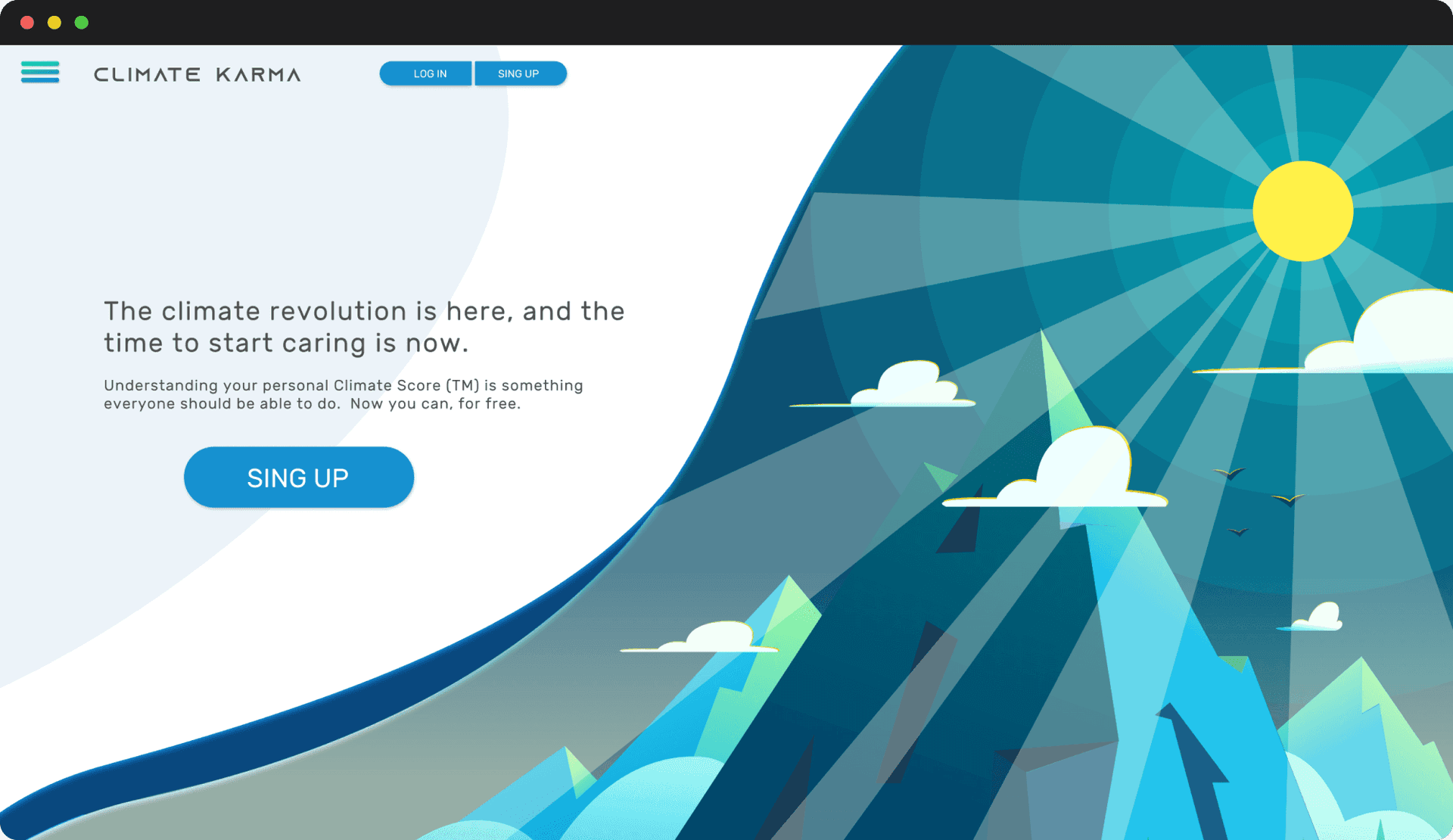
- Complete authentication system (login, sign-up, password reset)
- User viewing and suspension capabilities for administrators
Platform structure
- Navigation components (header, menu, footer)
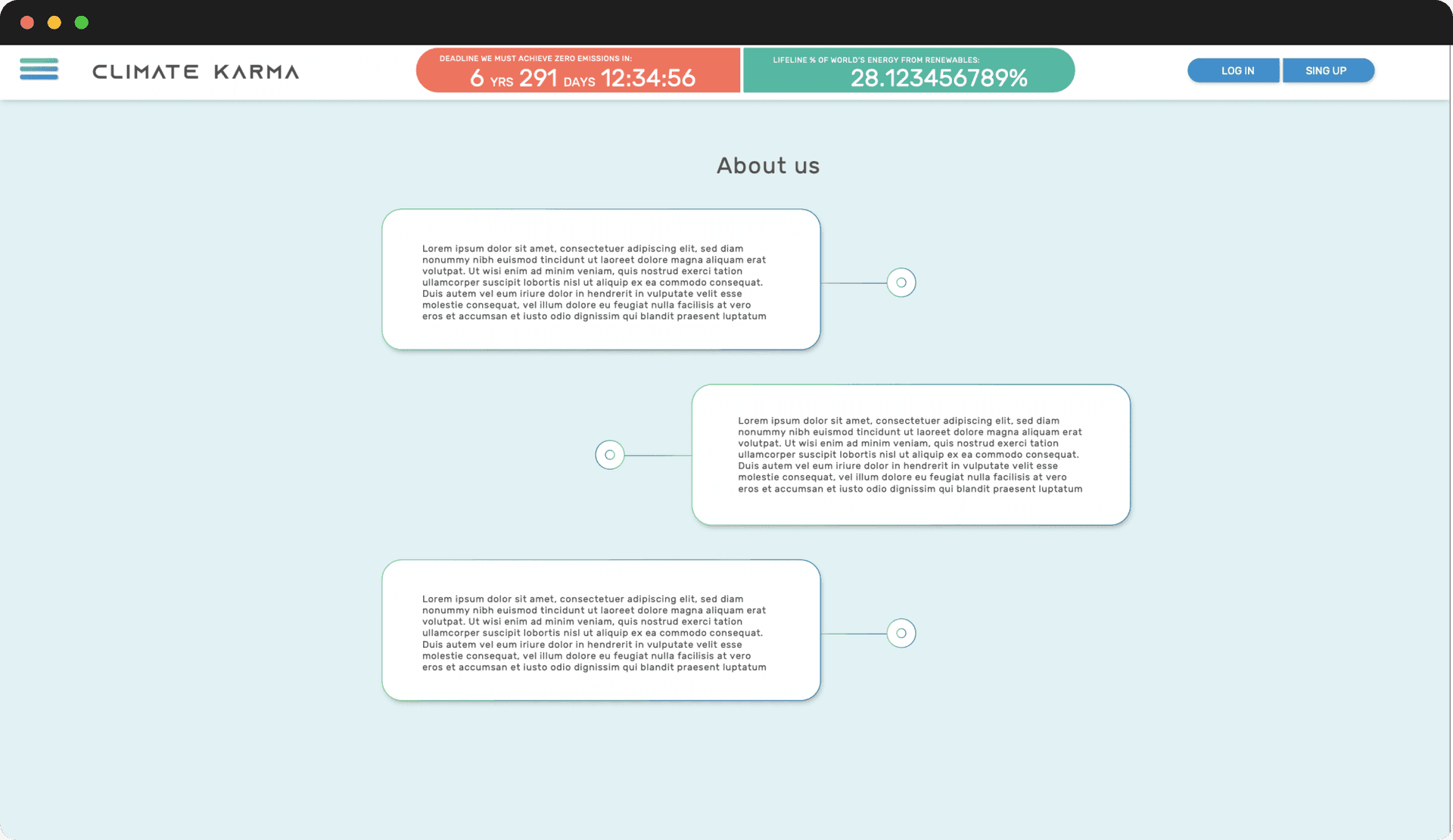
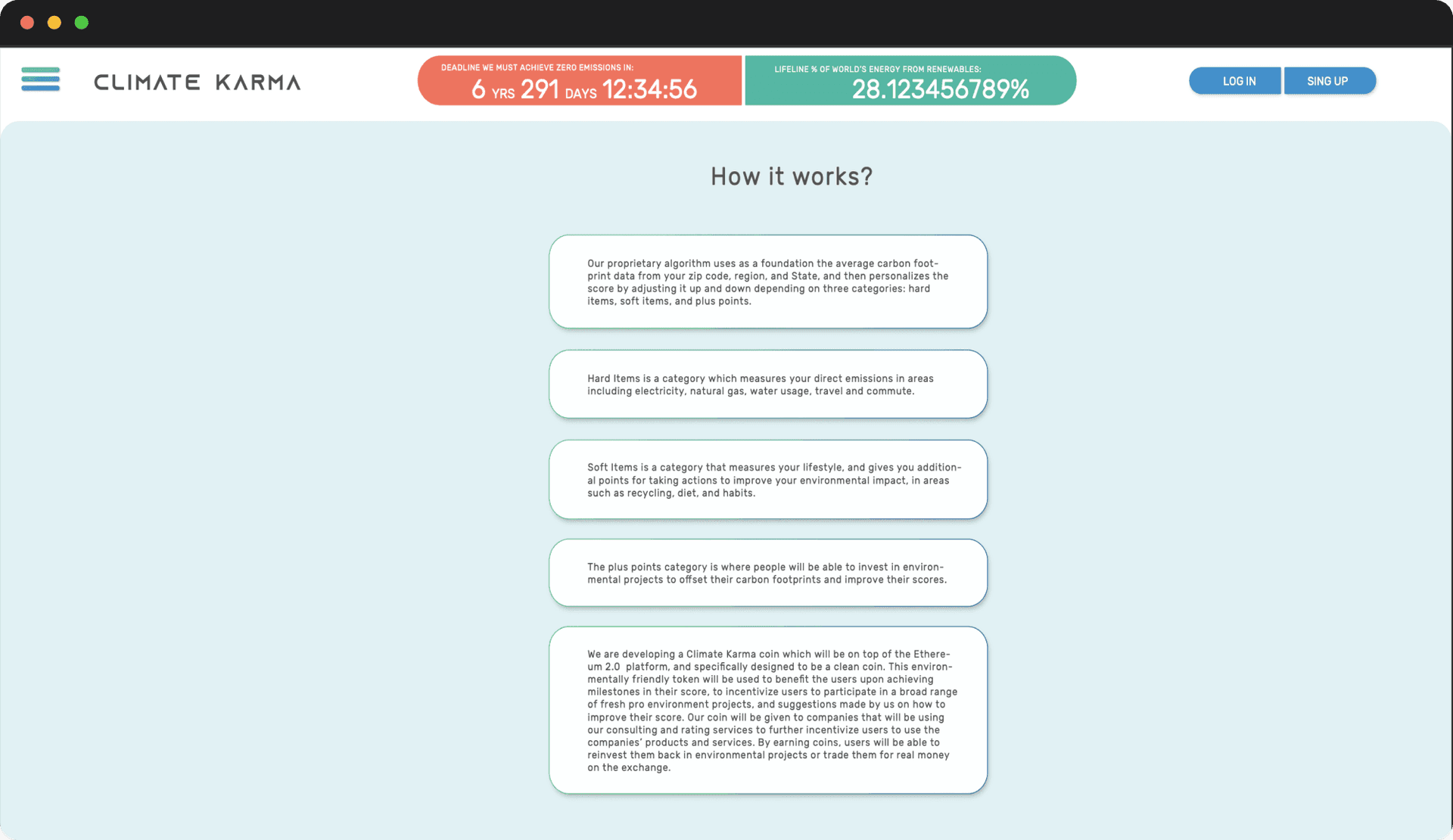
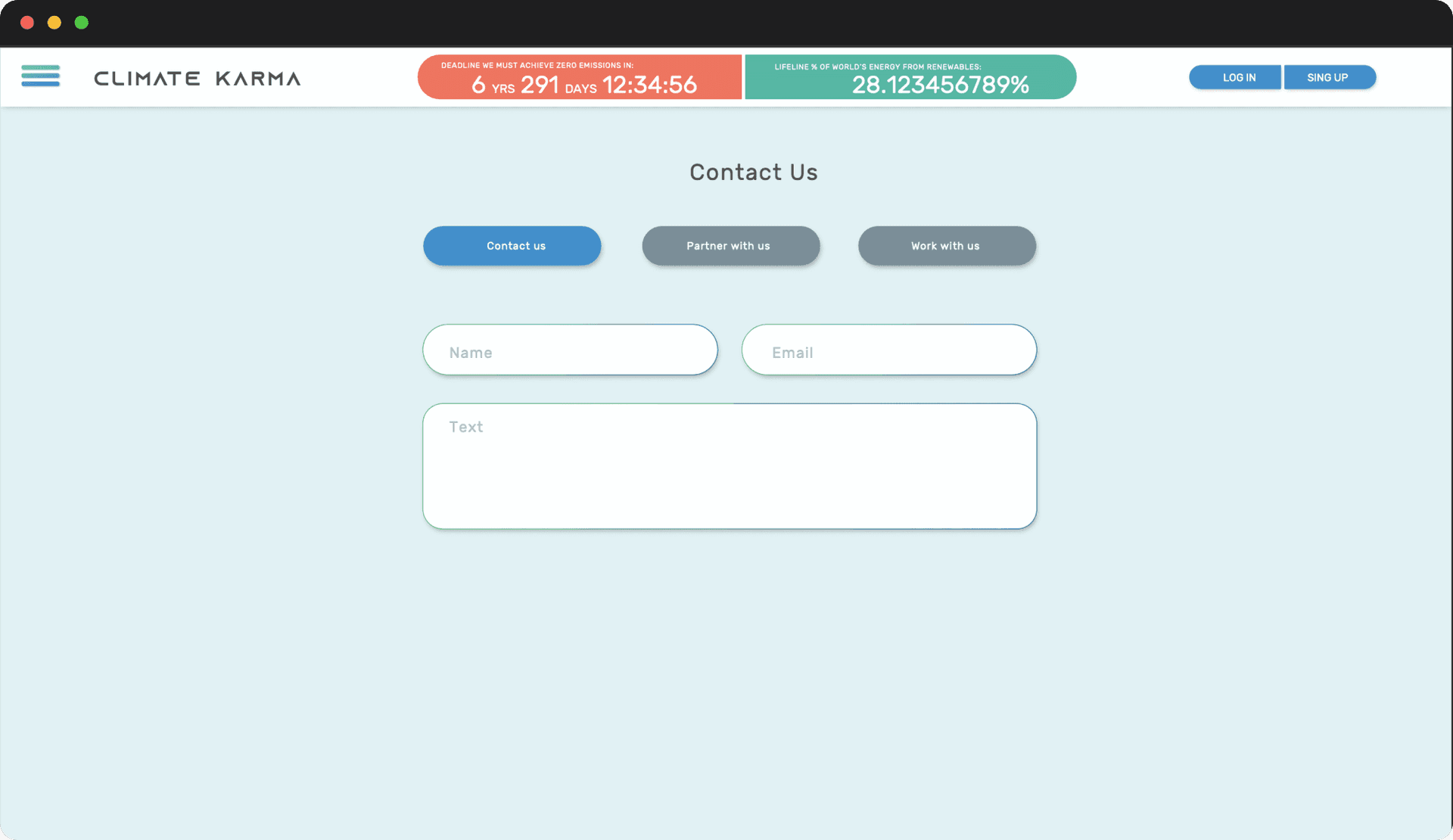
- Informational pages
Scoring system
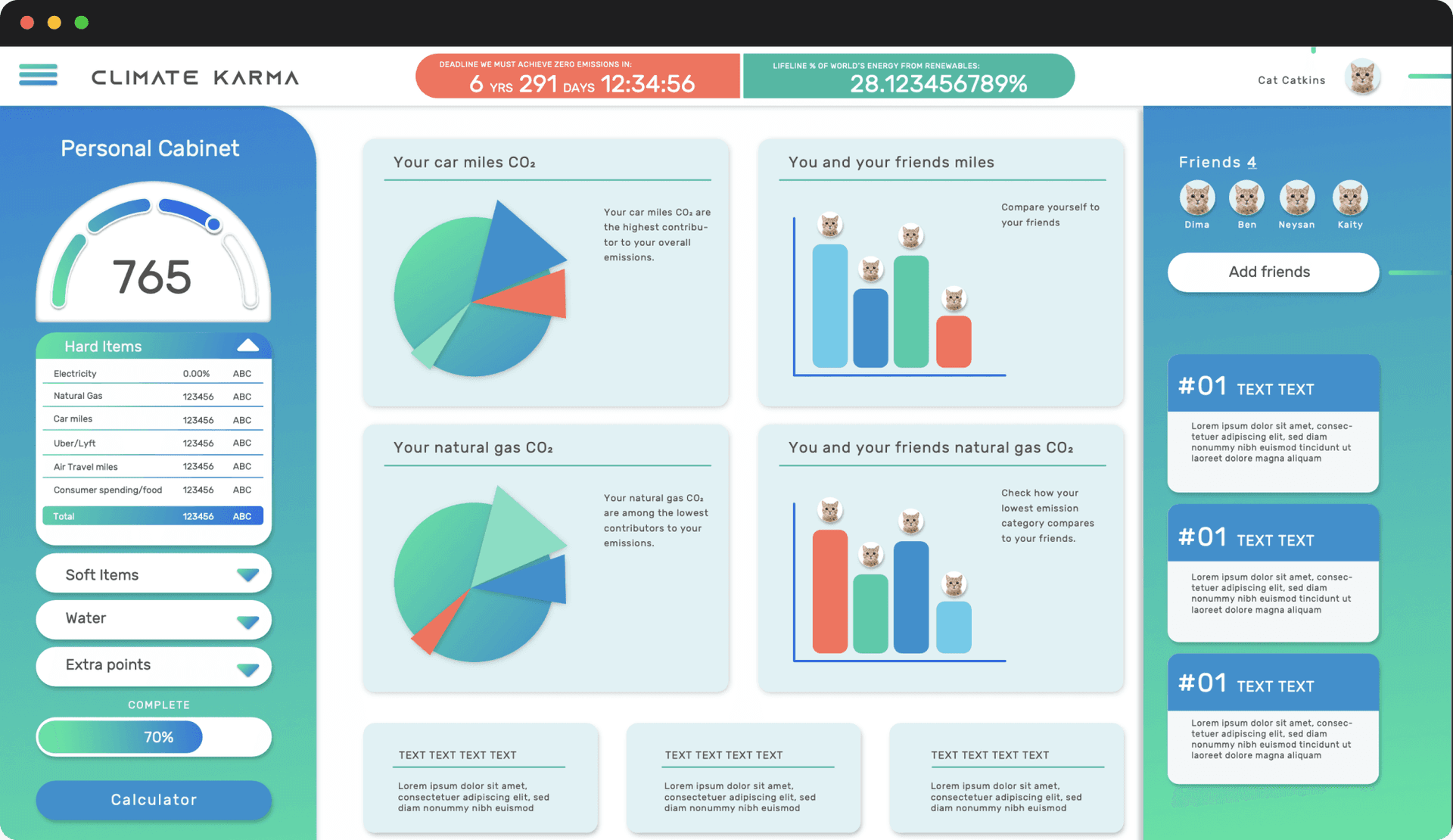
- Score categories with detailed breakdowns
- Individual category item viewing and editing
- Global scores with comparative benchmarks
- Interactive charts and data visualization
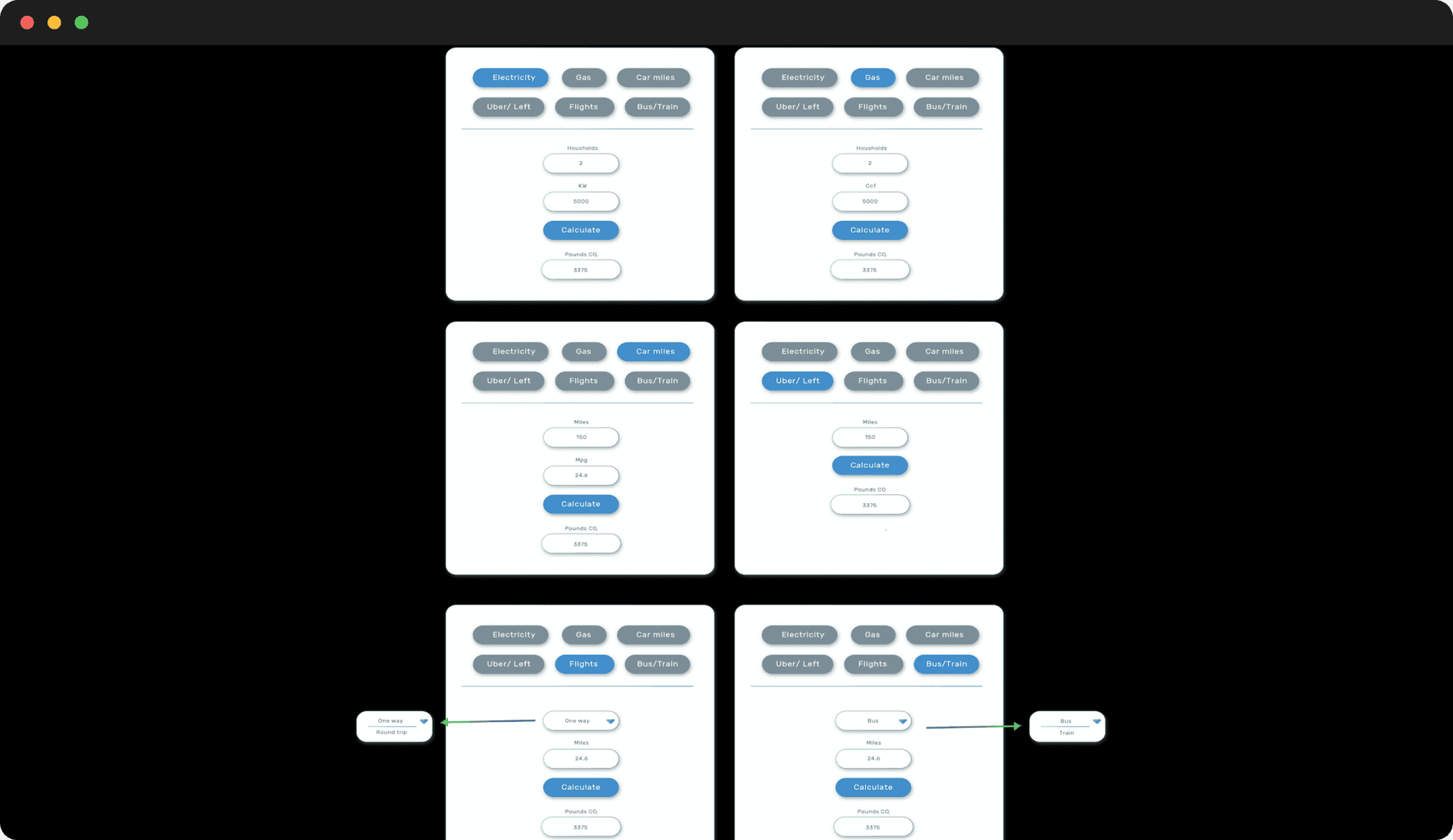
- Built-in calculator for testing lifestyle changes
Content features
- News feed for platform updates
- Admin panel for managing news and ideas
- Global score management tools
Score Implementation
The scoring algorithm became the most technically interesting part of the project. We created a system that generates a complete environmental score from surprisingly little initial input. When users register with just their name, age, gender, and address, the platform immediately calculates an approximate score based on regional averages for their location. This approach gave users instant feedback without requiring extensive data entry upfront. From there, they could refine their score by answering targeted questions about their actual habits.
Many UI elements required custom development rather than off-the-shelf solutions. The score indicators, progress bars, and category breakdowns were all built from scratch to match Climate Karma's specific design vision. These custom components had to clearly communicate complex environmental data in ways that felt intuitive to users without any background in sustainability metrics.
The Process
Communication with Climate Karma's CEO and CTO happened throughout development. We scheduled video calls two to three times per week, which kept everyone aligned as requirements evolved. These frequent check-ins meant we could adapt quickly when priorities shifted. Such regular contact prevented misunderstandings before they became expensive problems.
The Project Team
A senior full-stack developer led the technical work, especially the score mechanism implementation on the backend, while an additional junior frontend developer focused on UI implementation. This lean structure kept costs down while maintaining the quality standards the client needed. The team invested 500 total hours on development by concentrating on essential MVP features rather than elaborate extras that could wait for later versions.
The Result
The ELITEX team delivered a fully operational MVP that met Climate Karma’s needs for their investment pitch. The platform processes user inputs accurately, calculates environmental scores using a complex algorithm we built, and presents everything through a clean interface. The client got their demo-ready product within the agreed timeline and budget, which positioned them to move forward with investor conversations.
Key numbers and facts:
- 500 development hours total to deliver the MVP
- 2-person team covering full-stack development and UI implementation
- 1 investor-ready MVP shipped within strict budget and timeline
- Instant scoring through regional averages delivered, refined later by targeted habit questions
- Custom-built UI components for score indicators, progress bars, and category breakdowns
Why Choose ELITEX?
- Cost-effective team structure: We know how to assemble the most effective teams for each project. The right skill mix delivers quality results without unnecessary overhead.
- Transparent communication: Regular check-ins keep everyone aligned as requirements evolve. We never add unnecessary intermediary levels between clients and developers. This direct communication means we adapt quickly when priorities shift without derailing timelines.
- Flexible engagement models: We work with projects of all sizes and adapt to approach to match client needs. Whether you need a complete development team or targeted expertise for specific challenges, we scale our involvement accordingly.
- Cross-industry expertise: We’ve delivered solutions across healthcare, fintech, ecommerce, and environmental sectors. This breadth means we adapt quickly to new domains without lengthy onboarding periods.
Let's talk about your project
Drop us a line! We would love to hear from you.