



Companies turn to software development outsourcing when they are unable to develop specific functionality or applications using current in-house resources. Also, such kind of software solutions may be a wise choice in many other cases; for instance, it can cut development costs or free up an in-house team for core tasks. Finding a reliable custom software development services provider might take too long unless the company uses a well-structured approach that fairly evaluates all the options, comparing them one by one. Reaching out to potential partners with an RFP is one of the most popular ways of exploring the software development market. Let’s define what software development RFP stands for and what are the peculiarities of using it in software development.
What is an RFP, and why should one choose it?
A request for proposal (RFP) is a document that organizations or businesses send to solicit bids from vendors or suppliers for required services or products. The RFP typically outlines project goals, scope, deadline, budgets, and other details.
Organizations use RFPs to ensure getting the best value for their budgets by inviting multiple vendors to submit proposals. Such an action allows companies to compare and evaluate proposals and, consequently, determine the best solution for their specific needs.
What is an RFP for software development?
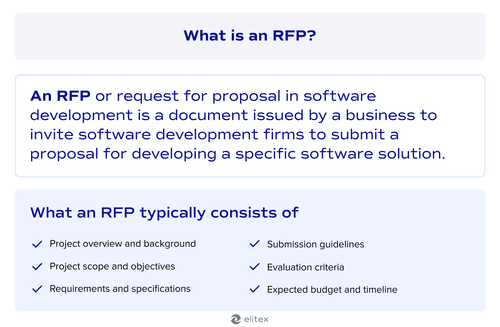

RFPs are a valuable tool for organizations looking to outsource some kind of work or specific services. They provide a clear and structured way for companies to communicate their unique business requirements. RFPs help to find the best vendor for their project and help ensure the entire process is completed successfully and within the time and budget.
In the case of software projects, companies send RFPs to several IT services companies to present them with the functional requirements and goals. Additionally, RFP specialized for software development includes a series of project-oriented questions. These factors help companies decide which potential software vendors are the best fit for their projects.
Request for information vs Request for proposal
Unlike a request for information (RFI), a preliminary document mainly aims to gather specific data from outsourcing teams before taking further steps; an RFP focuses on the description of the customer’s company, its background information, and the technical challenges the customer aims to resolve. This information clarifies the project’s need for outsourcing developers to estimate the scope of work and its cost.
In terms of software projects, both documents are commonly used; however, they serve different purposes. RFI is a document for gathering information about software vendors and narrowing down the list of potential vendors, while RFP is a tool to solicit proposals from software development market companies.
By creating a decent RFP, customers might determine the best outsourcing team just by evaluating answers to the RFP in terms of availability, cost-suggested solutions, relevant experience, and overall expertise.
Before starting a software development RFP
One of the crucial aspects of creating a successful RFP is ensuring that it actually accurately reflects the needs and requirements of the company. Each organization should take a number of preparational steps before proceeding with the selection process.
Clearly define business objectives
Before going straight to RFP, you should define your business objectives clearly, as well as the goals of the future software development project. This stage might involve identifying pain points, areas of potential improvement, or specific outcomes the project is intended to achieve.


Form a project team
The very first step in preparing the creation of a software development RFP template is forming the project core team, consisting of some technical specialists, project managers, and other stakeholders. Later, this team will be responsible for defining the project’s specificity, developing the RFP, and evaluating the vendor proposals. At this stage, you should also pay attention to establishing the system of project governance.
Conduct overall market research
You should conduct general market research to identify potential vendors and solutions currently available in your particular case. It might include attending industry conferences, reviewing analyst reports, or conducting service provider assessments to choose the vendor with the relevant tech expertise.
How to write an RFP for software development: step-by-step guide
Writing an effective RFP is paramount in the software development industry. A well-written one not only outlines project requirements but also serves as a powerful tool to attract qualified vendors and ensure the choice of a suitable partner. The clarity, completeness, and precision are self-evident components of a successful RFP. Hence, let’s try to create a step-by-step RFP template for software development.
1 . Define project background
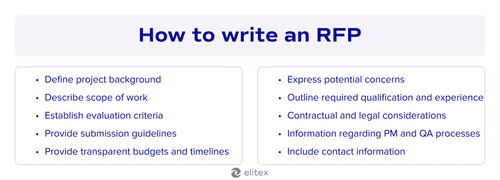
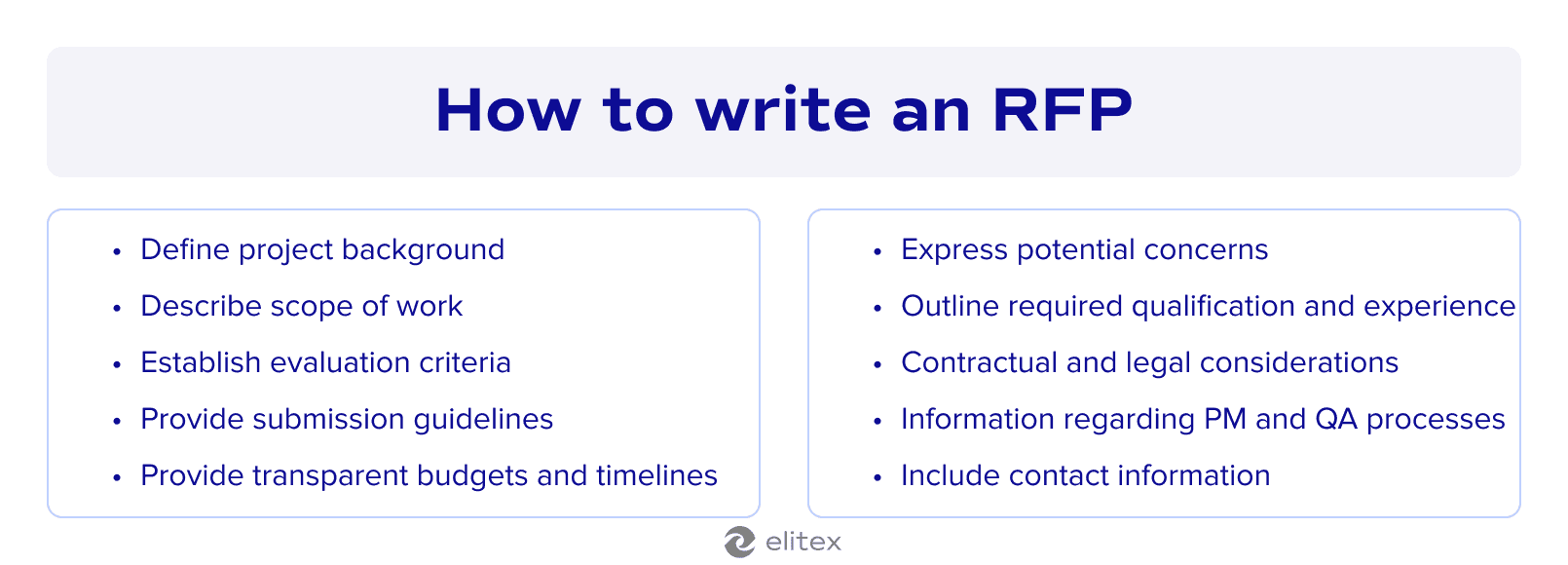
Begin with a brief introduction that outlines the organization, its purpose, background, and project overview. Clearly state the objective of the project and desired outcomes. Provide a comprehensive overview of your project. Outline the specific requirements, features, and pain points expected from the proposed solution.
2 . Describe the scope of work
Clearly define the scope of your project, including technical and functional requirements. Include information about specific deliverables, functionality, and features. Also include information about the preferred hardware, software, programming languages/technologies, security requirements, and performance expectations.
3 . Establish evaluation criteria
Define the set of factors to consider that will be used to assess vendor proposals, such as development costs, technical expertise, experience in a particular industry, project approach, and other specific requirements.
4 . Provide submission guidelines
Provide clear instructions on how vendors should structure their proposals, specify every section, format, page limits, and any additional documentation or templates to be included.
5 . Provide transparent budgets and timelines
You should specify funding constraints, outline budget allocation, and request detailed cost breakdowns in order to provide potential vendors with all the required information. At the same time, highlight the project’s timeline, including key milestones and review periods.
6 . Express potential concerns
Communicate honestly about any critical challenges or concerns the project may face. It can be specific legal and privacy restrictions, integration issues, functional requirements, technical complexities, etc. Right after, ask vendors to outline proposed strategies for mitigating identified concerns. This approach demonstrates the ability of the company to anticipate and handle any potential issues, providing insights into their past problem-solving experience.


7 . Outline the potential service provider’s qualifications and experience
Outline the desired qualifications and experience the other party should possess. Describe the particular field you are interested in: the industry experience, specific legal expertise, etc.
8 . Contractual and legal considerations
Specify any contractual or legal requirements vendors must adhere to. Such kind of information involves data protection, confidentiality, intellectual property rights, and licensing agreements.
9 . Include contact information and Q&A process
Provide contact information for any queries or clarifications regarding your RFP template for software development and explain the process for submitting questions or requesting additional information.
By following these simple steps, you can create a clear and comprehensive request for proposal software development that effectively communicates your project requirements and what you want to see from the potential vendors. Once finalized, it can be distributed to multiple potential vendors through appropriate channels. You should also remember that any communication requires time, so you should allow sufficient time for vendors to prepare their proposals.
Request for proposal for software development best practices
In this article, we have covered how to create a robust RFP for software development. Generally speaking, in the standard request, you should cover the essential components of the solutions your business intends to produce and their desired outcomes.
Firstly, ensure your RFP template for software development gives a clear picture of your request, specifying all the goals and required technologies. We have previously written all the necessary components for the RFP software template. Now, let’s summarize the key points of a good RFP:
- Clear and concise requirements;
- Ample background information;
- Comprehensive evaluation criteria;
- Realistic timeline and budget;
- Clear communication channels;
- Encouragement for innovative solutions;
- Relevant preferences;
- Legal and contractual considerations;
- Clearly outlined proposal submission process.


Ask questions properly
When it comes to best practices for creating a solid RFP, properly asked questions are crucial. They allow you to gather the information and ensure a rigorous understanding of their capabilities and proposed solutions. Communication itself should play a major role in the final decision. That’s why clear and well-structured questions help eliminate ambiguity and provide vendors with specific guidance on what you are seeking. On the other hand, asking the right questions demonstrates your diligence as a buyer and allows you to find more informed solutions.
The questions section of the request for proposal should include only those that require answers personally from the vendor and cannot be found in public sources. For example, avoid asking for the information posted on the company’s website or easily seen by other non-sophisticated means. The rule is quite simple: ask only about specific technical requirements, proposed or preferred project management styles and methodologies, team composition, software development pricing models, and overall expertise.
The most common mistakes when writing RFP for software development
There is a set of mistakes you should avoid when creating an RFP. It’s essential to be aware of ones that can hinder the proposal’s effectiveness and negatively impact the selection process of software development vendors. Here are some of them:
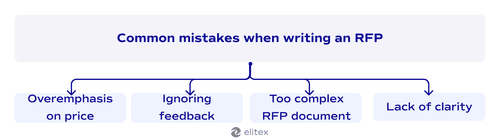
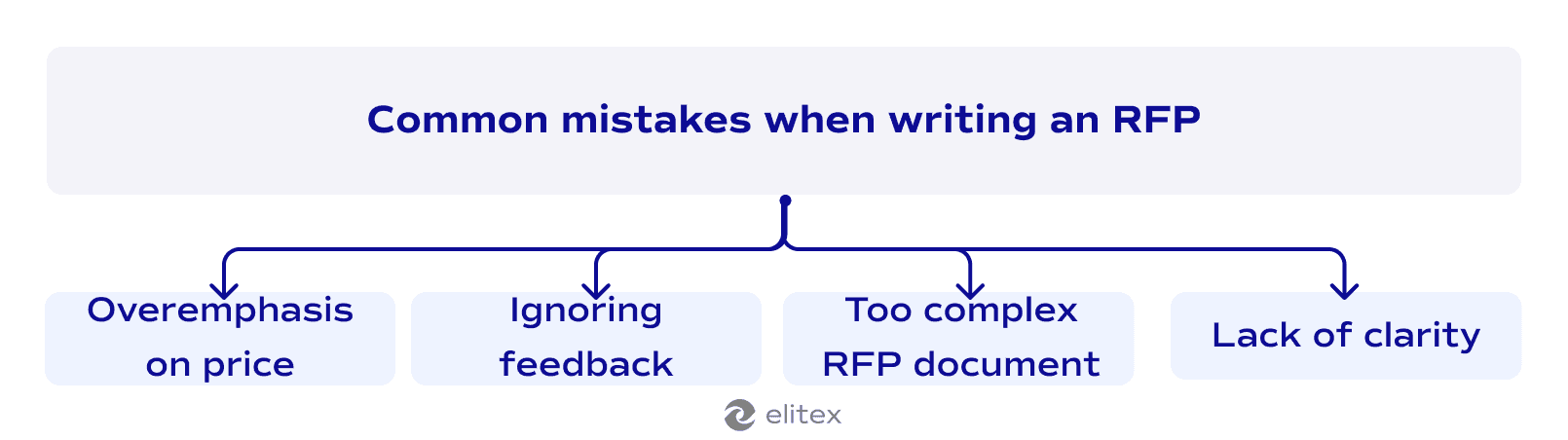
Overemphasis on price:
Placing excessive focus on price as the primary criterion in choosing is a big mistake. While cost is a very important factor, it should not overshadow the quality, expertise, and suitability of the proposed solution.
Ignoring vendor questions and feedback
Failing to address vendor feedback on time can lead to frustration. Establish a straightforward process for vendors to seek clarifications or request additional information required for the further software development process.
Lengthy and complex RFP document
If you create an excessively long and complex RFP, it can lead to some miscommunication. Such a document can overwhelm vendors and complicate the navigation through the information. Keep the software development request concise and well-structured, focusing only on the essential details and providing relevant information.
Lack of clarity
Although we have previously talked about unnecessary information, failing to provide required and precise data is an even more common mistake. Avoid vague or ambiguous language and clearly outline the project scope, business goals, technical requirements, functional specifications, and other relevant details.
Scope and deliverables in your RFP for software
The most comprehensive section of your RFP will be the detailed scope and the deliverables. Representatives of software development companies will use this technical description in order to produce accurate and customized proposals. You need to touch on the following items.
Software Development Infrastructure
What is required for a successful project to guarantee effectiveness, security, and trustworthiness? These criteria will determine your required infrastructure. Keep a few factors in mind at this point.
- How would you describe your present infrastructure?
- What modifications to your server infrastructure will be necessary?
- How will challenges around data security need to be handled?
- What about legal safeguards for intellectual property?
- How is software access restricted?
You may also add some precise requirements of your industry or your project.
RFP software development product requirements
The best way to communicate your software requirements is to share user journeys, use cases, and real-life scenarios. So, the tech lead and custom software developers will have an ideal representation of what they should build. How should your software product work in detail? Think of describing it starting with these three points.
User journey and user experience
Describe what the user will be able to see and do with your software. In terms of adding particular features, you may add some existing user stories explaining what should be improved. The users should be able to change their settings and select features to leverage through their user profile, for instance.
Product features
Discuss system-related product capabilities in your software RFP. For instance, the system should notify the user about every engagement (set by the user out of available options) on the product page on the marketplace.
Software usage optimization
Give clear examples of what should be automated in your software so that users do not have to take any actions to get the needed result. For instance, the system should automatically submit a confirmation email for each order in the online store.
List every feature that needs to be crafted. Describe your needs for both front and back ends in detail. Additionally, we advise you to outline the services you plan to offer using this software. You can also include a timeframe with a completion date for the project stages so that your software development vendors can assess their capability of delivering it on time.
RFP template for software development takeaways
The template should be concise, including only customized and important data and questions. Otherwise, revising and estimating all the RFPs will take extra time for you as a customer, and filling in all the questions will require higher efforts from the vendor.
Include the additional questions section to see what each software development team can offer. Give your prospects a chance to suggest their solution as it opens a space for better or unknown earlier options. It will help you make the right choice when the offerings seem almost identical.
Take into account the importance of the Guidelines section as it gives a chance to add specific instructions for reviewing and filling in the RFP, as well as lines out the deadlines for proposals or replies. It also helps to minimize unpredictable misunderstandings of the process from sending the RFP to the beginning of the cooperation with your new partner.


RFP template for software development
Here is one of the basic RFP for software development examples. You can use this template or modify it, considering the specific information your case may require.
| Overview | _________________________________________________________________________ |
| Company’s background | _________________________________________________________________________ |
| Project description | _________________________________________________________________________ |
| Goals | _________________________________________________________________________ |
| Technical requirements | _________________________________________________________________________ |
| Scope of work and timeline | _________________________________________________________________________ |
| Precise dates if needed | _________________________________________________________________________ |
| Budget | _________________________________________________________________________ |
| Questions | _________________________________________________________________________ |
| Guidelines | Please send your proposals and additional clarifications until ________ |
Let’s create your software RFP template together
Writing an RFP for software development does not have a set format. Therefore, we have given in this blog some recommendations and key points to think about. Consider those when drafting a request for a proposal for app development that fulfills the requirements of your product.
Feel free to arrange a call with our IT and outsourcing experts in case you want to spend less time creating a request for proposal or find it difficult to describe the technical elements and product requirements. With years of experience in custom software development, ELITEX is a trusted outsourcing and technology partner that knows everything about RFPs. We will be happy to assist you in producing any kind of stunning products that your customers will love.
Final thoughts
Creating an effective RFP is a critical step in the software development process. It sets the foundation for selecting the right development partner and clearly communicates your product requirements. By following some of the best practices and avoiding common mistakes, you can maximize the chances of receiving high-quality proposals from vendors.
A well-crafted RFP should provide comprehensive and precise info about the scope, objectives, timelines, budget, and specific technical requirements of your project. Also, outlining the evaluation criteria and any specific legal considerations would be a good idea. By being concise and transparent, you enhance the vendor’s understanding of your needs and facilitate a fair development process. In some sense, it not only makes the communication process more comfortable but also enables you to attract the best vendors and align expectations, increasing the chances of successful project outcomes.


FAQs
What is an RFP?
An RFP or Request for Proposal is the type of document used by companies and organizations looking for proposals from potential vendors or service providers. It typically outlines the company goals, project requirements, selection criteria, and other specifications of digital products, allowing vendors to submit their proposals specifying the details.
What’s the difference between RFP, RFI, and RFQ?
The main difference between these three kinds of requests lies in the purposes and level of detail. A Request for Proposal (RFP) is a comprehensive document that requests detailed proposals for a particular project. A Request for Information (RFI) is a preliminary inquiry seeking general information with fewer details than in the case of an RFP. A Request for Quotation (RFQ) is a request from organizations to service providers about the price of a specific product or service.
What is the typical timeline for the RFP process, from issuance to vendor selection?
It can vary depending on the complexity of the project and both parties’ internal processes. On average, it takes several weeks to a few months. This timeline allows potential vendors to review the RFP thoroughly, prepare the proposals, and engage in any necessary clarifications.
Should I ask about references or case studies before sending the RFP?
You can usually find some kind of portfolio on the website of development companies. Nevertheless, it’s advisable to ask for references or case studies before sending the RFP. You can gather insights into the vendor’s experience, problem-solving skills, and expertise in specific domains by requesting references and case studies relevant to your project.
What kind of outsourcing software development RFP is suitable for?
Request for Proposals may be a reasonable solution for most types of outsourcing development, from dedicated team models to business process outsourcing.
Can I engage multiple vendors for different phases or stages of my development project?
Yes, you can. This approach, known as multi-sourcing, is especially suitable for projects that require expertise across multiple industries. However, it requires careful management and coordination to ensure effective collaboration and integration between different vendors.
POSTED IN: